The Joy of Staying In - Home Theatres & Entertainment Spaces
LUXURY BY SPACE — PART II: AUREVIA LUXURY VILLAS | CHAPTER 13
Where cinematic experiences, family togetherness and everyday comfort find their perfect setting.
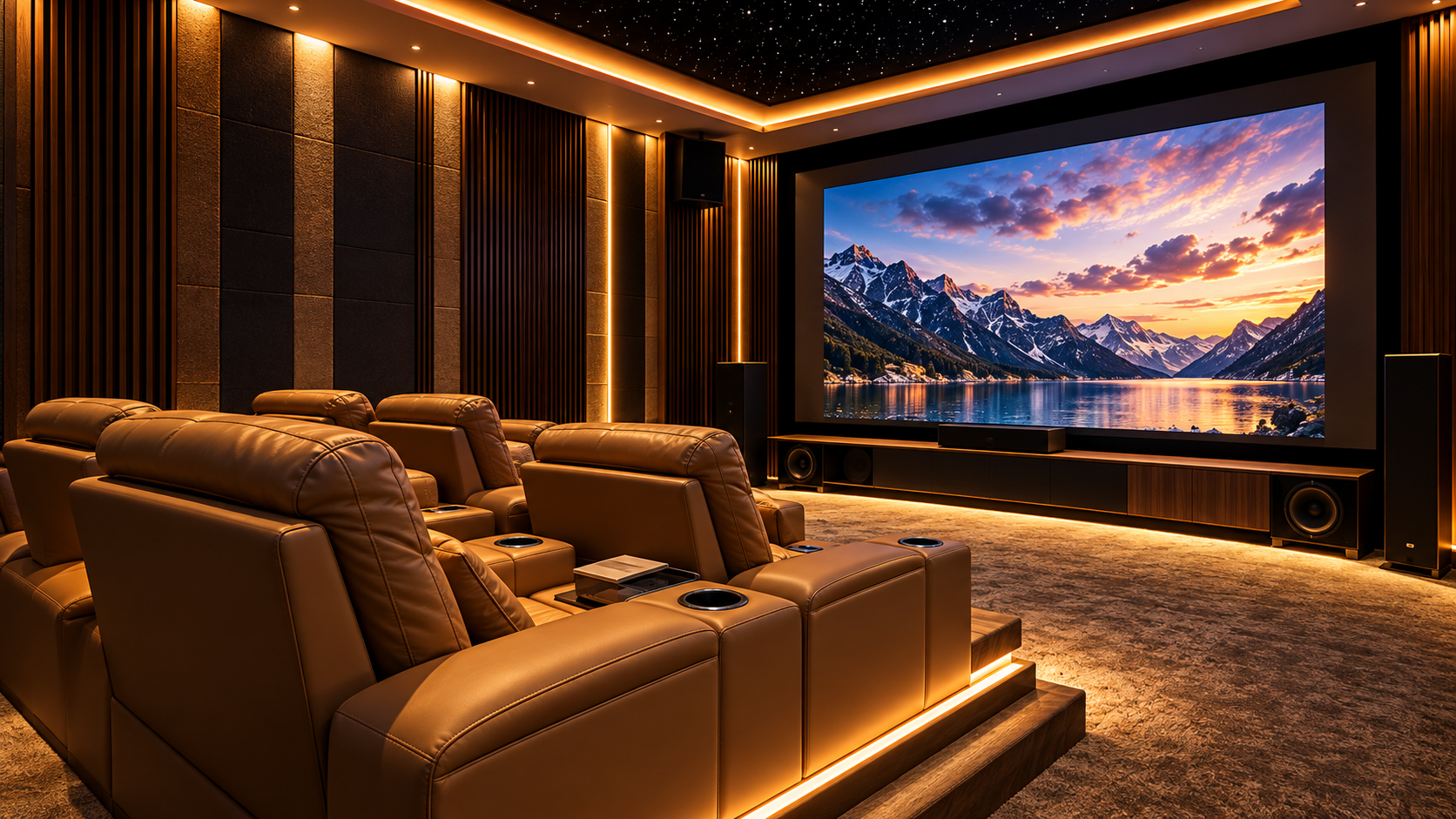
Introduction — The Luxury of Enjoying Home
Imagine a Friday evening when the family gathers to watch a favourite film. The lights gradually dim, the curtains close, the screen comes alive and immersive sound fills the room. There are no queues, no traffic, no interruptions and no need to leave the comfort of home.
On another evening, the same space might host a cricket match, a children's animated film, a music concert or a quiet documentary.
This is the real attraction of a thoughtfully designed home entertainment space.
At Aurevia Luxury Villas, we believe the finest entertainment rooms are not necessarily those with the largest screens or most expensive equipment. They are spaces where everyone feels comfortable, technology is easy to operate and maintenance never becomes an unnecessary burden.
The objective is simple: create a place where the family genuinely enjoys spending time together.
1. Dedicated Home Theatre or Multipurpose Entertainment Room?
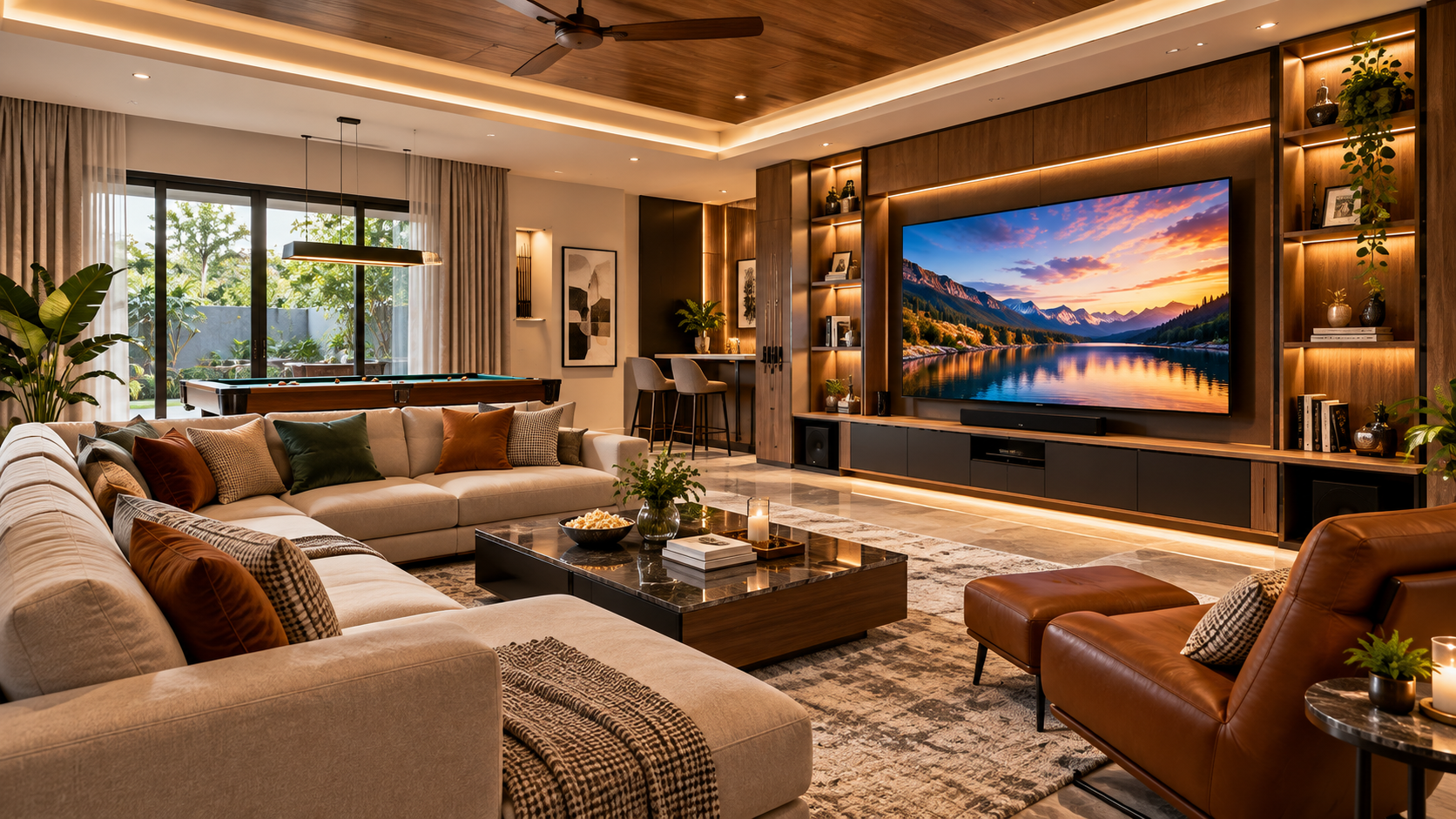
A thoughtfully designed family entertainment lounge combines cinematic viewing, comfortable seating, games and everyday relaxation in one elegant space.
The first decision is not which projector to buy. It is how the family intends to use the space.
Option A — Dedicated Home Theatre
A room designed primarily for films and immersive viewing, with controlled lighting, acoustic treatment, carefully positioned speakers and cinema-style seating.
Ideal for: Film enthusiasts, frequent movie nights and homeowners with a spare room.
Option B — Family Entertainment Lounge
A flexible room for television, films, sports, gaming, music, conversation and occasional gatherings.
Ideal for: Families who prefer a relaxed, frequently used living space.
For many Indian families, the multipurpose entertainment lounge provides better everyday value. A dedicated theatre becomes worthwhile when immersive movie viewing is a genuine family priority.
Aurevia Recommendation: Never sacrifice a useful family room simply to create a theatre that may be used only occasionally.
2. Choosing the Right Location
A home theatre can be placed on the ground floor, first floor, basement or even in a carefully designed upper-floor entertainment suite.
The most suitable location depends on privacy, noise control, ventilation and access.
A good location should provide:
Separation from bedrooms and quiet study areas.
Limited direct sunlight or effective blackout curtains.
Adequate ceiling height after acoustic and air-conditioning installations.
Convenient access to a washroom and refreshments.
Safe movement for children and elderly family members.
Easy access for equipment replacement and servicing.
Basements can offer excellent light control, but waterproofing, humidity control, fresh-air ventilation, drainage and emergency escape provisions require particular attention.
For a family villa in Lucknow, a first-floor entertainment lounge adjacent to a family sitting area can be an especially practical arrangement.
3. How Much Space Is Enough?
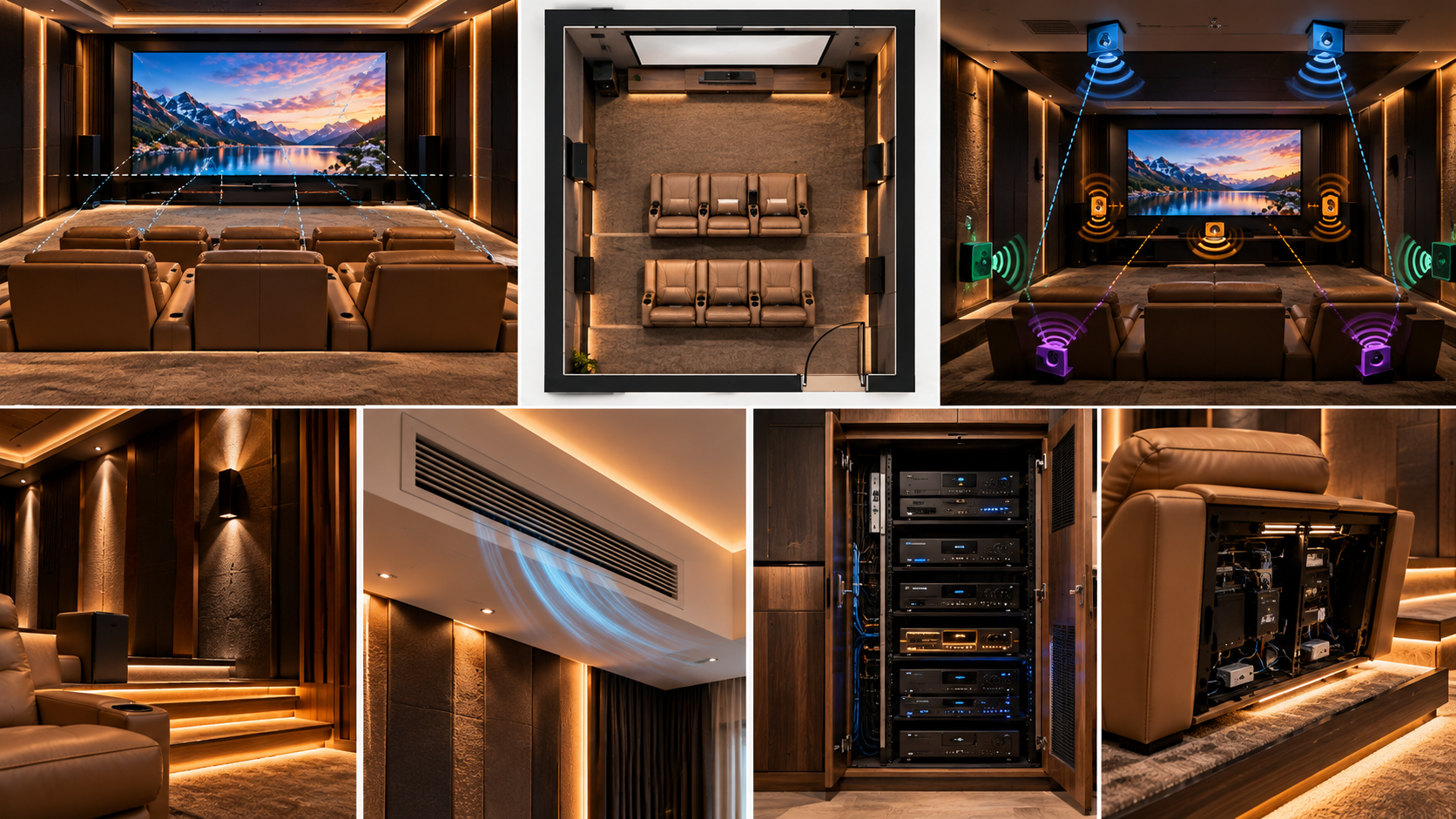
Thoughtful home theatre planning brings together comfortable seating, immersive sound, architectural lighting and accessible technology.
A memorable entertainment experience does not always require a huge room.
Approximate room sizes and suitable arrangements
10 × 12 ft : Compact TV entertainment room
12 × 15 ft : Comfortable family media lounge
15 × 20 ft : Dedicated theatre with 4–6 seats
18 × 25 ft : Larger theatre with potential for two seating rows
These are conceptual planning ranges, not mandatory dimensions. Final seating capacity depends on door swings, viewing distance, speaker layout, circulation and acoustic design.
A room that is too small for the proposed seating can become uncomfortable, even when expensive equipment is installed.
4. The Screen — Bigger Is Not Always Better
The ideal screen depends on viewing distance, room brightness and the type of entertainment.
Large television: Convenient for daily viewing, daytime sports, gaming and rooms with windows.
Projector and screen: Particularly appealing for dedicated theatres where lighting can be controlled.
Ultra-short-throw projector: Can create a large image from a unit placed near the screen wall, although it still requires careful installation and a suitable screen.
For a useful starting point, approximate screen diagonals for immersive 4K viewing are:
Viewing distance and screen sizes to consider
7 ft: 65–85 inches
9 ft: 75–100 inches
11 ft: 85–120 inches
13 ft: 100–135 inches
These are broad comfort ranges rather than strict rules. Viewing preferences vary, and projector installations need additional checks.
The centre of the screen should generally be close to seated eye level, avoiding unnecessary neck strain.
5. Seating — Where Luxury Is Truly Experienced
An impressive theatre becomes disappointing if its seats are uncomfortable.
Homeowners should evaluate seating based on actual viewing habits rather than appearance alone.
Consider generous arm support, appropriate lumbar support, comfortable legroom, breathable upholstery, easy-clean surfaces and sufficient space for reclining.
Power recliners can be delightful, but their motors, wiring and replacement parts should remain accessible.
For families with children, a comfortable sofa with movable ottomans may be more practical than individual cinema recliners.
For elderly family members, seat height and ease of standing are particularly important.
Aurevia Comfort Rule: Test the seating for at least 20 minutes before purchasing. A chair that feels luxurious for two minutes may not remain comfortable throughout a three-hour film.
6. Sound — The Invisible Architecture of Entertainment
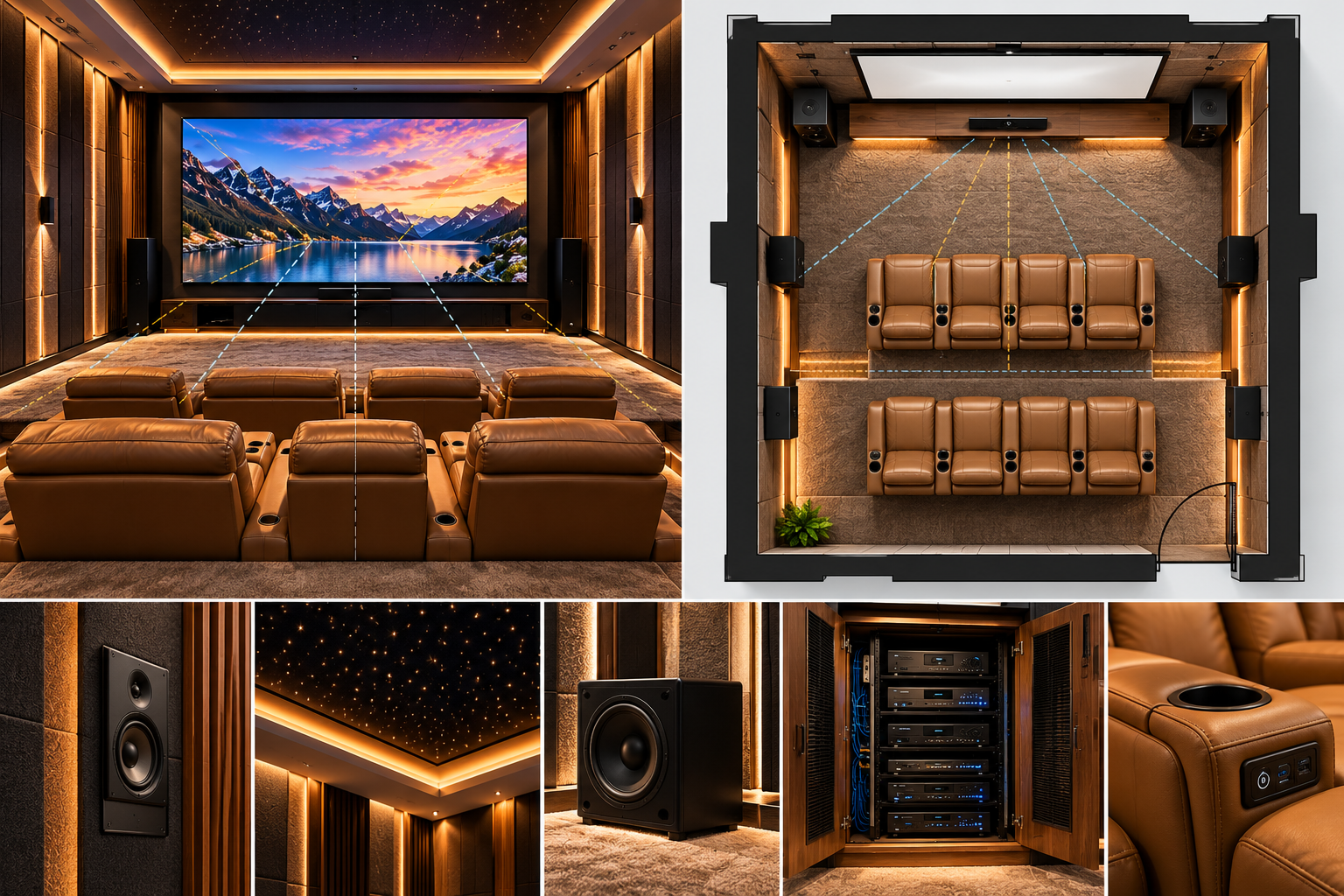
An immersive home theatre combines carefully positioned speakers, acoustic wall treatments and comfortable seating for a balanced cinematic experience.
Good sound does not simply mean loud sound.
The most enjoyable audio experience allows viewers to hear conversations clearly, appreciate music naturally and experience action scenes without discomfort.
Three common approaches are:
Soundbar system: Simple, compact and suitable for multipurpose lounges.
5.1 surround system: Five main speakers and a subwoofer, providing a more immersive experience.
Dolby Atmos-compatible system: Can introduce height effects through correctly configured speakers and compatible content.
A specialist should finalise speaker locations before electrical conduits, false ceilings and wall finishes are completed.
Acoustic treatment is equally important. Soft furnishings, rugs, curtains and properly designed acoustic panels help manage reflections and echoes.
Soundproofing is different from acoustic treatment. Preventing sound from disturbing adjoining rooms requires attention to walls, doors, ceilings and structural transmission.
7. Lighting — Creating the Cinema Atmosphere
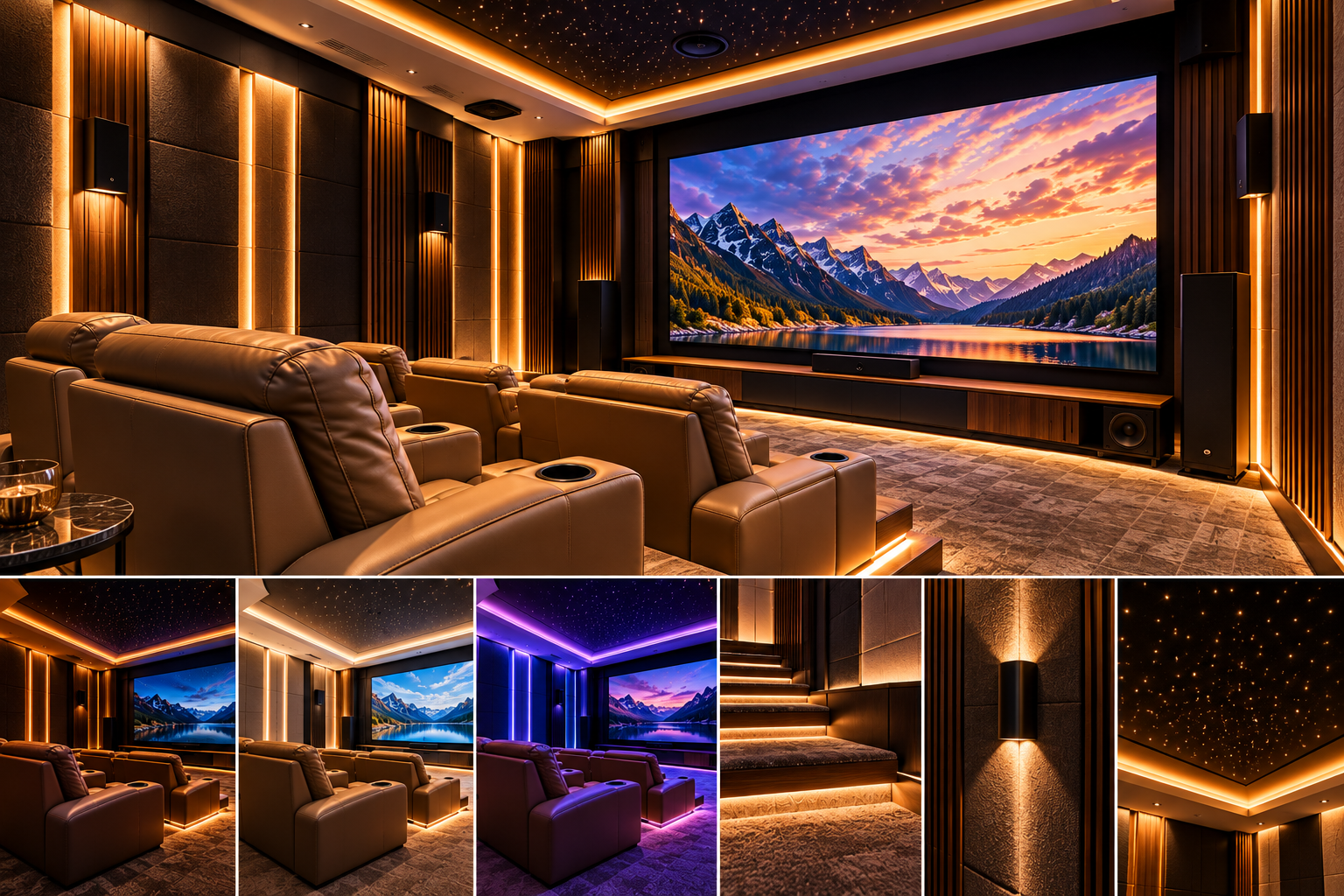
Layered lighting transforms a private home theatre through warm ambient illumination, dimmable cinema scenes, decorative wall lights and softly illuminated steps.
Lighting should support different activities without causing reflections on the screen.
A well-designed entertainment room benefits from separate lighting scenes.
Lighting scenes and suggested illumination
Movie Time: Very low ambient lighting, safe pathway illumination
Family TV: Gentle indirect background lighting
Sports Night: Comfortable moderate lighting
Music & Conversation: Warm decorative lighting
Cleaning & Maintenance: Full practical illumination
Dimmable lighting is highly desirable, but the switches and controls should remain simple enough for every family member to operate.
A physical switch should always be available, even when app-based or voice-controlled lighting is installed.
8. Cooling, Fresh Air and Thermal Comfort
In Lucknow's long, hot summers, air-conditioning is essential to entertainment-room comfort.
However, cooling alone is not enough.
A closed theatre occupied by several people can become stuffy unless fresh-air ventilation is provided.
The design should consider cooling load from occupants and electronic equipment, quiet air distribution, humidity control, filtered fresh air and condensate drainage.
Avoid directing cold air continuously towards viewers' faces or necks.
Projectors, amplifiers and gaming consoles also generate heat. Their cabinets must have adequate ventilation.
Important: A split AC generally recirculates indoor air; it should not be mistaken for a fresh-air ventilation system.
9. Wiring and Connectivity — Plan Before Construction
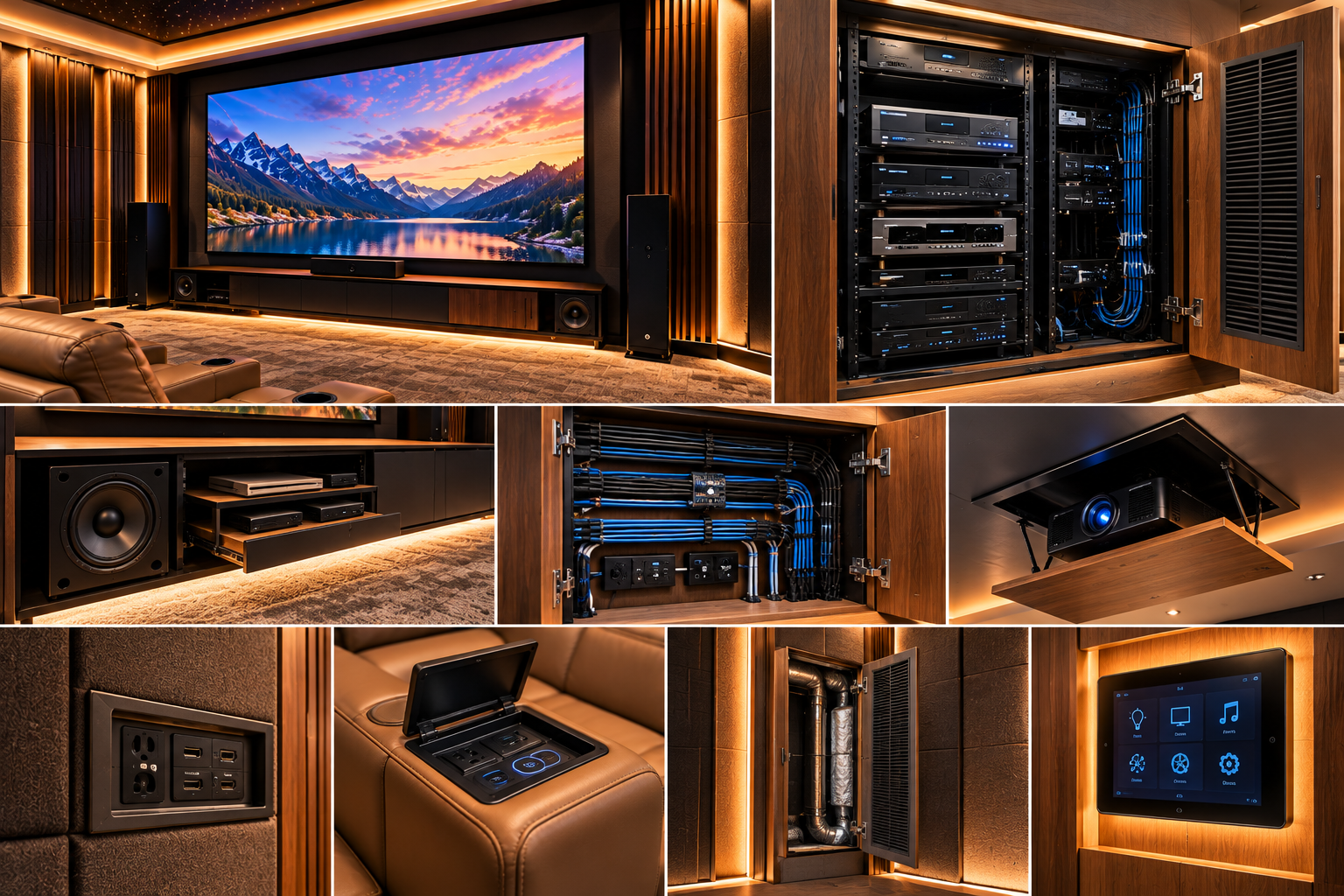
A well-planned entertainment room keeps technology discreet while providing organised wiring, ventilated equipment cabinets and convenient maintenance access.
The most common construction mistake is treating entertainment wiring as an afterthought.
During construction, provide suitable concealed pathways for power, network, audio and video connections.
Recommended provisions include:
Dedicated, appropriately protected electrical circuits where required by equipment loads.
Proper earthing, surge protection and suitable power backup.
Network cabling to the TV, projector and media equipment.
Separate or suitably designed routes for power and signal cables.
Spare conduits for future technology upgrades.
Clearly labelled cables and accessible junction points.
Ventilated equipment storage and serviceable connections.
For longer HDMI connections, compatibility and cable length should be checked carefully; optical HDMI or other professionally selected solutions may be appropriate.
Never permanently conceal an amplifier or connection point behind decorative panels without maintenance access.
10. The Entertainment Experience Beyond Movies
A modern entertainment room can serve many purposes.
A small refreshment counter, compact refrigerator or nearby pantry can improve convenience. Food preparation areas should be planned to avoid moisture, spills and heat near sensitive electronics.
A room that accommodates different generations and different activities will usually provide greater long-term satisfaction.
11. Maintenance — The Luxury of a Trouble-Free System
An entertainment system is only as enjoyable as its reliability.
The projector may require cleaning, the remote may stop responding, a streaming device may lose connectivity or an amplifier may need replacement.
These problems should be anticipated during design.
Homeowner's Maintenance Reference
Suggested frequency and practical checks
Monthly: Check remotes, batteries, connectivity and ventilation openings
Every 3–6 months: Inspect accessible cables, cabinet airflow and dust accumulation
Annually: Review electrical safety, equipment condition, firmware and cooling performance
As recommended: Professional projector, audio and AC servicing
The precise servicing schedule should follow equipment manufacturers' instructions.
A Maintenance Technician Should Be Able To:
Access the AV equipment without dismantling decorative walls, identify cables through clear labels, isolate power safely, replace a failed component and test the system without disturbing the entire room.
A concealed service cabinet, removable access panel and simple equipment diagram can save substantial time and money over the life of the villa.
This is particularly important for homeowners who want reliable comfort rather than complicated technology.
12. Safety and Future Readiness
A well-designed entertainment room should remain comfortable and functional for many years.
Consider adequate exit circulation, safe steps and low-level lighting in tiered theatres, fire-safe electrical installations, secured heavy screens and cabinets, child-friendly cable management and appropriate ventilation.
Technology will evolve. Screens, streaming devices and gaming systems may be replaced long before the room itself is renovated.
Plan the room so that the equipment can change without requiring major civil work.
13. Budgeting — Where Should You Spend More?
Instead of spending the entire budget on a spectacular screen, allocate resources across the complete experience.
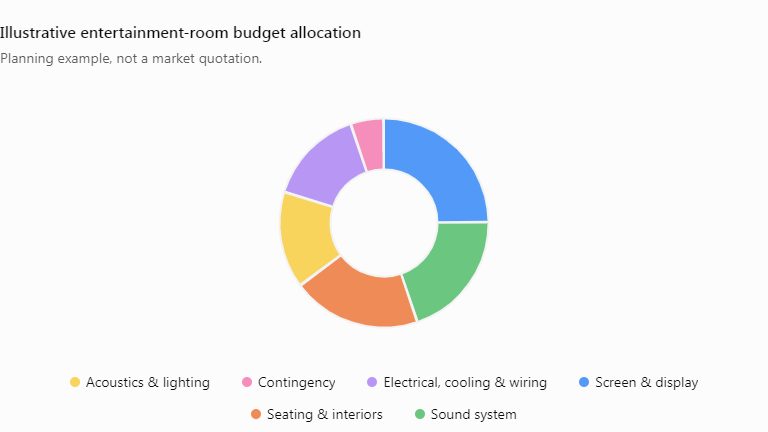
Include all six elements in your budget:
Screen and display.
Sound system.
Seating and interiors.
Acoustics and lighting.
Electrical work, cooling and wiring.
Contingency for unforeseen costs.
The allocation is illustrative. Actual requirements will vary with room size, existing construction and equipment choices.
Aurevia Principle: Invest first in the room's permanent infrastructure, acoustic comfort and reliable wiring. Electronic devices can be upgraded later.
14. Common Mistakes to Avoid
Many disappointing home theatres share similar problems: oversized screens, poor speaker placement, inadequate ventilation, excessive reverberation, uncomfortable seating and inaccessible equipment.
Another common mistake is installing complicated controls that only one person in the family understands.
The solution is not necessarily more technology. It is better planning, simpler operation and careful coordination between the architect, interior designer, electrical contractor, HVAC consultant and AV specialist.
15. The Aurevia Ready-Reference Checklist
Your entertainment-room planning checklist
Choose dedicated theatre or multipurpose lounge
Confirm room size and seating arrangement
Plan screen size and viewing distance
Finalise speaker positions and acoustic treatment
Provide dimmable lighting and physical controls
Plan quiet cooling and fresh-air ventilation
Provide power, network and spare conduits
Allow equipment ventilation and maintenance access
Confirm safe circulation and emergency access
Test all systems before final handover
Conclusion — The Best Seat Is at Home
A beautifully designed home theatre is not simply a private cinema. It is a space for shared memories.
It is where grandparents enjoy classic films, children discover new stories, friends gather for important matches and families unwind after demanding days.
The most successful entertainment spaces combine comfortable seating, excellent sound, thoughtful lighting, reliable cooling, simple controls and easy maintenance.
Because true luxury is not measured by the number of speakers or the size of a screen.
It is measured by how much you enjoy being home.
Luxury by Space — Part II
Aurevia Luxury Villas Bespoke Luxury Villas, Interiors & Turnkey Construction in Lucknow
Editorial note: Room dimensions, viewing ranges, system configurations and budget allocations are planning guidance. Final specifications should be verified against the selected equipment, site conditions, applicable safety requirements and professional design recommendations.
Illustration note: Architectural images are AI-generated design concepts, not photographs of completed Aurevia projects or construction drawings.
Continue exploring the Luxury by Space collection, discover Aurevia’s Signature Collection of villa concepts, or book a free design consultation to plan your entertainment space.