The Sacred Sanctuary - Luxury Puja Rooms & Meditation Spaces
LUXURY BY SPACE — CHAPTER 09
Where spirituality, architecture and everyday tranquillity come together.
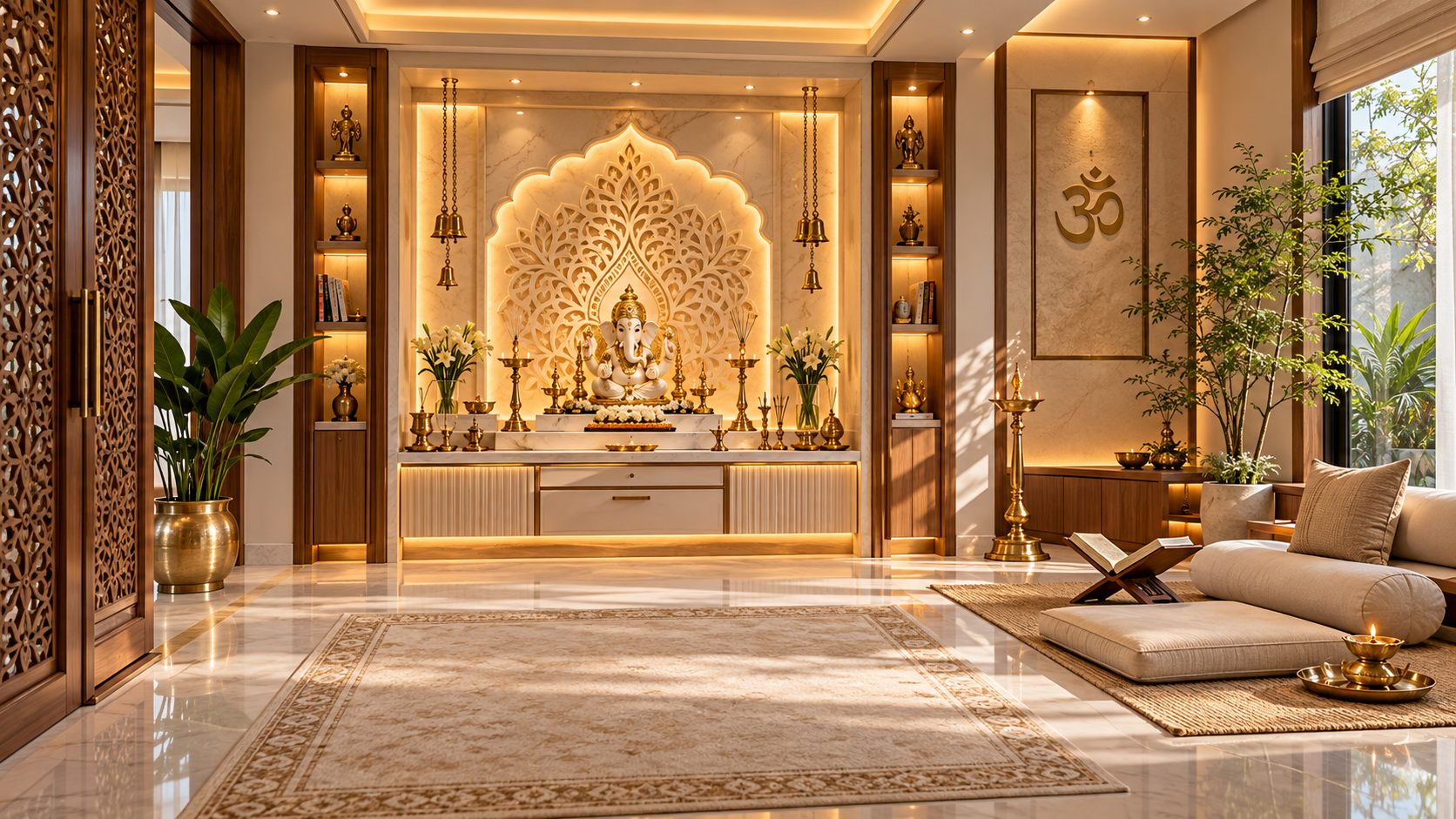
Luxury contemporary Indian villa puja room featuring a marble mandir, intricate carved backdrop, brass lamps, warm architectural lighting and a peaceful meditation area. An Aurevia Luxury Villas design concept.
A sacred space within a home is more than a place of worship. It is a setting for reflection, gratitude, contemplation and inner peace. Whether it takes the form of a traditional puja room, a contemporary mandir alcove or a minimalist meditation sanctuary, its success depends on how thoughtfully it supports the family's spiritual practices.
In a luxury villa, a sacred space deserves careful architectural planning rather than being treated as an afterthought. Its proportions, natural light, ventilation, acoustics, material finishes, storage and relationship with surrounding rooms all contribute to its atmosphere.
For homeowners in Lucknow, the design challenge is particularly interesting. Traditional Indian spiritual practices coexist with modern architecture, compact urban plots, multigenerational households and increasingly sophisticated interior design expectations.
The finest sacred spaces respect these traditions without compromising safety, practicality or architectural elegance.
1. Begin with the family's spiritual practices
Before choosing a marble mandir or decorative backdrop, understand how the space will be used.
Some families perform a brief morning prayer, while others conduct elaborate daily rituals, seasonal festivals, bhajans or gatherings involving several family members. Some prefer seated meditation, while others need sufficient room for standing prayers, floor seating or traditional ceremonies.
Aurevia recommends beginning with five planning questions: Who will use the room? How many people gather simultaneously? What rituals involve lamps, incense or water? What storage is required? And should the room also accommodate meditation?
A sacred room designed around actual routines will remain more meaningful than one designed solely for photographs.
2. Choose the right sacred-space configuration
The integrated mandir alcove
A practical option for compact villas, using a recessed wall niche or dedicated cabinet near a quiet family area.
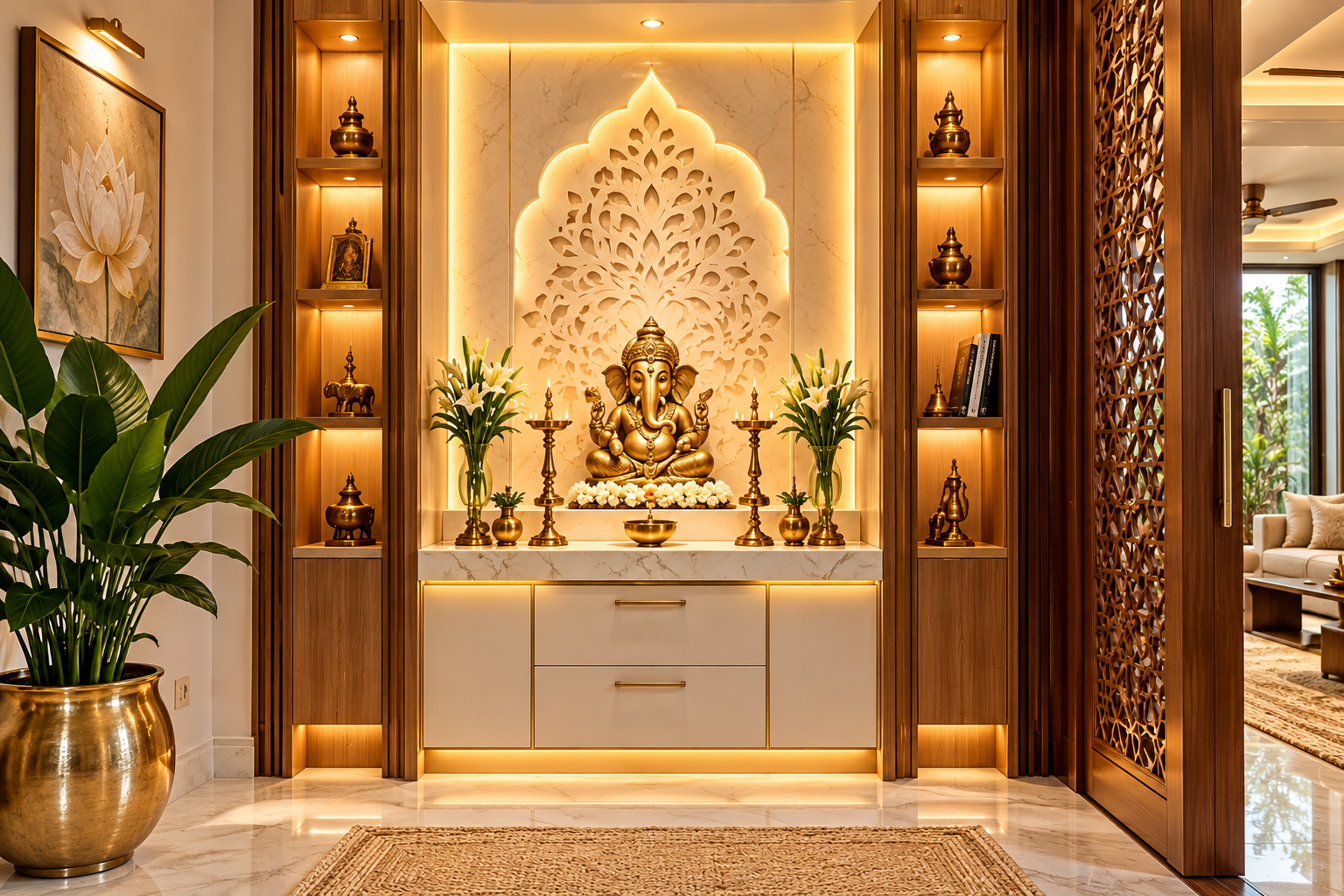
Integrated marble mandir alcove with warm wood cabinetry and a carved backdrop. AI-generated conceptual design illustration.
The dedicated puja room
Offers privacy, organised ritual storage and space for family worship. Suitable when the villa's floor plan permits.
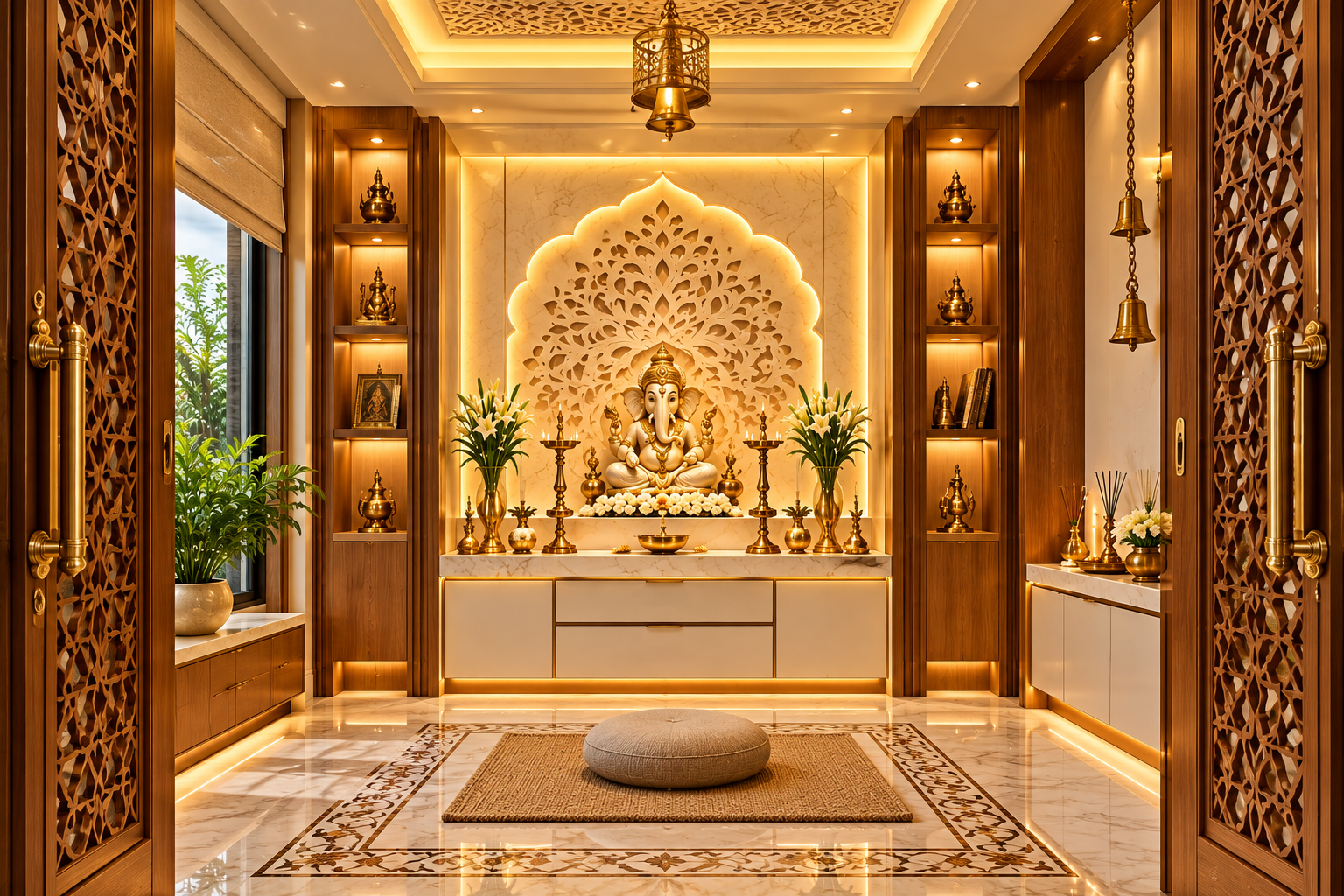
Dedicated puja room with carved doors, an ivory marble mandir and layered warm lighting. AI-generated conceptual design illustration.
The meditation sanctuary
A quiet, uncluttered space emphasising acoustic comfort, natural materials and gentle lighting.
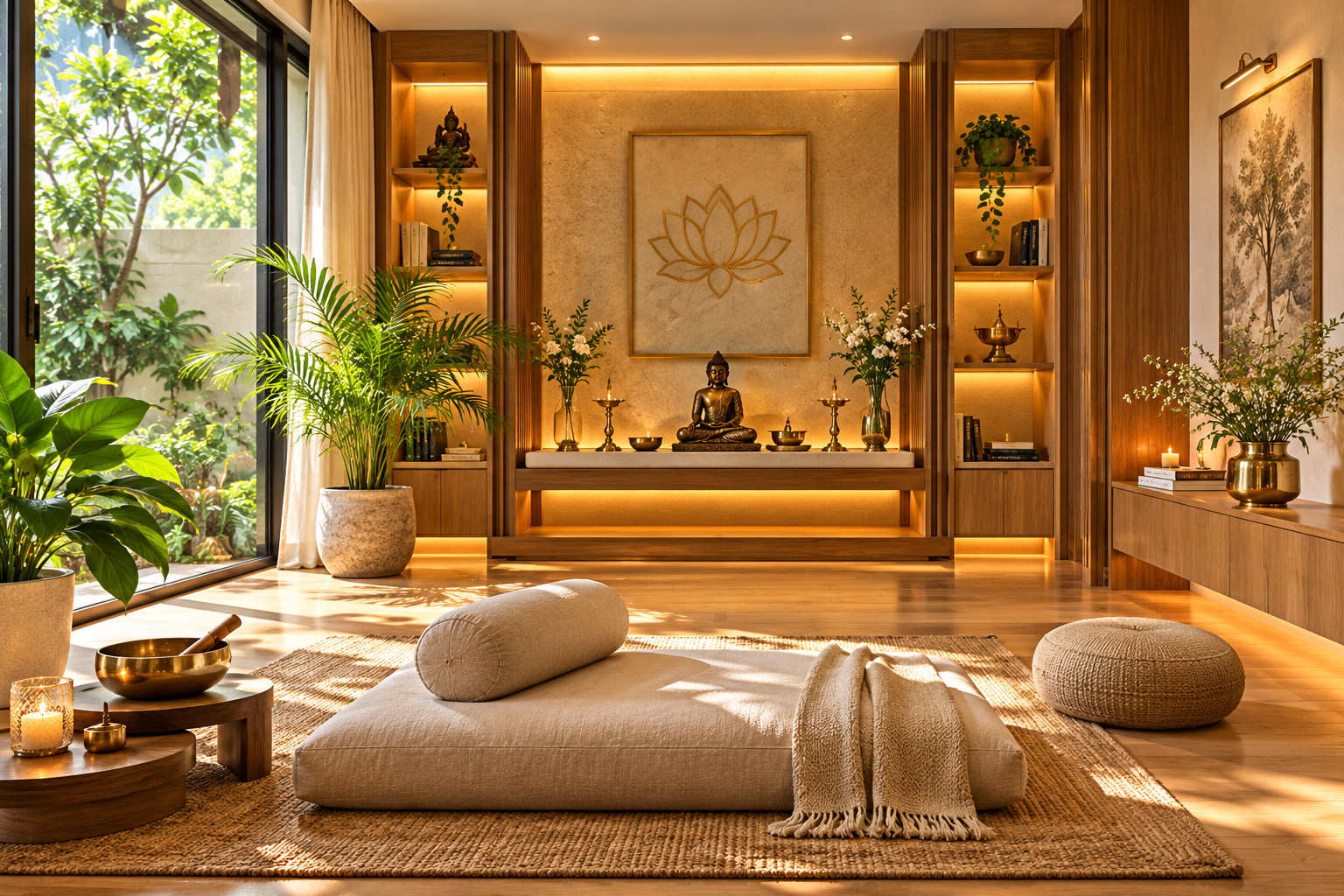
A serene meditation sanctuary combining natural wood, warm architectural lighting, soft furnishings and greenery. Designed to encourage mindfulness, reflection and everyday tranquillity.
The combined spiritual retreat
A carefully zoned room accommodates traditional worship and contemplative practices without crowding either activity.
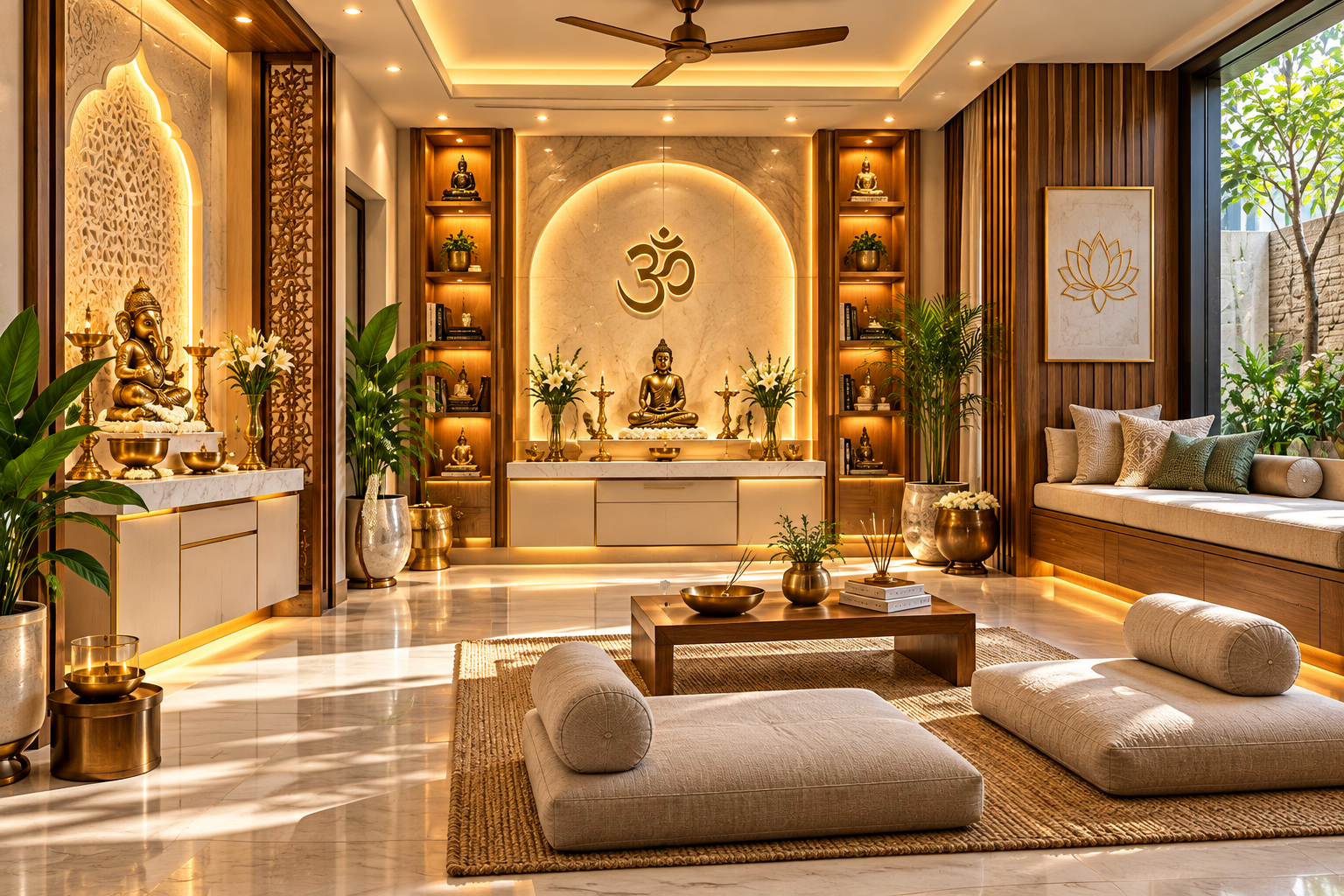
A beautifully integrated spiritual retreat combining traditional Indian worship with contemporary meditation. Featuring elegant marble altars, natural wood finishes, warm architectural lighting, comfortable seating and garden views, this multifunctional sanctuary creates a peaceful environment for prayer, reflection and relaxation. Aurevia Luxury Villas, Lucknow — Conceptual Design Illustration.
Aurevia Design Insight: Even a modest sacred space can feel luxurious when proportions, lighting and materials are resolved with care. A larger room is not automatically a better room.
3. Vastu: respecting tradition through thoughtful planning
For families who follow Vastu Shastra, the northeast portion of a home is traditionally considered favourable for a puja room. East and north are also commonly considered in various practices.
However, interpretations differ among traditions, and Vastu guidance should be treated as a cultural and spiritual design preference rather than a scientifically established performance requirement.
The architect should first understand the family's specific beliefs and consult its chosen religious adviser where necessary.
Practical considerations must remain equally important: structural feasibility, natural light, safe electrical arrangements, ventilation, privacy and accessibility.
In compact Lucknow row houses, a well-designed alternative location may be preferable to forcing a sacred room into an unsuitable corner.
4. Dimensions and spatial planning
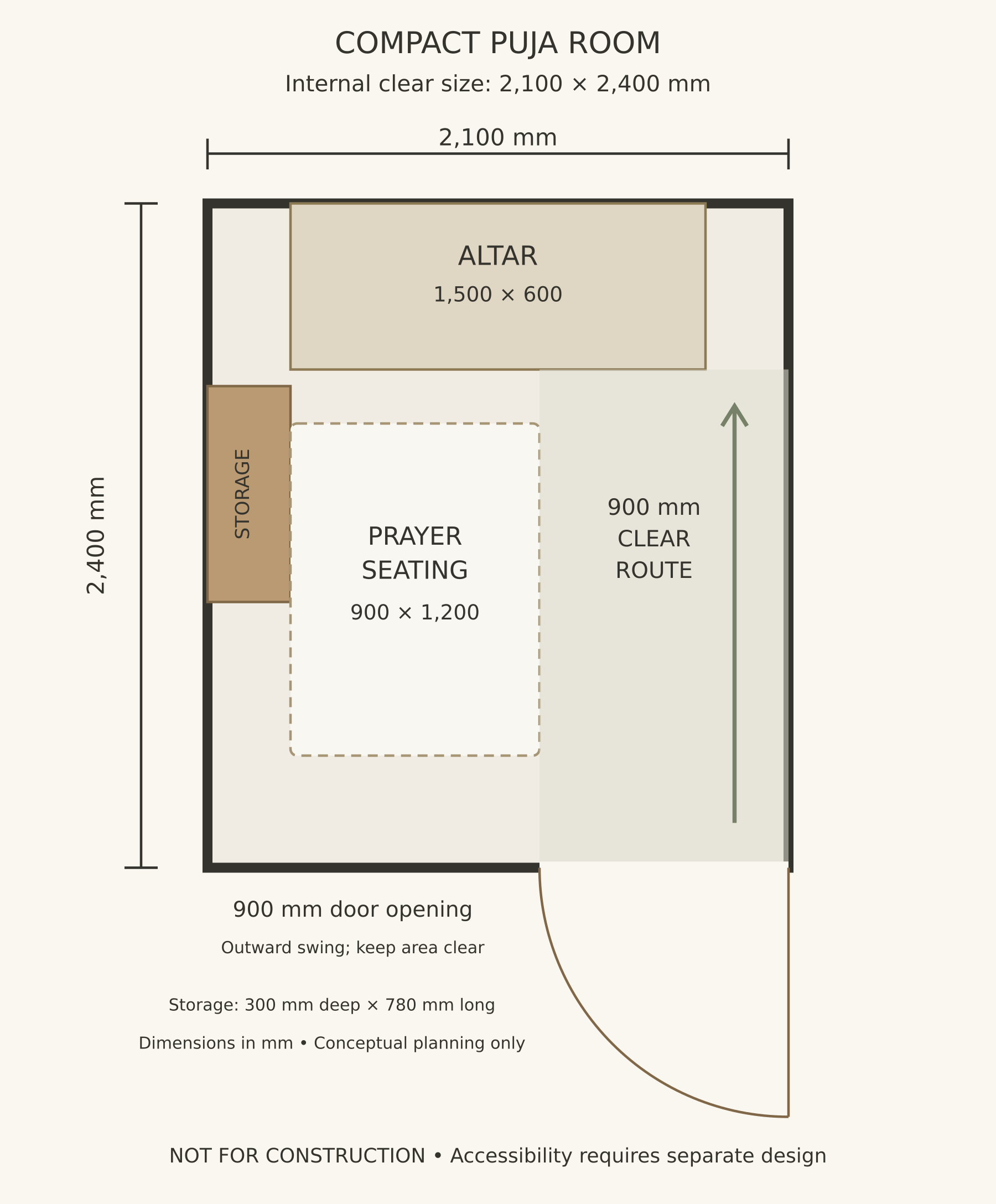
Compact puja-room concept: 2.1 × 2.4 m internal clear size, with altar, prayer seating, shallow storage and a 900 mm circulation route. Outward-opening door requires clear adjoining space. Not for construction; accessibility requires separate design.
A successful puja room requires enough space for worship, movement and maintenance.
Compact mandir niche: Approximately 900–1,200 mm wide
Small dedicated puja room: Around 1.8 × 2.1 m as an initial planning reference
Comfortable single-person floor seating: Approximately 900 × 1,200 mm clear zone
Seated meditation area: Approximately 1.2 × 1.2 m per person, adjusted for posture
Main clear circulation: Preferably 900 mm or more
Storage counter: Approximately 750–900 mm high where required
These are conceptual guidelines, not statutory standards. Actual dimensions must respond to users, ritual practices, accessibility and the selected mandir.
Illustrative small puja room layout
Conceptual layout of a compact dedicated puja room. Door swing, furniture dimensions and circulation require detailed site-specific planning.
5. Materials that express quiet luxury
Natural marble
Creates a timeless, luminous setting, provided staining, weight and maintenance are considered.
Natural wood
Teak, engineered wood and quality veneers bring warmth and craftsmanship.
Decorative jali panels
Add depth, privacy and patterned light without excessive ornamentation.
Textured stone and plaster
Provide a restrained architectural backdrop for meditation-focused spaces.
The choice of materials should consider heat exposure, incense residue, cleaning methods and the weight of idols or decorative elements. Combustible finishes should be kept away from open flames.
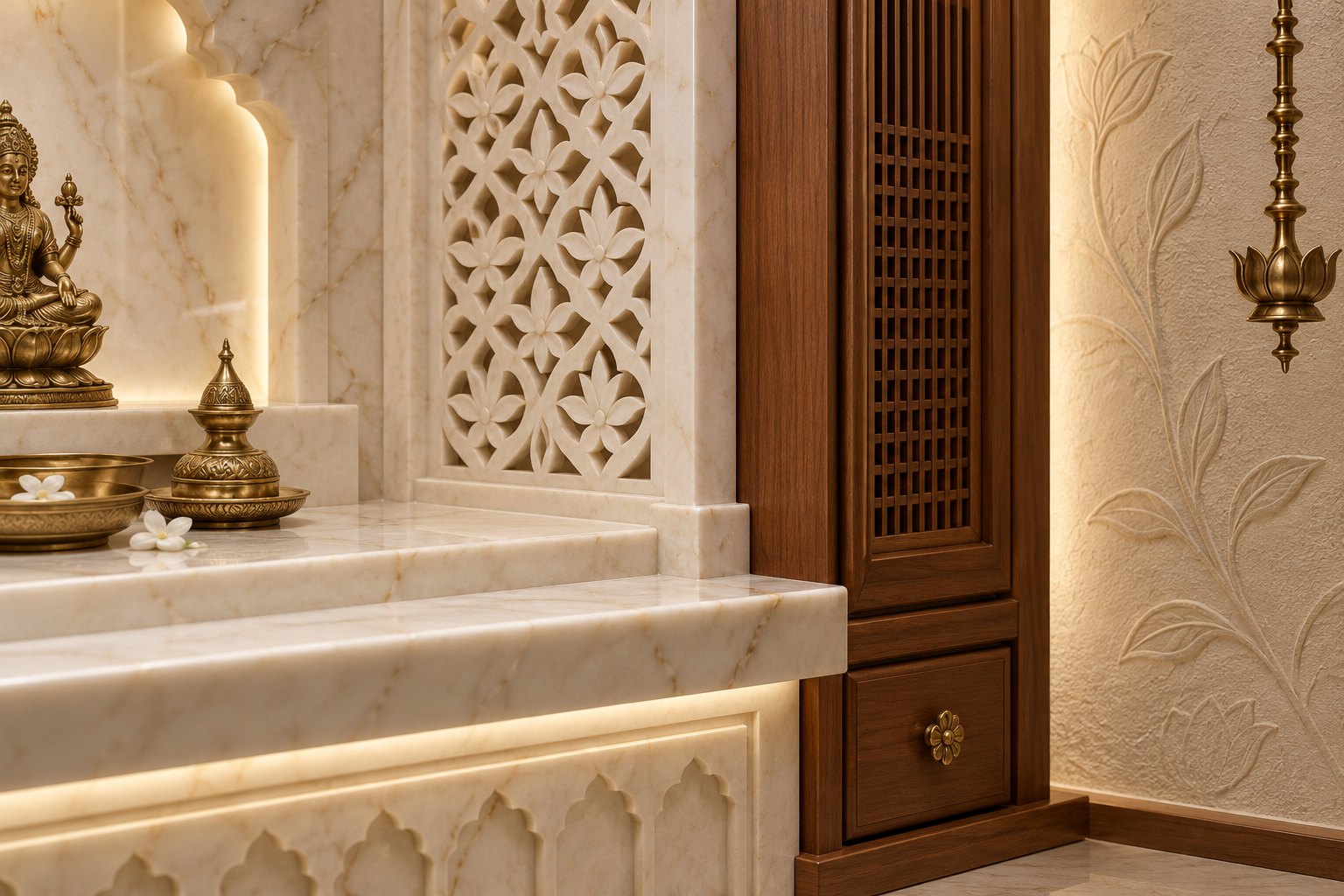
Marble, warm wood, jali and textured finishes — AI-generated conceptual design illustration.
6. Lighting: creating a peaceful atmosphere
Lighting should reveal sacred objects gently without creating glare.
A thoughtful lighting design can include diffused ambient lighting, concealed LED illumination behind a stone or jali panel, discreet accent lighting and adjustable scenes for daily worship or meditation.
Warm light around 2700–3000 K can create an inviting atmosphere. Avoid excessive brightness, exposed LED strips and rapidly changing decorative colours.
Electrical lighting should not be confused with ritual flame. If oil lamps or candles are used, provide a stable, non-combustible surface with adequate separation from curtains, timber, decorations and electrical fittings. Never leave flames unattended. Use flameless alternatives where practical. Have wiring, circuit protection, earthing and concealed LED drivers coordinated by a qualified electrical professional, with maintenance access and separation from ritual water and heat.
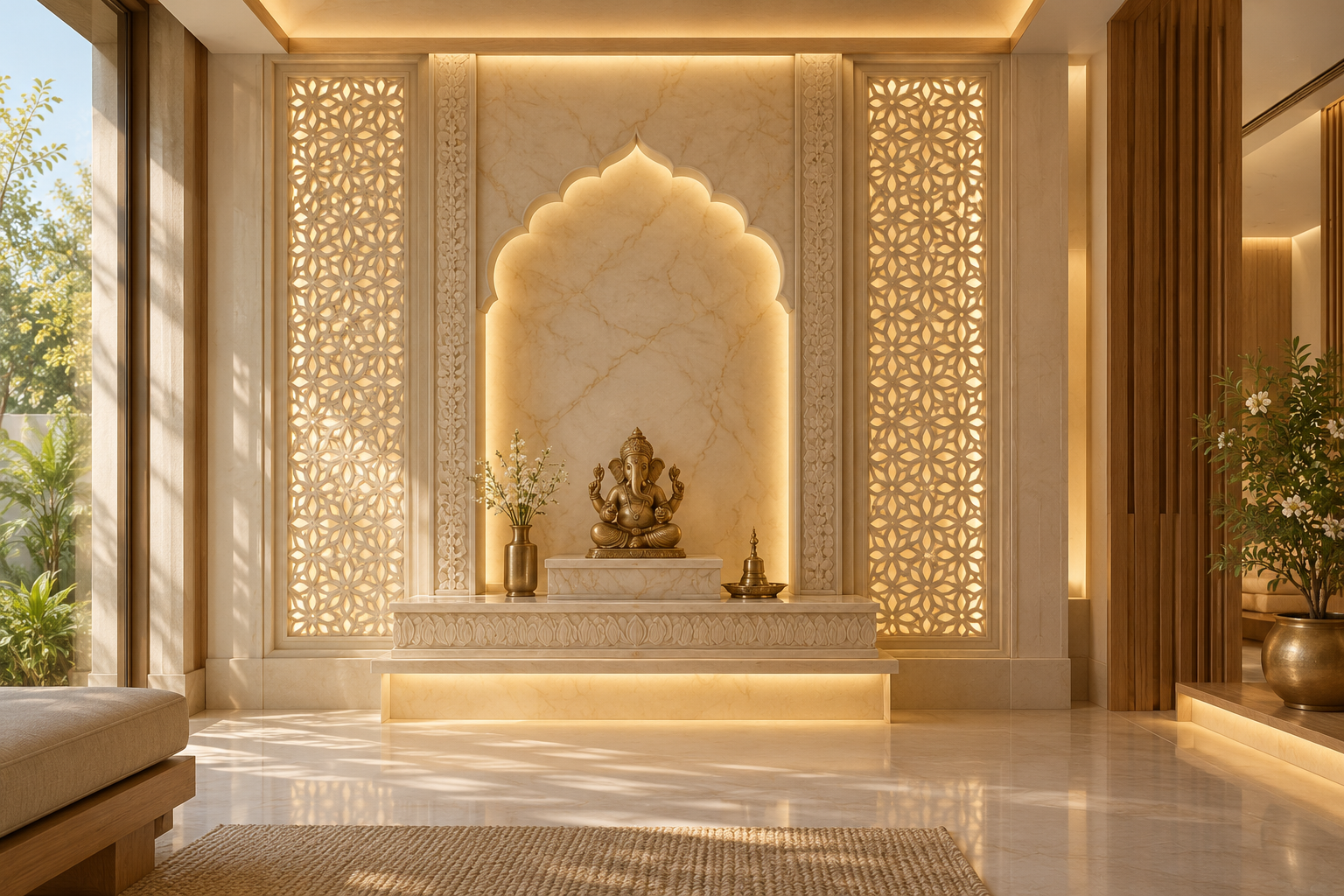
Concealed warm lighting reveals marble and jali details — AI-generated conceptual design illustration.
7. Ventilation, incense and indoor air quality
A sacred space should feel fresh, not smoky.
Incense, camphor and oil lamps can release particles and other pollutants. Even natural products can affect indoor air quality.
For regular use, provide appropriate ventilation and consider limiting smoke-generating rituals, especially in enclosed rooms. Where an exhaust system is provided, it should discharge outdoors and avoid disturbing the ritual flame.
A meditation room may benefit from quiet mechanical ventilation or conditioned air, particularly during Lucknow's hot summers and humid monsoon season. Recirculating air-conditioning does not replace outdoor-air ventilation; coordinate fresh-air supply and exhaust with the services designer.
8. Storage: keeping rituals organised
Thoughtful storage keeps the altar uncluttered and makes daily worship easier.
Plan dedicated compartments for prayer books, incense, cotton wicks, brass utensils, flowers, ceremonial textiles and festival decorations.
Keep flammable supplies and oils away from lamps and heat sources. Consider removable trays and wipe-clean surfaces for items that may spill.
For households with children, provide secure storage for matches, lighters, camphor and other potentially hazardous materials.
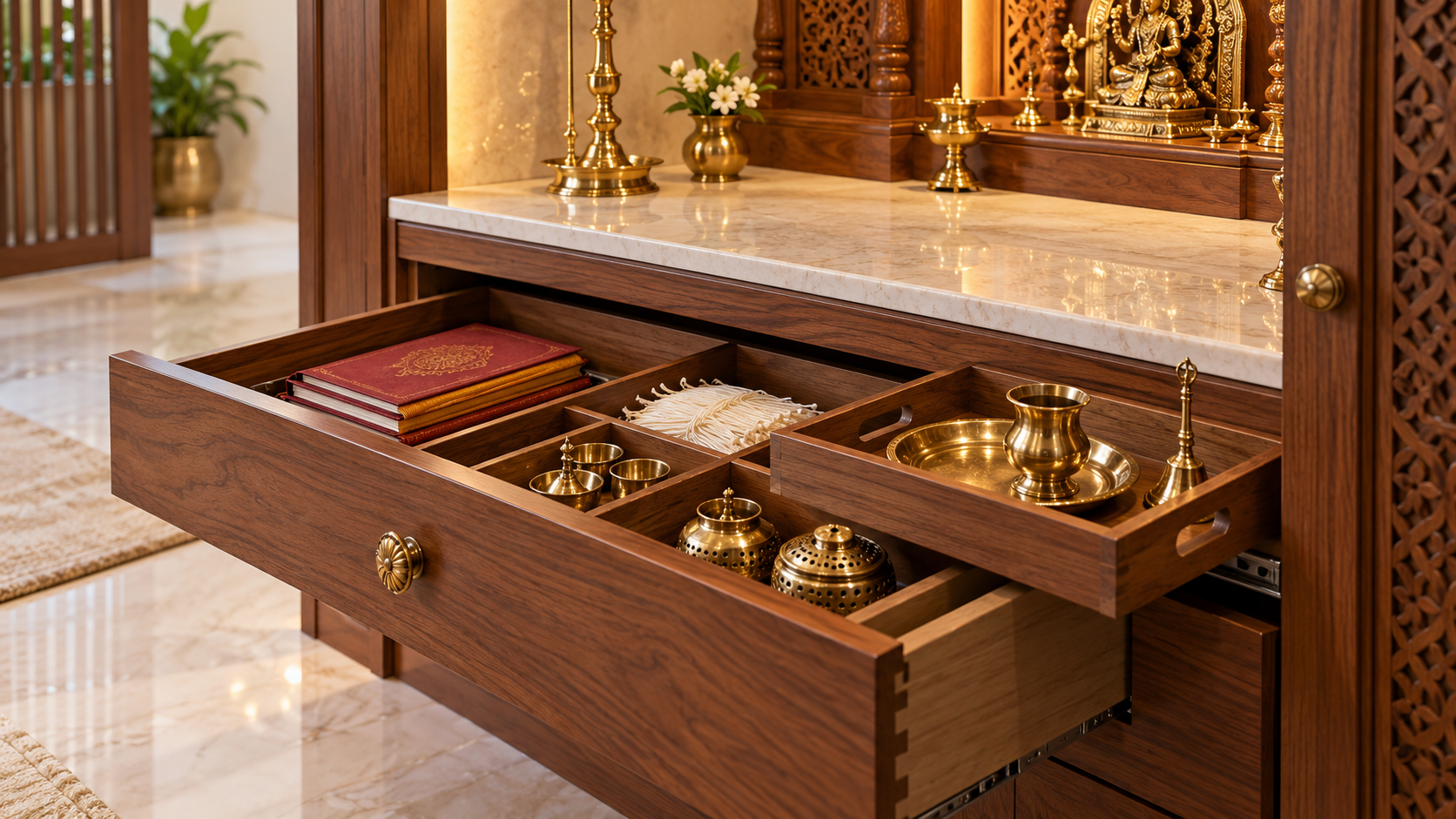
Bespoke cabinetry keeps ritual supplies organised — AI-generated conceptual design illustration.
9. Designing a dedicated meditation corner
A meditation space need not resemble a traditional temple.
The strongest meditation interiors often have very few elements: comfortable seating, soft natural light, a calm colour palette, controlled noise and sufficient ventilation.
A small shelf for books or meaningful objects may be useful. An adjustable reading light and supportive seating can make the space accessible to older family members.
Avoid treating floor seating as mandatory. Chairs, benches and back-supported meditation seats may be more comfortable for many users.
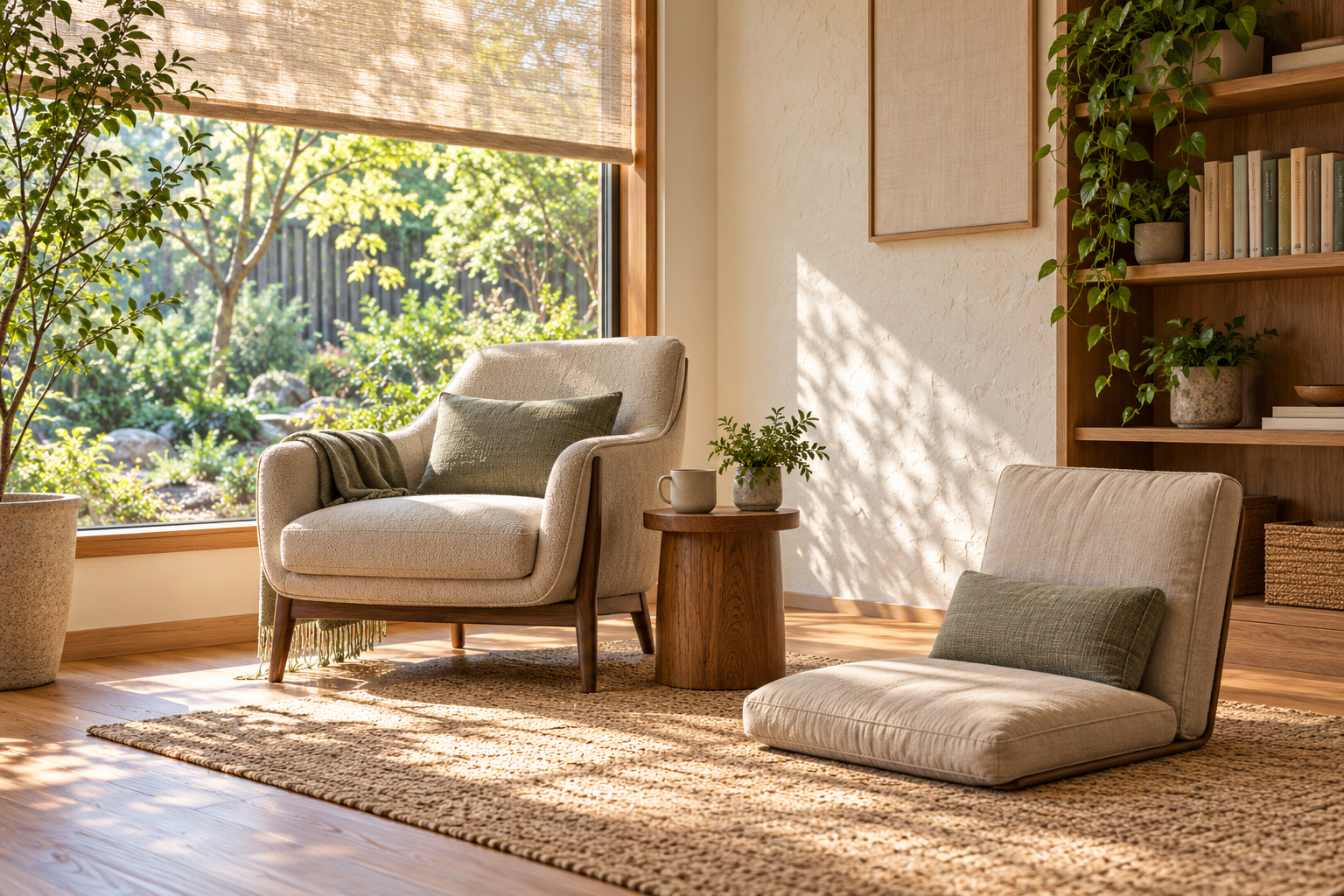
Supportive seating and filtered daylight create a comfortable meditation corner — AI-generated conceptual design illustration.
10. Acoustic comfort and privacy
Peaceful interiors depend as much on sound control as visual design.
Position the sanctuary away from television lounges, machinery rooms, heavy traffic areas and noisy circulation routes where possible.
Solid doors, well-sealed frames, upholstered furnishings and acoustic wall or ceiling treatments can reduce distracting sound.
For rooms intended for bhajans or chanting, balance sound absorption with sufficient natural reverberation to preserve warmth and musical character.
11. Accessibility for multigenerational families
Sacred spaces should remain comfortable throughout changing life stages.
Provide slip-resistant flooring, sufficient clear movement space, good lighting and convenient seating for elderly family members.
Avoid unnecessary level changes, difficult-to-reach storage and heavy doors.
Where wheelchair access is required, dimensions, turning space, door clearance and altar height should be designed for the specific user rather than relying on generic minimums.
12. Technology that remains discreet
Modern features can support spiritual routines without dominating the space.
Useful additions include dimmable lighting, programmable scenes, concealed speakers for devotional music, occupancy-controlled general lighting and carefully positioned charging points.
Where automation is installed, essential lighting should remain operable through straightforward manual controls.
The best technology is nearly invisible.
13. What does a luxury puja room cost in Lucknow?
The following are preliminary 2026 budgeting allowances, not verified contractor quotations. Final prices depend on size, stone quality, craftsmanship, hardware, site conditions and installation scope.
Compact custom mandir alcove: ₹40,000–₹1,20,000
Premium modular puja unit: ₹80,000–₹2,00,000
Dedicated luxury puja room interior: ₹2,00,000–₹6,00,000
Elaborate carved stone or bespoke mandir: ₹5,00,000–₹12,00,000+
These ranges may exclude civil construction, major electrical modifications, air-conditioning, specialist carvings, idols, taxes and other project-specific work.
Aurevia recommends comparing itemised BOQs rather than headline prices alone.
14. Common mistakes to avoid
Selecting a decorative mandir before understanding ritual requirements.
Forcing Vastu preferences into an impractical or unsafe layout.
Providing insufficient space for family worship and movement.
Installing combustible decorative materials too close to open flames.
Ignoring incense smoke, ventilation and indoor air quality.
Using harsh lighting or excessive ornamentation.
Omitting storage and accessible seating.
Overlooking maintenance requirements for marble, brass and intricate carvings.
15. The Aurevia sacred-space checklist
Document family rituals and spiritual preferences
Select a suitable room or alcove location
Confirm seating and circulation requirements
Review Vastu preferences where applicable
Finalise mandir dimensions and structural support
Select durable, easy-to-maintain finishes
Design lighting and safe flame placement
Provide ventilation and indoor air quality measures
Plan ritual storage and accessibility
Prepare drawings, specifications and itemised BOQ
16. Aurevia's design philosophy
A sacred room should not feel like an exhibition of expensive materials. Its purpose is to offer a setting in which daily rituals become effortless and quiet moments feel natural.
A carefully proportioned mandir, a softly illuminated stone wall, a comfortable meditation seat and the absence of visual clutter can create an atmosphere more meaningful than elaborate decoration alone.
At Aurevia Luxury Villas, we believe the most enduring luxury comes from spaces that respect how people actually live, including their beliefs, traditions and moments of stillness.
A sacred sanctuary should bring peace into the architecture of everyday life.
Planning note and references
All room dimensions and layouts are conceptual planning references, not approved construction drawings. Verify site measurements, accessibility, structure, materials, ventilation and electrical requirements before execution. Vastu guidance describes traditional preferences; cost allowances are preliminary budgets.
AI-generated conceptual design illustrations show design intent and do not represent completed Aurevia projects.
US EPA — Sources of Indoor Particulate Matter; US Fire Administration — Candle Fire Safety; US Department of Energy — LED Colour-Tunable Products.
Explore Luxury by Space
Chapter 08 — The Art of Dressing · The Bedroom · Book a Free Design Consultation