Luxury Villa Construction Trends 2026: What’s Shaping High-End Homes in Lucknow?
Luxury villa construction is undergoing a significant transformation. A luxurious home is no longer defined merely by its size, expensive finishes or elaborate decoration. Today’s homeowners are looking for residences that provide comfort, privacy, wellness, energy efficiency and effortless technology—while remaining beautiful for decades.
This change is particularly relevant for Lucknow. The city’s hot summers, humid monsoon season, winter temperature variations and growing demand for premium independent homes require architecture that is visually impressive yet locally practical.
Here are the leading luxury villa construction trends shaping high-end homes in 2026—and how they can be applied intelligently in Lucknow.
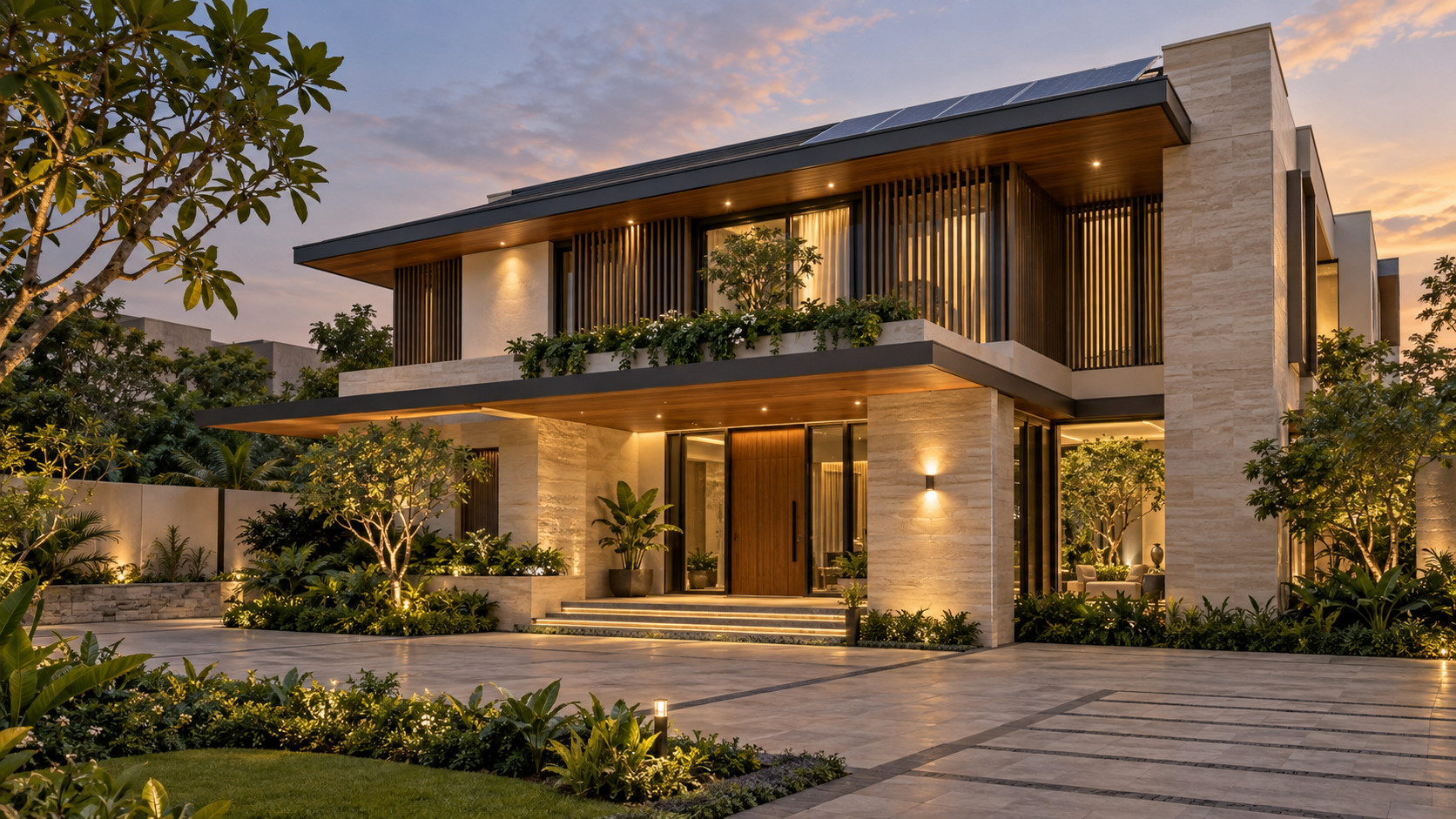
Quiet Luxury and Warm Minimalism
One of the most visible trends is the movement away from excessively ornate interiors and heavily decorated façades.
Quiet luxury uses balanced proportions, clean architectural lines, natural textures and carefully selected premium materials. Instead of displaying luxury through abundance, it creates refinement through restraint.
Warm stone, wood-finish surfaces, textured plaster, muted colours and soft architectural lighting can make a villa feel sophisticated without becoming cold or impersonal.
For Lucknow villas, this approach also offers a practical advantage: simpler façades generally collect less dust and are easier to maintain than elevations filled with complicated projections and decorative elements.
2. Climate-Responsive Villa Architecture
Perhaps the most valuable trend is the return to climate-conscious planning.
Large glass façades may look attractive in photographs, but uncontrolled west- and south-facing glazing can significantly increase heat gain in Lucknow. Contemporary luxury architecture therefore combines glazing with intelligent orientation, deep overhangs, recessed windows, vertical fins, pergolas and external shading screens.
Other useful strategies include:
• Insulated roofs and cavity walls
• Cross-ventilation through correctly positioned openings
• Courtyards and shaded transitional spaces
• High-performance glass where genuinely required
• Light-coloured or heat-reflective roof finishes
• Landscape buffers along heat-exposed sides
A successful luxury villa should respond to its climate before depending upon air conditioning to correct an unsuitable design.
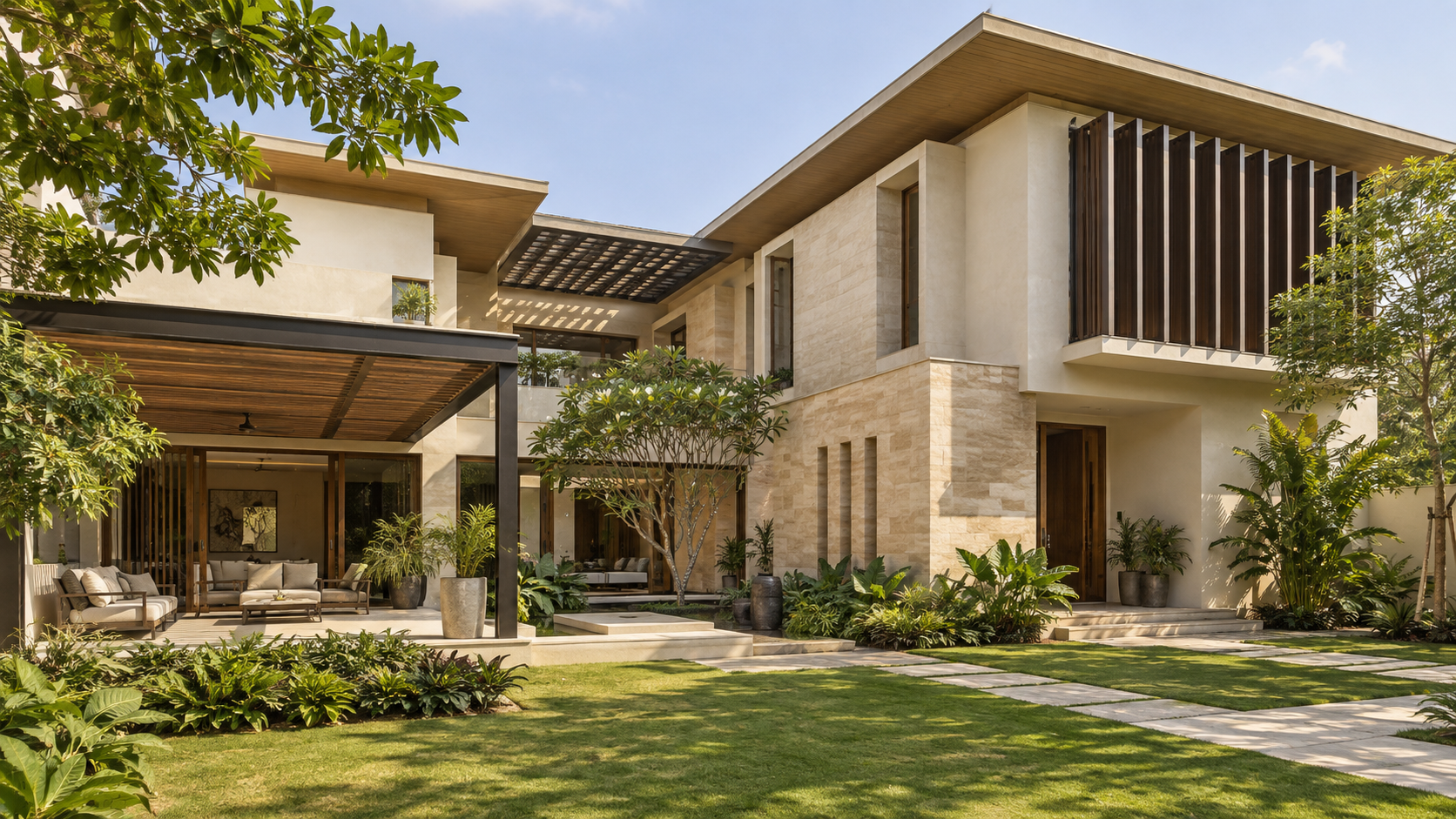
Climate-responsive luxury villa in Lucknow with deep roof overhangs, vertical sun-shading fins and a landscaped courtyard.
3. Biophilic and Indoor–Outdoor Living
Biophilic design creates a meaningful relationship between architecture and nature. It is much more than placing a few indoor plants around the house.
Courtyards, landscaped terraces, internal gardens, skylights, framed views, natural materials and shaded outdoor seating areas are increasingly being integrated into villa planning from the beginning.
A carefully designed courtyard can bring daylight and ventilation into the centre of a deep plot. A covered deck connected to the living and dining area can extend family activities outdoors during pleasant weather.
In Lucknow, these spaces require adequate shading, drainage, waterproofing, mosquito control and suitable local plants. When these practical details are resolved, indoor–outdoor living can become one of the villa’s most enjoyable features.
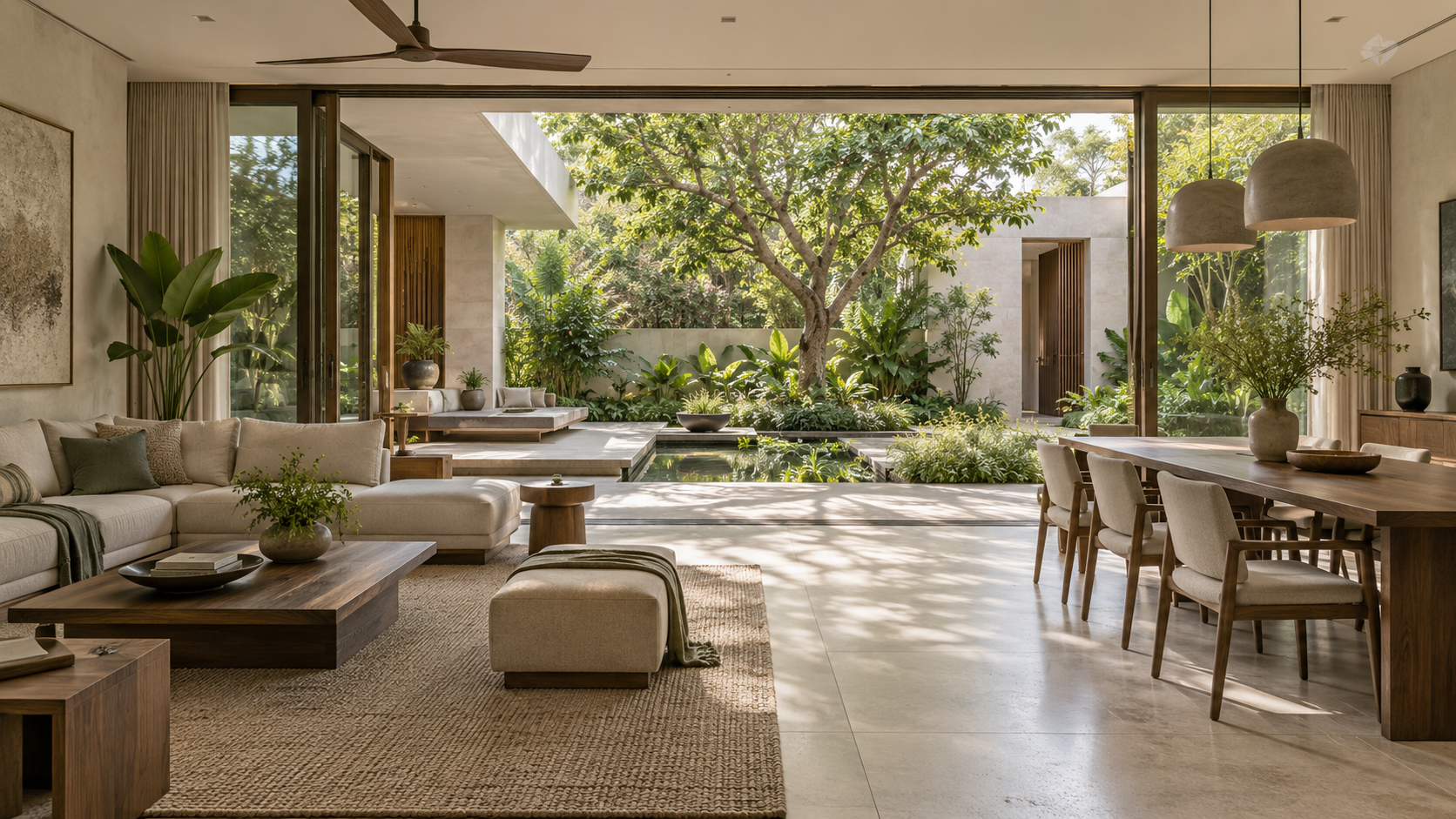
Biophilic luxury villa interior with an open living and dining area connected to a landscaped courtyard.
4. Invisible Smart-Home Technology
Smart technology is becoming more powerful but less visually intrusive.
The trend is moving away from a collection of unrelated gadgets towards a properly integrated system controlling lighting, air conditioning, curtains, security, entertainment and selected appliances.
Popular provisions include:
• App-based lighting and climate control
• Video door communication and intelligent access control
• Motion and occupancy sensors
• Automated curtains and external blinds
• Gas-leak, smoke and water-leak detection
• Energy and water-consumption monitoring
• Remote security and maintenance alerts
The essential requirement is advance planning. Electrical conduits, data cabling, control panels, Wi-Fi access points and backup arrangements should be coordinated before plastering and finishing work begins.
A genuinely smart villa should remain easy to operate manually if the internet or automation controller stops working.
5. Wellness-Centred Homes
Wellness is becoming an integral part of luxury residential design.
Instead of treating health-related facilities as additions, architects are designing homes that naturally support rest, movement and emotional wellbeing.
This may include a private gym, yoga or meditation room, spa-inspired bathroom, reading corner, landscaped courtyard or quiet terrace garden. Better daylight, acoustic privacy, clean indoor air and low-toxicity materials are equally important.
In Lucknow, indoor air quality deserves special attention because homes may remain closed for long periods during extremely hot, humid or polluted conditions. Filtered fresh-air ventilation and properly designed exhaust systems can improve comfort beyond what ordinary split air conditioners provide.
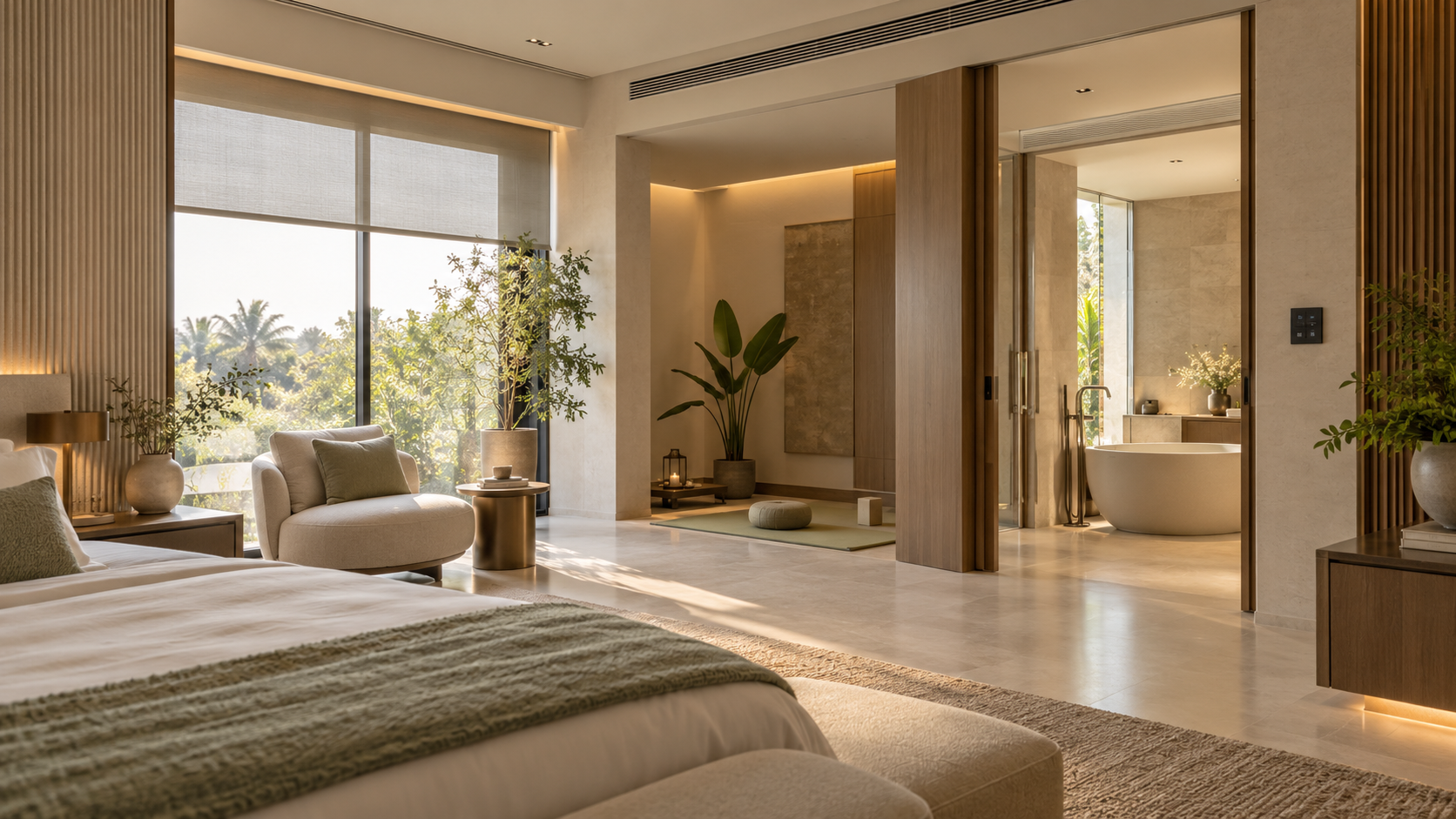
Smart wellness-centred luxury bedroom with automated blinds, integrated air conditioning, meditation space and spa bathroom.
6. Energy-Efficient and Better-Coordinated MEP Services
Mechanical, electrical and plumbing systems are no longer hidden secondary considerations. They are becoming central to luxury-home performance.
An efficient villa may incorporate:
• High-efficiency inverter or VRF air conditioning
• Zoned cooling based on actual occupancy
• Solar photovoltaic power
• Solar or heat-pump water heating
• LED lighting with intelligent controls
• Rainwater harvesting
• Treated-water reuse for landscaping
• Pressure-controlled plumbing
• EV-charging provision
• Power backup for essential circuits
The emerging trend is not to install every available technology. It is to select compatible systems, calculate their capacity correctly and coordinate them before construction.
Poorly planned services can damage ceilings, reduce usable space and create recurring maintenance problems—even when expensive equipment has been installed.
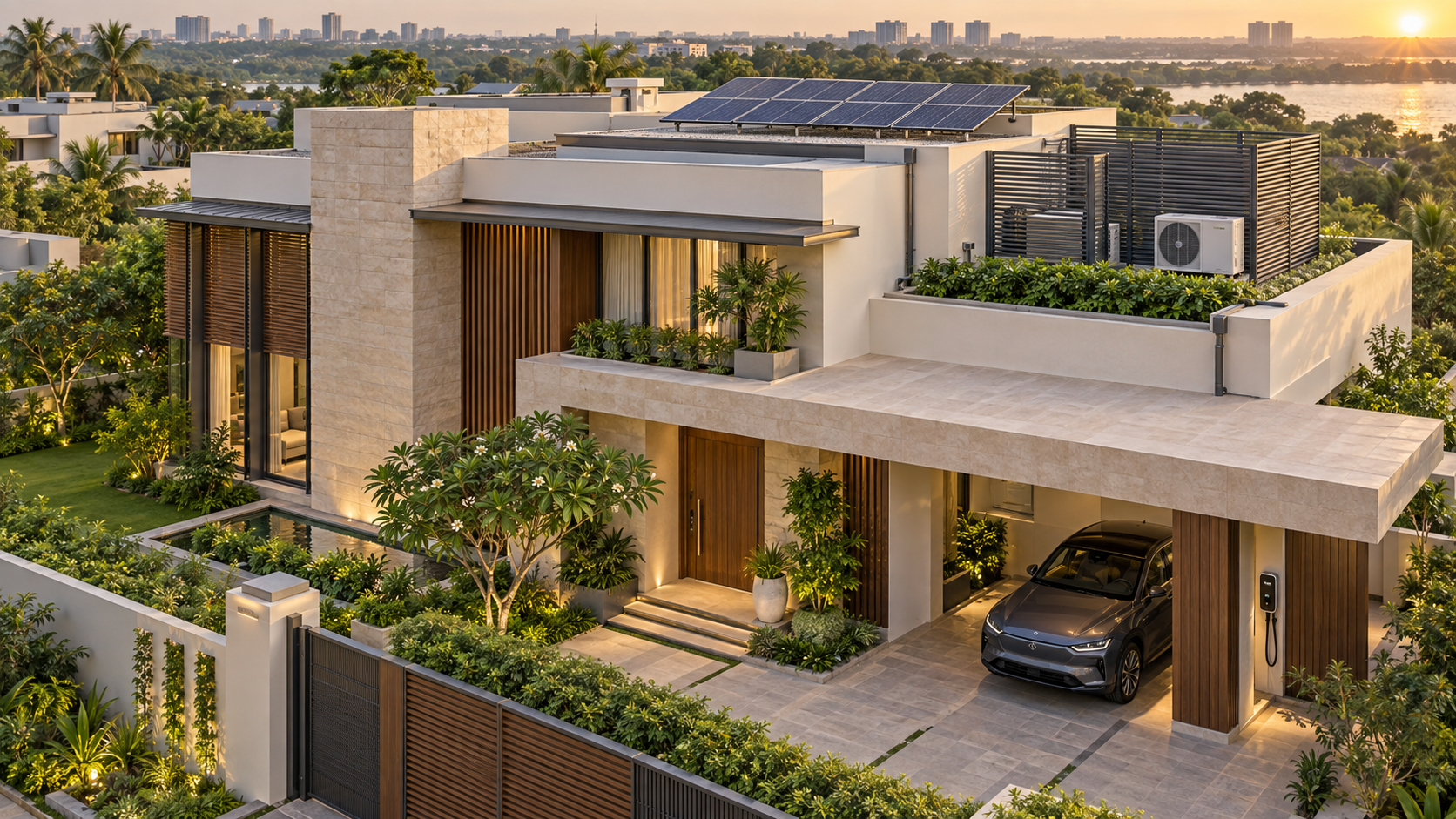
Energy-efficient luxury villa with rooftop solar panels, screened MEP equipment, shaded glazing and EV-charging provision.
7. Distinctive Mixed-Material Façades
Luxury villa elevations in 2026 are becoming more textured, layered and carefully composed.
Architects are combining materials such as natural stone, textured exterior plaster, aluminium screens, glass, exposed concrete and wood-finish cladding. Warm architectural lighting is then used to highlight the composition at night.
However, exterior materials should be selected for weather resistance and maintenance—not appearance alone. Natural timber may require frequent treatment, while suitable aluminium or exterior-grade alternatives can provide similar warmth with less maintenance.
The most successful façade uses a limited material palette and allows proportion, depth, shadow and craftsmanship to create visual impact.
8. Flexible and Multigenerational Planning
Luxury homes are being designed to adapt as families and lifestyles change.
A ground-floor bedroom can serve elderly parents today and become an accessible suite later. A study can function as a home office, library or guest room. A multipurpose lounge may accommodate hobbies, entertainment or family gatherings.
Other future-ready provisions include:
• Space for a compact home elevator
• Wider doorways in selected areas
• A senior-friendly bathroom
• Step-free movement on the principal floor
• Flexible staff accommodation
• Provision for future automation or solar expansion
Good luxury planning anticipates changing needs without making the home feel institutional.
9. Personalised Kitchens and Service Areas
The kitchen is increasingly becoming both a social and functional centre of the villa.
Open display kitchens connected to dining areas remain popular, but many Indian families also benefit from a separate utility or preparation kitchen. This allows heavy cooking, washing and storage activities to remain organised without affecting the formal kitchen.
Walk-in pantries, breakfast counters, concealed appliances and better internal storage are replacing unnecessarily oversized kitchens with poorly planned work zones.
Laundry areas, stores, staff circulation and waste handling also deserve careful attention. True luxury is experienced as much in daily convenience as in visible finishes.
10. Craftsmanship and Local Character
Premium homeowners are increasingly seeking individual identity instead of catalogue-style interiors.
Bespoke furniture, customised metalwork, handcrafted screens, selected artwork and locally influenced details can give a villa a distinctive character. Lucknow’s cultural heritage offers rich inspiration through patterns, proportions, craft traditions and understated elegance.
The objective is not to reproduce historical architecture literally. Traditional ideas can be reinterpreted through contemporary materials and simplified detailing to create a villa that feels rooted in its location.
11. Construction Quality as the New Luxury
The most important trend may also be the least visible.
Homeowners are paying greater attention to waterproofing, structural coordination, thermal comfort, acoustic performance, drainage, service accessibility and finishing precision.
Imported marble cannot compensate for leaking terraces. Expensive automation cannot correct inadequate electrical planning. Large windows do not create luxury if they cause glare, overheating and loss of privacy.
A premium villa must therefore be evaluated by how comfortably and reliably it performs—not only by how it appears on completion day.
Which Trends Are Most Suitable for Lucknow?
For Lucknow, the most valuable trends are climate-responsive architecture, insulated building envelopes, shaded outdoor spaces, efficient cooling, reliable water management, discreet automation and flexible family planning.
Features such as excessive unshaded glazing, complicated façade projections, exposed timber and difficult-to-maintain water installations should be evaluated carefully before adoption.
Every trend must pass three tests:
Does it improve the family’s everyday experience?
Is it suitable for Lucknow’s climate and site conditions?
Can it be maintained economically over the life of the villa?
If the answer is no, the feature may be fashionable—but it is not intelligent luxury.
Luxury That Performs Beautifully
The luxury villa of 2026 is not necessarily the largest or most decorative home. It is a thoughtfully designed residence that responds to its climate, supports its occupants’ wellbeing, uses resources responsibly and integrates technology without complication.
Trends can provide inspiration, but they should never replace sound architectural planning. The best villas combine contemporary ideas with the owner’s lifestyle, the site’s opportunities and the realities of long-term maintenance.
At Aurevia Luxury Villas, we believe real luxury lies in creating homes that are distinctive, comfortable, technically coordinated and designed to remain valuable for generations.
Planning a Luxury Villa in Lucknow?
Connect with Aurevia Luxury Villas for integrated architecture, interiors, energy-efficient MEP planning and personalised villa-development guidance.