
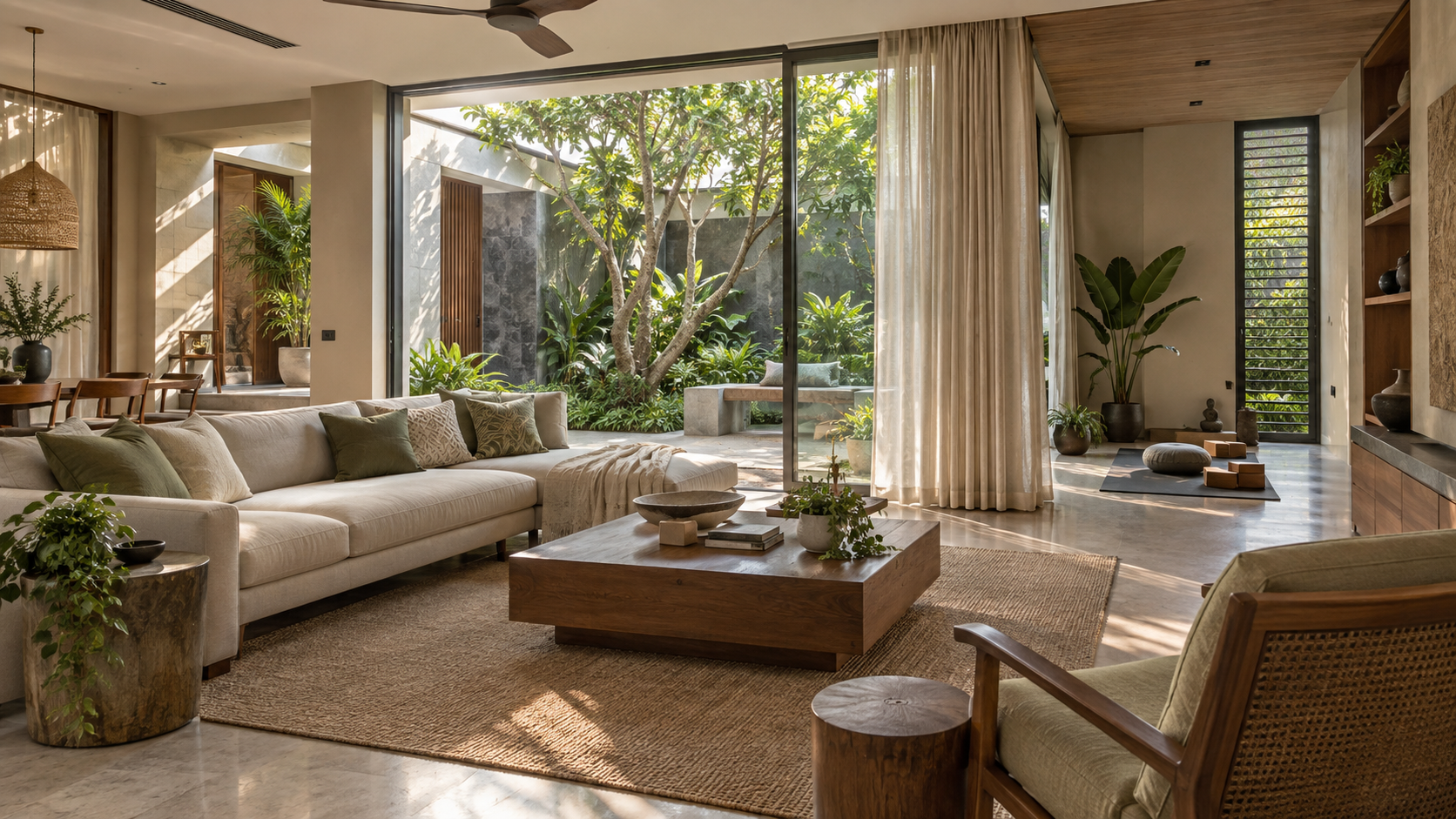
Wellness-Centred Villas in Lucknow: Designing Homes for Health, Comfort and Calm
Explore how thoughtful planning, natural light, fresh air, thermal comfort, acoustic privacy, healthy materials and coordinated MEP services can create a calmer, more comfortable wellness-centred villa in Lucknow.
A villa should do more than look beautiful. At its best, it should support restful sleep, comfortable movement, clean air, natural light and a calmer way of living.
Wellness-centred villa design brings these priorities into the architecture from the beginning. Orientation, room planning, ventilation, acoustics, materials, lighting and building services are considered together—not treated as decorative additions after construction.
For homeowners planning a villa in Lucknow, this approach is particularly relevant. Intense summer heat, monsoon humidity, dust, traffic noise and changing family needs all influence how comfortable and restorative a home will feel throughout the year.
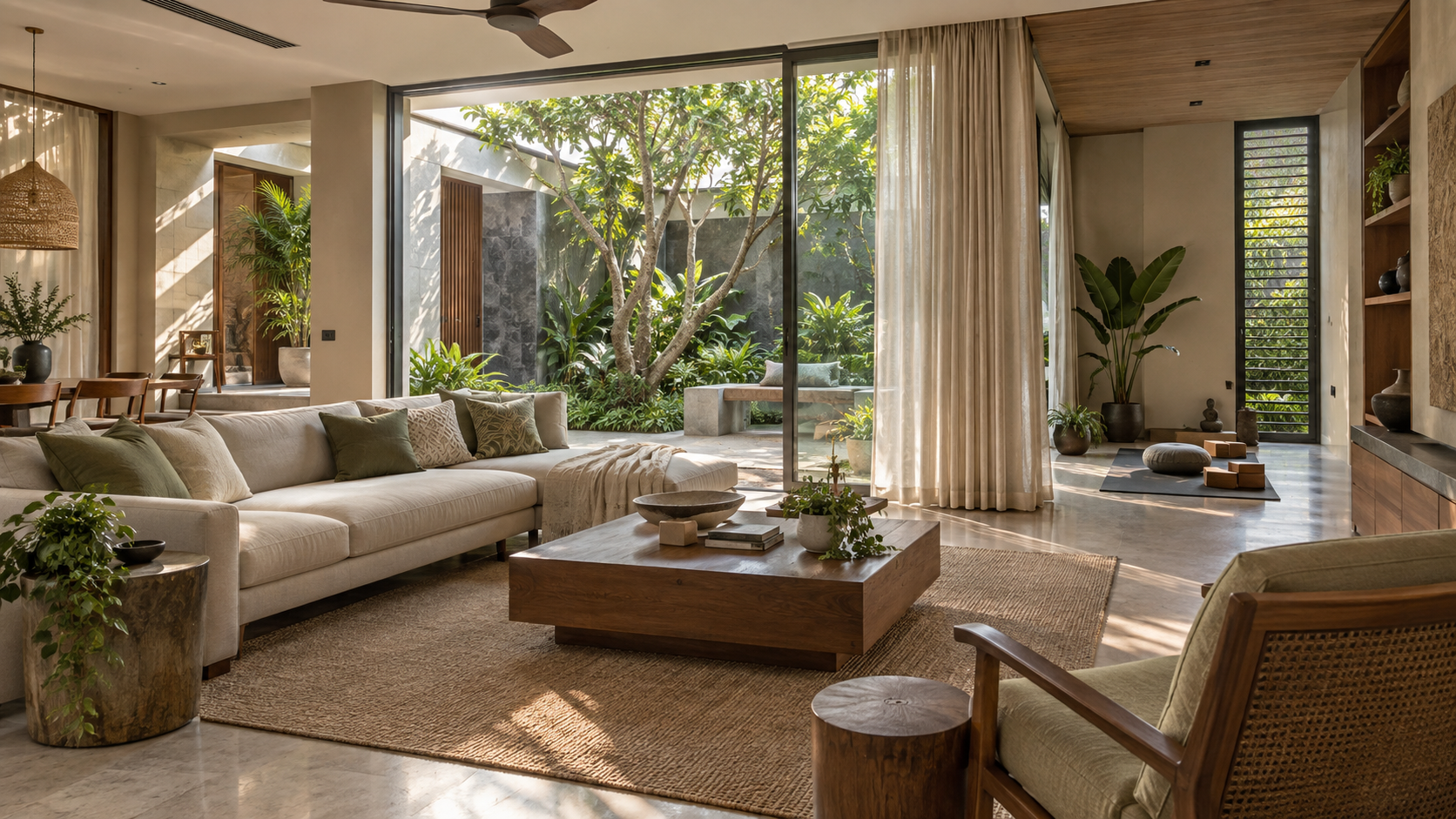
What Is a Wellness-Centred Villa?
A wellness-centred villa is planned around the physical comfort and emotional ease of the people who live there. It does not require a private spa or expensive technology. Its foundation is good architecture: appropriate daylight, fresh air, thermal comfort, acoustic privacy and spaces that support everyday routines.
The approach considers how residents sleep, work, exercise, gather and relax. Bedrooms should feel restful, kitchens should be healthy and practical, circulation should be effortless, and outdoor areas should invite regular contact with nature.
Wellness is therefore not a particular visual style. A contemporary, traditional or minimalist villa can all promote well-being when the design responds thoughtfully to its occupants, site and climate.
Design with Daylight and the Body Clock
Natural light influences how a home feels from morning to evening. Bedrooms that receive gentle morning light can support a natural waking routine, while living and working areas benefit from balanced daylight that reduces dependence on artificial lighting.
In Lucknow, admitting daylight must be balanced with protection from excessive heat and glare. Window orientation, shaded verandas, roof projections, screens and suitable glazing can allow useful light indoors while limiting unwanted solar gain.
Artificial lighting should follow the same principle. Layered illumination, warmer light in relaxation areas and well-controlled task lighting can make rooms comfortable without creating harsh brightness. Bedrooms should also allow effective darkness at night through curtains, blinds and carefully positioned external lights.
Plan for Fresh Air and Healthy Indoor Air
Good indoor-air quality begins with controlling pollution at its source. Low-emission paints, adhesives, composite wood products and furnishings can reduce unwanted chemical emissions, while adequate ventilation helps remove moisture, odours and pollutants generated through daily activities.
Windows should be positioned to encourage cross-ventilation when outdoor conditions are suitable. However, Lucknow’s dust, seasonal pollution, heat and humidity mean that natural ventilation alone may not always provide comfort. A well-designed mechanical system can introduce filtered fresh air while limiting dust and controlling indoor temperature and moisture.
Kitchens, bathrooms and utility areas need effective exhaust systems that discharge outdoors. Air-conditioning filters, fresh-air units and accessible service points should also be included in the maintenance plan so that good performance continues after the villa is occupied.
Create Thermal Comfort without Overdependence on Cooling
A comfortable villa should avoid rooms that become excessively hot, cold or humid. Orientation, wall and roof insulation, shaded openings, reflective roof treatments and controlled glazing can reduce heat entering the building before air-conditioning is required.
Ceiling fans, cross-ventilation and protected outdoor spaces can extend the periods when residents feel comfortable without mechanical cooling. Courtyards and verandas should be carefully proportioned and shaded so that they provide relief rather than becoming heat traps.
Air-conditioning should then be selected and zoned according to actual room requirements. Correct equipment sizing, efficient systems, humidity control and accessible maintenance can provide consistent comfort while reducing energy use and unnecessary noise.
Protect Quiet, Privacy and Rest
Noise can affect concentration, relaxation and sleep even when a home looks peaceful. Bedrooms, studies and meditation areas should therefore be positioned away from entrances, entertainment zones, kitchens, mechanical equipment and noisy roads wherever the site permits.
Solid doors, suitable wall construction, sealed windows, soft furnishings and careful plumbing design can reduce sound transmission. Air-conditioning equipment, pumps and generators should be selected and located with vibration and noise control in mind.
Privacy also supports a sense of calm. Thoughtful entrances, screened windows, layered landscaping and clear separation between social and private areas allow family members to feel protected without making the villa feel enclosed.
Bring Nature into Everyday Life
A connection with nature can make daily life feel more pleasant and restorative. Views of trees, access to a garden, natural materials and changing daylight can soften the transition between indoor and outdoor spaces.
This connection does not require a large lawn. A shaded courtyard, planted balcony, terrace garden, window seat overlooking greenery or a small water feature can become part of everyday routines. Native and climate-appropriate plants can provide shade and seasonal interest while generally requiring less water and maintenance.
Landscaping should be planned together with the architecture. Planting must not obstruct ventilation, damage waterproofing or create persistent dampness near the building. Safe pathways, comfortable seating and suitable outdoor lighting help ensure that these spaces are genuinely used.
Choose Healthy Materials and Manage Water Carefully
Materials affect both the atmosphere of a room and the quality of the indoor environment. Finishes should be selected for low emissions, durability, ease of cleaning and suitability for Lucknow’s heat, dust and seasonal humidity. Natural materials can add warmth, but they still require appropriate treatment and maintenance.
Water quality should be considered at the planning stage. Depending on the available supply, the villa may require filtration, softening or drinking-water purification. Storage tanks, pumps and treatment equipment need hygienic design, accessible maintenance and protection from contamination.
Moisture control is equally important. Correct waterproofing, bathroom ventilation, roof drainage and plumbing details help prevent leakage, dampness and mould. Materials and systems should be chosen according to verified site and water conditions rather than assumed requirements.
Design Spaces That Support Healthy Routines
Wellness becomes meaningful when the home makes beneficial routines easier. A quiet corner for reading or reflection, a flexible area for yoga or exercise, and convenient access to a garden or terrace can support regular use without requiring a large dedicated gym or spa.
Bedrooms should prioritise sleep, with comfortable circulation, suitable storage, effective light control and minimal disturbance from household activity. Kitchens should support hygienic food preparation, ventilation and organised storage, while bathrooms should provide safe movement, good drainage and appropriate lighting.
The design should also adapt as family needs change. Step-free access where practical, safe stairs, provision for handrails and flexible ground-floor spaces can make the villa more comfortable for children, older residents and visitors over time.
Coordinate MEP Services and Technology Early
A wellness-centred villa depends on systems that work quietly and reliably behind the architecture. Air-conditioning, fresh-air ventilation, plumbing, water treatment, electrical services, lighting and drainage should be coordinated before construction begins.
Early coordination prevents exposed pipes, awkward access panels, noisy equipment and last-minute compromises. Service routes and maintenance access should be planned so that essential systems can be inspected or repaired without unnecessarily disturbing finished interiors.
Smart controls can improve comfort when they are simple and purposeful. Automated shading, lighting scenes, temperature control, air-quality monitoring and security may be useful, but technology should remain easy to operate manually and should not make the home dependent on complicated systems.
A Healthier, Calmer Home Begins with the Plan
A wellness-centred villa is not defined by a checklist of fashionable features. Its value comes from many coordinated decisions that make the home easier to breathe in, move through, maintain and enjoy.
For a villa in Lucknow, the most effective approach begins with the site, climate and family’s daily routines. Architecture, interiors, landscaping and MEP services should then be developed as one integrated design rather than as separate layers.
If you are planning a new villa or reconsidering an existing design, Aurevia Luxury Villas can help translate your priorities for comfort, privacy and calm into a practical, site-responsive brief. Begin with a thoughtful conversation before the drawings—and the costly decisions—are finalised.