Biophilic Villa Design in Lucknow: Bringing Nature into Modern Homes
Modern homes often separate daily life from the natural world. Biophilic villa design takes a different approach by making daylight, fresh air, greenery, natural materials and outdoor views part of the architecture from the beginning.
For a villa in Lucknow, this connection requires more than adding indoor plants after construction. Intense summer heat, monsoon rain, dust, limited urban plots and seasonal changes must influence the placement of courtyards, windows, shaded terraces, planting and water features.
When planned carefully, biophilic design can create a home that feels calmer, brighter and more comfortable while retaining the privacy, convenience and refined character expected of a modern luxury villa.
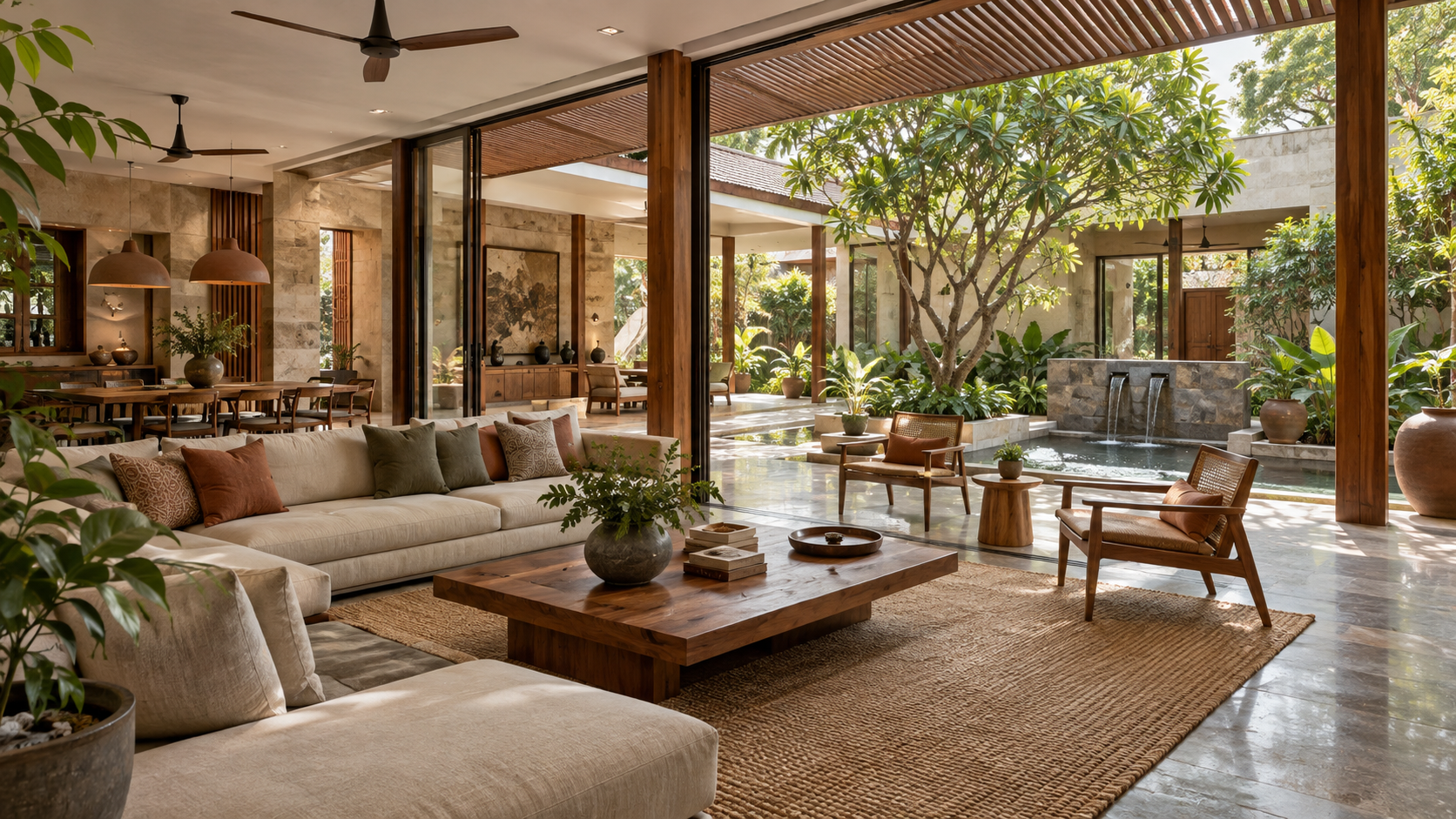
What Does Biophilic Villa Design Mean?
Biophilic design is an architectural approach that strengthens the relationship between people, buildings and nature. It considers how residents experience sunlight, air movement, vegetation, water, natural textures and seasonal change throughout the day.
The connection may be direct, through courtyards, gardens, balconies and indoor planting, or indirect, through natural materials, earthy colours, organic forms and changing patterns of light and shadow.
A successful biophilic villa does not simply contain more greenery. Its architecture allows nature to influence how rooms are arranged, connected, shaded and experienced.
Begin with Site Planning and Orientation
Biophilic design should begin with an understanding of the site. Sun direction, prevailing winds, surrounding buildings, existing trees, road noise and privacy requirements will determine where the villa can open towards nature.
Living and dining areas can be arranged around a courtyard, rear garden or planted light well, while bedrooms may face quieter green edges. Carefully positioned windows can frame selected views without exposing private spaces to neighbouring properties.
In Lucknow’s climate, openings should receive useful daylight without allowing excessive summer heat. Deep overhangs, pergolas, verandas, external screens and shade-giving trees can make the connection with nature comfortable across more of the year.
Use Courtyards and Green Pockets on Compact Plots
A meaningful connection with nature does not require an expansive lawn. Even on a compact urban plot, a small courtyard, planted setback, terrace garden, balcony or double-height light well can bring greenery into everyday view.
Courtyards can introduce daylight and ventilation into the centre of the villa while creating a private outdoor room. Their proportions, shading and drainage must be carefully designed so that they remain comfortable during summer and functional during the monsoon.
Where ground space is limited, vertical planting and terrace gardens can be considered. These features need suitable structure, waterproofing, root barriers, irrigation and safe maintenance access from the planning stage.
Frame Nature through Views, Daylight and Airflow
The experience of nature often begins with what can be seen from inside. A window overlooking a tree, a dining area facing a courtyard or a staircase receiving filtered daylight can make greenery and seasonal change part of daily life.
Large areas of glass should be positioned carefully rather than used indiscriminately. Appropriate orientation, external shading, controlled glazing and privacy screens can preserve outdoor views while limiting glare, heat gain and unwanted visibility.
Operable windows and well-planned openings can also support cross-ventilation when outdoor conditions are suitable. In dusty, hot or humid periods, filtered mechanical ventilation and air-conditioning may still be needed, so natural and mechanical systems should be designed to complement each other.
Bring Natural Materials and Sensory Richness Indoors
Biophilic interiors engage more than sight. The texture of stone, the warmth of timber, the sound of leaves, filtered sunlight and gentle air movement can make a room feel connected to its surroundings.
Locally appropriate stone, responsibly sourced timber, terracotta, lime-based finishes, woven fibres and handcrafted details can add natural character. Materials should be selected for durability, low emissions, ease of cleaning and suitability for Lucknow’s heat, dust and seasonal humidity.
Natural materials do not need to cover every surface. A restrained palette, honest textures and a few carefully detailed elements usually create a calmer and more timeless interior than excessive decoration.
Choose Planting for Climate, Scale and Maintenance
Plants should be selected according to sunlight, available soil depth, water requirements, mature size and the level of maintenance the household can realistically provide. Native and climate-appropriate species generally adapt better and can support seasonal interest with less intervention.
Large trees require adequate distance from foundations, waterproofed areas and underground services. Indoor plants need sufficient natural light, suitable containers and drainage that does not damage flooring or furniture.
Planting should also preserve ventilation, security visibility and safe movement. A smaller, well-maintained landscape is more valuable than dense greenery that creates dampness, blocks light or becomes difficult to manage.
Use Water Carefully and Prevent Moisture Problems
Water can add movement, reflected light and a gentle sound to a courtyard or garden. However, a water feature should be introduced only when its circulation, filtration, cleaning, water consumption and maintenance are properly planned.
Open water must not become stagnant or create conditions for mosquitoes. Overflow points, child safety, electrical protection and access to pumps and filters should be resolved before installation.
During Lucknow’s monsoon, reliable waterproofing, surface slopes, roof drainage and rainwater discharge are essential. Planting beds and water features should remain separated from vulnerable walls and foundations so that a connection with nature does not result in leakage, dampness or mould.
Create Comfortable Indoor–Outdoor Transitions
The most useful biophilic spaces often lie between the fully enclosed interior and the open garden. Shaded verandas, covered terraces, balconies, entrance courts and window seats allow residents to experience daylight and greenery with greater comfort and privacy.
These transition spaces should be proportioned for real activities such as morning tea, reading, family conversation or quiet reflection. Suitable seating, ceiling fans, lighting, electrical points and weather protection help ensure that they are genuinely used.
Floor levels, slip resistance, drainage, insect screens and secure doors also require attention. The design should make movement between indoors and outdoors effortless without compromising safety, cleanliness or climate control.
Coordinate Architecture, Landscape and MEP Services Early
Biophilic features work best when architecture, structural design, landscaping and MEP services are developed together. Planters, courtyards, skylights, irrigation, drainage, lighting and water features can affect the structure and waterproofing as well as electrical and plumbing routes.
Early coordination allows irrigation valves, drain outlets, pumps, filters, lighting controls and maintenance access to be positioned discreetly. It also prevents exposed pipes, difficult repairs and last-minute changes that weaken the finished design.
Technology may assist through automated irrigation, moisture sensors, shading controls and efficient outdoor lighting. These systems should remain simple to operate and should support—not replace—sound architectural and landscape planning.
A Nature-Connected Villa Begins with the Plan
Biophilic luxury is not measured by the number of plants placed inside a home. It emerges from coordinated decisions about orientation, daylight, ventilation, views, materials, water, landscape and the routines of the people who will live there.
For villas in Lucknow, the most successful approach balances nature with shade, privacy, dust control, monsoon protection and manageable maintenance. When these priorities are resolved together, even a compact plot can support a calm and meaningful connection with the outdoors.
If you are planning a new villa or reconsidering an existing design, Aurevia Luxury Villas can help translate your site, lifestyle and preferences into a practical, climate-responsive biophilic design brief. Begin this conversation before the plans, services and landscape are finalised.