Making Every Room Comfortable, Welcoming and Practical

1. A home that changes with the day
Imagine entering your living room on a pleasant winter morning.
Sunlight falls gently across the floor. The room feels bright and welcoming. There is little need to switch on the lights.
Later, as the afternoon sun becomes stronger, curtains or external shading help reduce glare and unwanted heat.
By evening, the same room feels different. A soft ceiling light provides general illumination. A reading lamp brightens a favourite chair. Gentle lighting near the walls creates a relaxed atmosphere.
Nothing complicated is required.
The room simply responds to the way it is being used.
This is what good lighting should achieve.
A well-lit home is not one where every corner is equally bright. It is one where the right light is available at the right place and time.
Before selecting chandeliers, downlights or smart switches, consider how each room will be used throughout the day.
2. Welcome natural light
Daylight makes a home feel connected to the outside world.
It helps us recognise colours naturally, enjoy views and experience the changing character of the day.
But more glass does not automatically mean better lighting.
A large west-facing window, for example, may admit uncomfortable afternoon heat and glare during Lucknow's summer months. An unshaded window can make a room difficult to use even when it looks attractive in photographs.
Good daylight planning considers window orientation, size, shading, privacy and the activities taking place inside.
A bedroom may benefit from gentle morning light. A study should receive daylight without creating distracting reflections on a computer screen. A kitchen needs useful illumination over preparation surfaces.
In some rooms, carefully positioned windows or a lightwell may provide more comfortable daylight than an oversized glass wall.
External shading, balconies, suitable glazing and curtains can help manage light and heat.
The aim is not to maximise sunlight at every moment.
It is to make daylight pleasant and useful.
3. Different rooms need different lighting
Every room serves a different purpose, so its lighting should respond accordingly.
Living and family rooms
Combine comfortable general lighting with selected reading lamps and gentle decorative illumination. Allow the atmosphere to change between family activities and relaxed evenings.
Bedrooms
Use restful lighting with convenient bedside controls. Provide sufficient light for dressing and reading without making the entire room excessively bright.
Kitchens
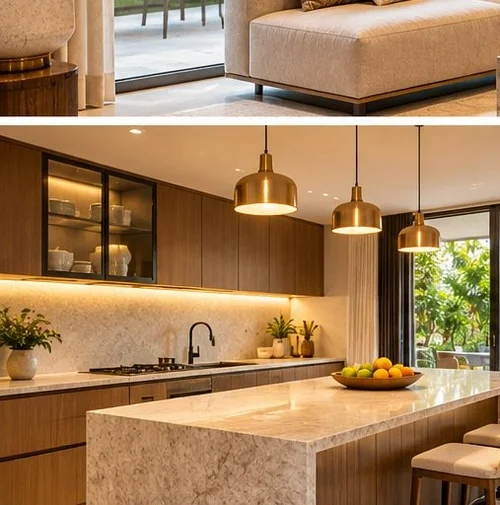
Prioritise clear lighting over countertops, sinks and cooking areas. Under-cabinet lights can help prevent shadows created by overhead cabinets.
Bathrooms
Provide useful mirror lighting and comfortable general illumination. Fixtures and electrical arrangements must be suitable for their locations and exposure to moisture.
Staircases and passages
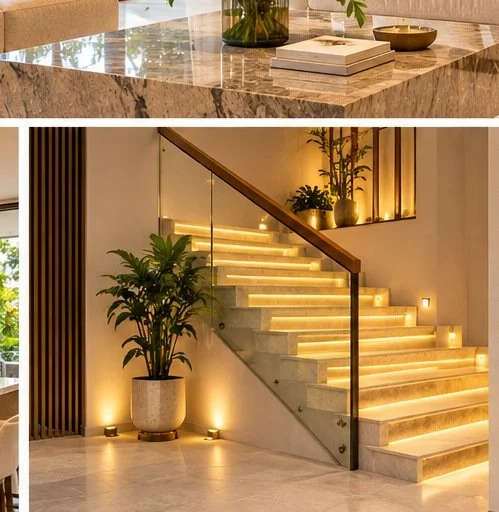
Ensure clear visibility of steps, changes in level and obstacles. Gentle night lighting can make movement safer without unnecessarily disturbing sleeping family members.
A thoughtful lighting plan begins with activities, not merely the number of fixtures.
4. Understand the layers of light
Lighting designers often describe several layers of illumination.
Homeowners do not need to memorise technical terminology, but understanding the idea can improve decisions.
General lighting provides comfortable overall illumination for moving around and using a room.
Task lighting helps with specific activities such as reading, cooking, shaving or working at a desk.
Accent lighting draws attention to selected architectural features, artwork or decorative surfaces.
Decorative lighting includes fixtures such as chandeliers and pendant lights that contribute to the room's appearance.
These layers should complement one another.
A living room with a beautiful chandelier may still need a reading lamp. A kitchen with attractive pendant lights may still need better illumination over the worktop.
Conversely, installing many downlights in every ceiling does not necessarily create better lighting.
Too many fixtures can increase glare, energy use, installation cost and future maintenance.
Luxury comes from thoughtful lighting, not from excessive lighting.
5. Comfortable light, not excessive brightness
Have you ever entered a room that seemed brightly illuminated but still felt uncomfortable?
The problem may have been glare.
Bare light sources, poorly positioned downlights or reflections from glossy surfaces can cause visual discomfort.
Good lighting should allow people to see clearly without repeatedly looking into harsh light.
The colour appearance of light also matters.
Warm light often creates a relaxed atmosphere in living rooms and bedrooms. Neutral-looking light can be useful in kitchens, dressing areas and workspaces.
However, there is no need to use exactly the same colour of light everywhere.
Consistency within a room is often more important than forcing one setting throughout the entire villa.
Dimming can provide additional flexibility, particularly in living rooms and bedrooms. Compatible fixtures, drivers and controls must be selected together.
The homeowner's goal should be comfortable visibility and a pleasant atmosphere, rather than achieving the highest possible brightness.
6. Switches where you need them
A beautifully designed lighting scheme can become frustrating if the switches are inconvenient.
Imagine entering a dark bedroom and finding the main switch behind the open door.
Or reaching the top of a staircase and discovering that the light can only be switched off downstairs.
These problems are easy to overlook on a drawing.
Switch locations should be considered from the perspective of someone actually moving through the home.
Bedrooms benefit from suitable bedside controls. Staircases and long passages may need switching from more than one location. Bathrooms and dressing areas should have practical controls near their entrances.
For older family members and children, switches should be easy to locate and operate.
Smart controls can provide useful convenience, but essential lighting should not depend exclusively on a mobile application.
A visitor should be able to operate ordinary lights without instructions.
7. Lighting during power cuts
Power interruptions are an important consideration in residential planning.
A villa does not necessarily need every decorative light connected to backup power.
Instead, identify the lights that matter most when the normal supply fails.
These may include staircases, passages, entrances, essential bathrooms, a family gathering area and routes used to leave the building safely.
Appropriate emergency or backup lighting can help occupants move safely while the power supply is interrupted.
The arrangement should be coordinated with the electrical and backup-power design.
It is also worth considering what happens when an automated lighting controller loses power and later restarts.
Essential lighting should behave predictably and remain operable through suitable controls.
The detailed selection of inverters, batteries, generators and backup priorities belongs in Chapter 5.
Here, the important decision is to identify which lighting functions must remain available.
8. Outdoor and landscape lighting

Outdoor lighting has several purposes.
It helps people approach the home safely, identifies steps and changes in level, supports security and creates a pleasant atmosphere around gardens and terraces.
An entrance should be clearly visible without shining harsh light into visitors' eyes.
Pathways and steps should be illuminated sufficiently for safe movement.
Garden lighting can highlight selected trees or architectural features, but excessive brightness may disturb neighbouring properties and reduce the peaceful character of outdoor spaces.
Outdoor fixtures should be suitable for weather exposure and positioned where they can be cleaned, inspected and replaced.
Timers, photocells and motion sensors may help reduce unnecessary operation.
However, important entrance and circulation lighting should remain dependable even when optional automation is unavailable.
9. Simple lighting automation
Automation can be useful when it solves a genuine everyday problem.
For example, outdoor lights may turn on automatically after sunset. Passage lighting may respond to movement. A family room may have separate settings for television viewing and entertaining.
These features can improve convenience.
But complexity should be kept under control.
A lighting system that requires several applications, repeated configuration or specialised assistance for ordinary changes may become frustrating.
Before selecting automated lighting, ask:
- Will this feature save effort or improve comfort?
- Can the family operate the lights manually?
- What happens if the controller or internet connection fails?
- Can a faulty switch, sensor or driver be replaced without major disruption?
- Will replacement components remain reasonably available?
Simple, dependable automation is often more valuable than an elaborate system that is difficult to maintain.
10. Plan before the ceiling is finished
Lighting positions should be coordinated with furniture, ceiling design, air-conditioning equipment and other services.
A downlight positioned directly above a ceiling fan may create moving shadows. A pendant light may conflict with the dining table arrangement. A concealed LED strip may be difficult to repair if its driver is trapped behind a permanently sealed panel.
These details are easier to resolve before construction finishes.
Discuss fixture locations, switch positions, wiring routes and access to serviceable components with your architect and electrical consultant.
Particular attention is needed for high ceilings, double-height spaces and staircase chandeliers.
A fixture may look attractive when installed, but how will it be cleaned or repaired?
Where appropriate, plan safe access or equipment arrangements for future maintenance.
Electrical connections, drivers and controls should be installed in suitable accessible locations in accordance with applicable requirements.
11. When a light stops working
Imagine that a concealed LED strip in your living room suddenly stops illuminating.
The problem may be with the light source, driver, wiring or control.
If the driver is accessible and the installation is documented, a qualified electrician can investigate the fault more easily.
If the driver is hidden behind a permanently sealed decorative ceiling, a relatively small repair may require damage to the finish.
The same issue can arise with decorative pendants, recessed fixtures and outdoor lighting.
The homeowner should know which circuit serves the affected area and whom to contact.
Faulty electrical equipment should not be opened or repaired by unqualified occupants.
Good lighting design considers the day a component fails, not only the day it is installed.
12. Plan, Maintain, Repair, Replace
PLAN
Decide lighting needs room by room. Coordinate daylight, fixtures, switches, backup lighting, wiring routes and access before construction finishes.
MAINTAIN
Keep fixtures clean, inspect outdoor fittings and arrange periodic checks of appropriate electrical components. Test emergency lighting and controls as recommended.
REPAIR
Ensure qualified electricians can identify circuits, isolate supplies and access replaceable drivers, sensors and connections safely.
REPLACE
Prefer lighting arrangements that allow failed components to be replaced without unnecessarily damaging ceilings or decorative finishes. Consider future compatibility and availability of parts.
13. Ready reference — Room-by-room lighting checklist
Use this checklist when reviewing the lighting layout with your architect or lighting designer.
Lighting planning review
Daylight and room comfort
- Window placement, glare, shading and privacy have been reviewed.
- Each important room has suitable general and task lighting.
- Lighting colour and brightness suit the intended activities.
Controls and dependability
- Switches are conveniently positioned near entrances and key activity areas.
- Bedrooms, staircases and passages have suitable control arrangements.
- Essential lighting during power cuts has been considered.
Maintenance and replacement
- Concealed drivers and serviceable connections will remain accessible.
- High-ceiling and outdoor fixtures can be maintained safely.
- Lighting circuits and controls will be documented at handover.
14. A final thought
Light changes the way we experience a home.
It can make a room feel welcoming in the morning, comfortable during work and restful in the evening.
Good lighting does not require excessive fixtures or complicated technology.
It requires an understanding of how people use their rooms, thoughtful placement, convenient controls and sensible maintenance planning.
A beautiful light is worth choosing.
A beautiful light that remains easy to operate, maintain and replace is an even better choice.
The finest lighting is not always the lighting you notice. It is the lighting that makes everyday life feel right.
Coming next — Chapter 4: Electrical Services. Planning safe, convenient and dependable electricity throughout your villa.