Outdoor Living & Landscaping - Creating a Welcoming, Manageable Garden
LUXURY BY SPACE — PART II | CHAPTER 15
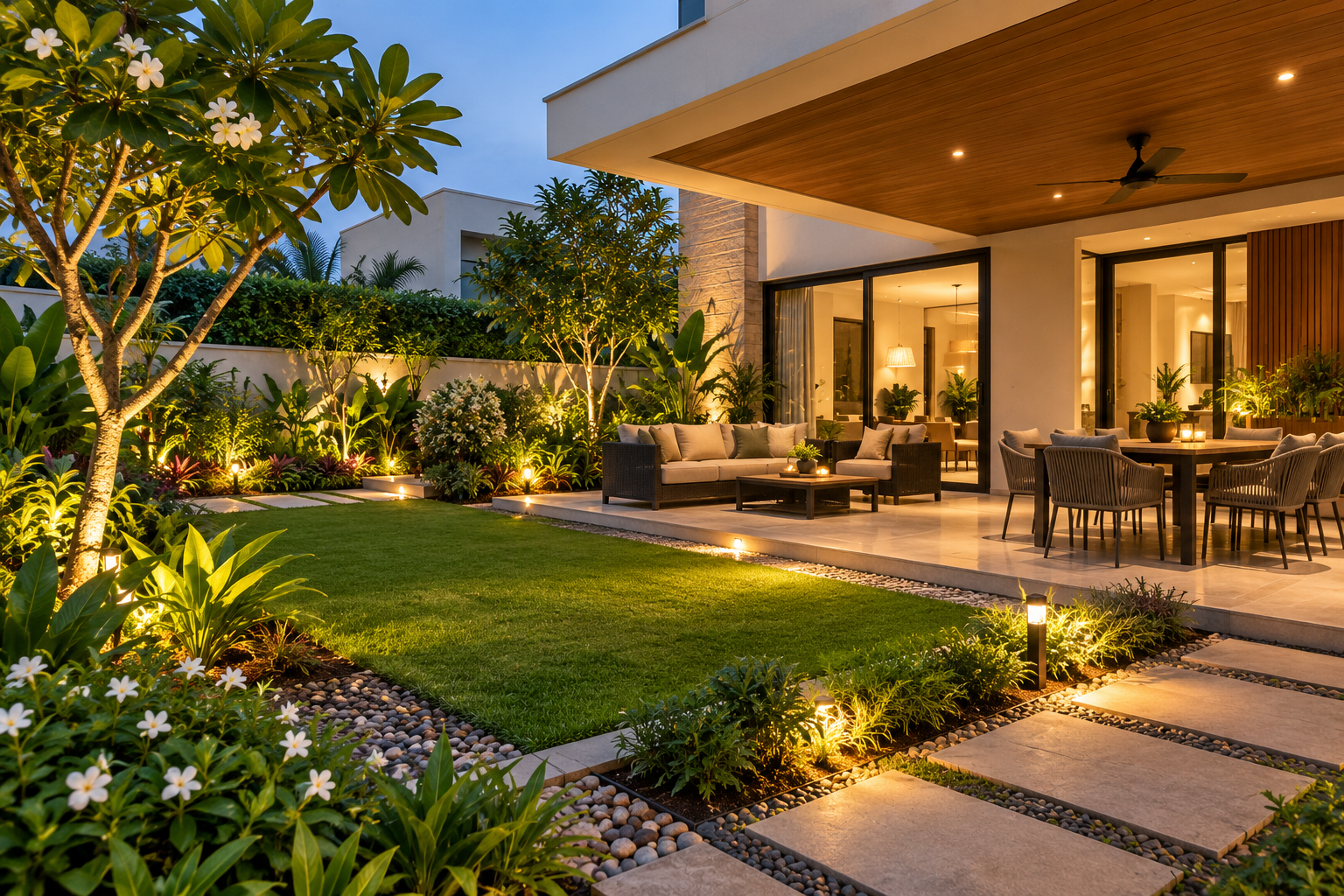
Thoughtfully designed outdoor spaces bring together greenery, comfortable seating and elegant lighting for everyday enjoyment.
The homeowner’s question: How can our outdoor areas provide pleasure without becoming a daily burden?
A beautiful garden should invite us outdoors, soften the architecture and make everyday life more enjoyable. It should not demand constant watering, pruning, cleaning or expensive maintenance.
For homes in Lucknow, successful outdoor design must respond to intense summer heat, seasonal monsoon rainfall, winter conditions, dust and the practical demands of family life.
At Aurevia Luxury Villas, we believe that outdoor luxury is not measured by the size of the lawn or the number of ornamental plants. It is measured by comfort, thoughtful planning, enduring beauty and ease of ownership.
1. Begin with Life, Not Landscaping
Before selecting plants, paving or decorative features, consider how the family intends to use the outdoor space.
A garden for morning tea requires a different arrangement from one designed for children's activities, weekend entertaining or quiet evening relaxation.
A well-planned outdoor area might include a shaded breakfast corner, a modest family lawn, a comfortable sitting terrace, an intimate courtyard or an outdoor dining area connected to the kitchen.
The aim is to make every square foot purposeful without crowding the site.
2. Finding the Right Balance Between Greenery and Usable Space
In many urban residential plots, gardens must coexist with parking, entrance pathways, setbacks, utilities and building services.
Instead of filling every available space with grass, consider combining permeable surfaces where suitable, planted borders, small trees, groundcovers and comfortable paved seating.
A compact courtyard with one well-positioned tree and carefully selected planting may provide greater everyday pleasure than an extensive lawn requiring regular mowing and irrigation.
Parking and pedestrian routes should remain practical, especially for older residents, children and visitors.
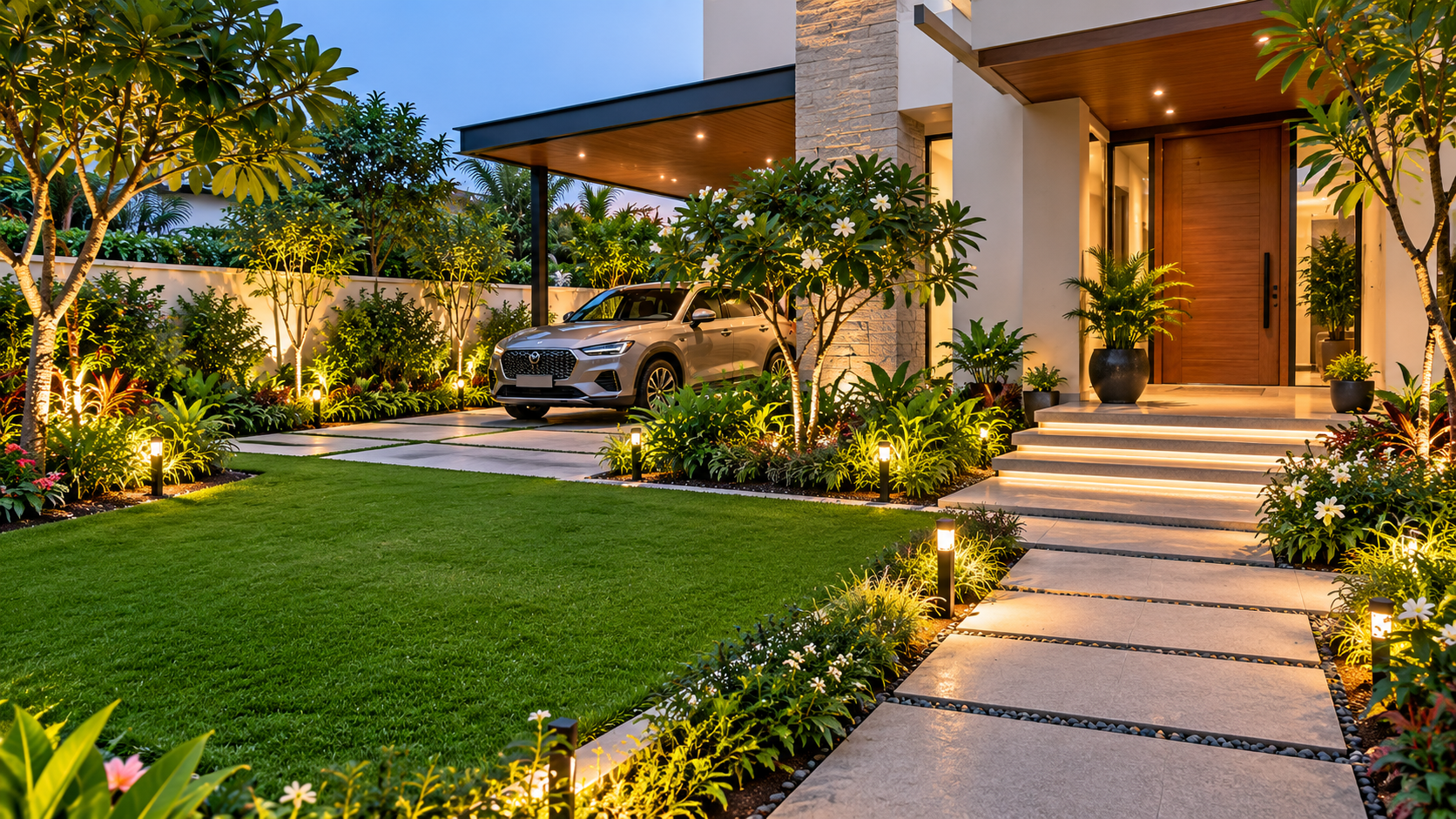
A thoughtfully planned entrance balances attractive greenery with convenient parking, safe pedestrian movement and welcoming access to the home.
3. Shade, Privacy and Views
A successful garden should be enjoyable from inside the house as well as outdoors.
Consider what residents see through living-room windows, bedroom openings and dining areas. A framed view of greenery can make an interior feel calmer and more spacious.
Shade can be created through carefully positioned trees, pergolas, covered verandas and architectural projections. However, a pergola with widely spaced slats may provide insufficient protection from intense summer sun or monsoon rain.
Privacy may be achieved through boundary walls, screens, layered planting and thoughtful seating placement, while maintaining adequate airflow.
For Lucknow homes, western exposures deserve particular attention because of strong afternoon solar heat.
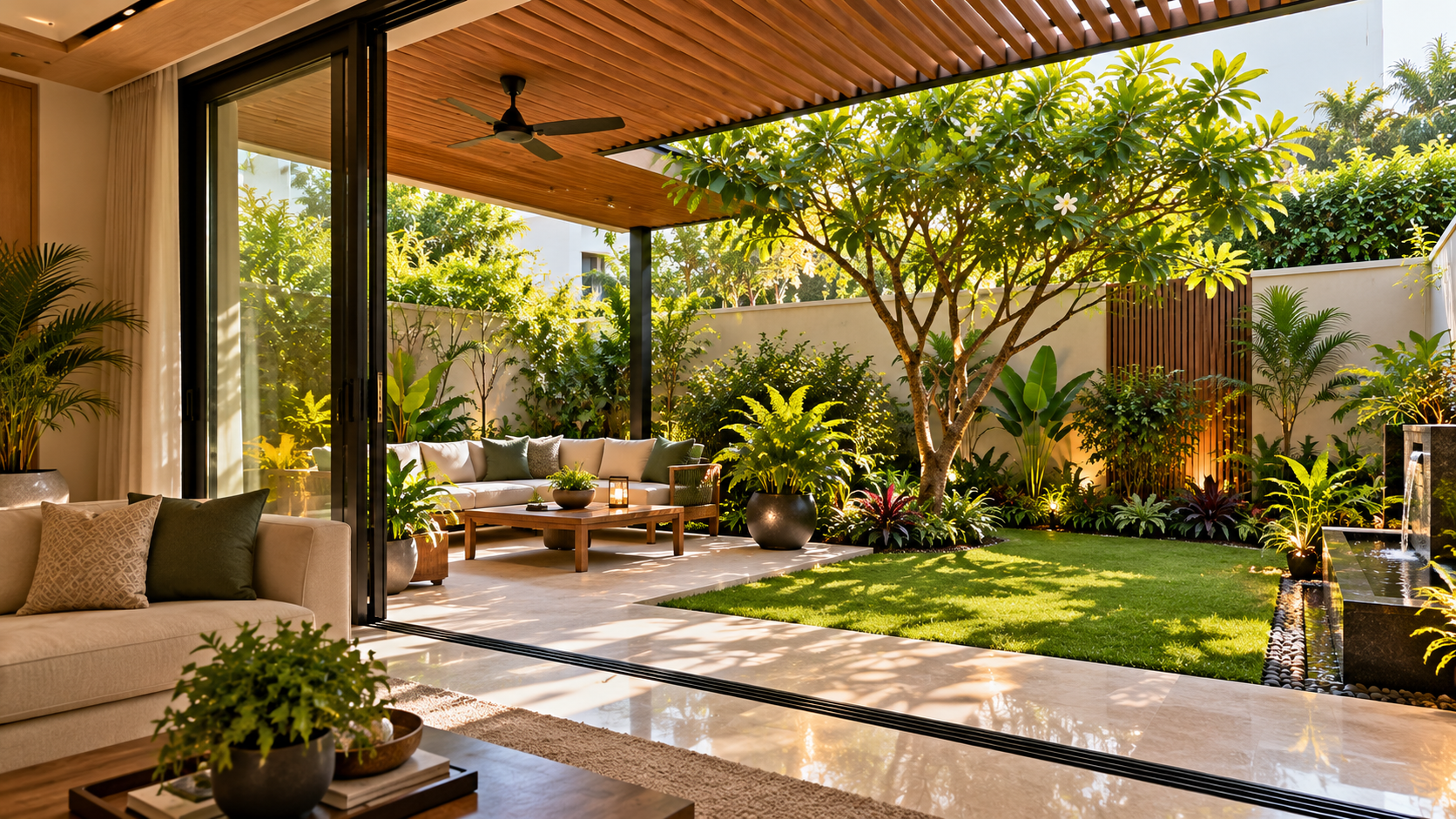
A private, shaded courtyard creates a peaceful connection between indoor comfort and outdoor greenery, offering beautiful views and relaxation throughout the day.
4. Choosing Plants for the Site and the Owner
Plant selection should begin with the site's sunlight, soil, drainage, available root space and maintenance arrangements.
Some plants thrive in full sunlight, while others require filtered light or sheltered conditions. Species suited to the regional climate can reduce maintenance, but even hardy plants need care during establishment.
Possible choices for appropriate Lucknow sites include:
Neem - Shade tree for sufficiently large spaces
Amaltas - Seasonal flowering feature
Mogra - Fragrant shrub near seating
Hibiscus - Flowering hedge or accent
Bougainvillea - Sunny boundary feature
Dwarf ornamental grasses - Texture and planting borders
These are illustrative options, not a universal planting prescription. Mature size, root behaviour, thorns, water needs, local ecology, allergies and proximity to buildings must be checked before selection.
Aurevia principle: Choose fewer, better-suited plants rather than creating a crowded garden that becomes difficult to maintain.
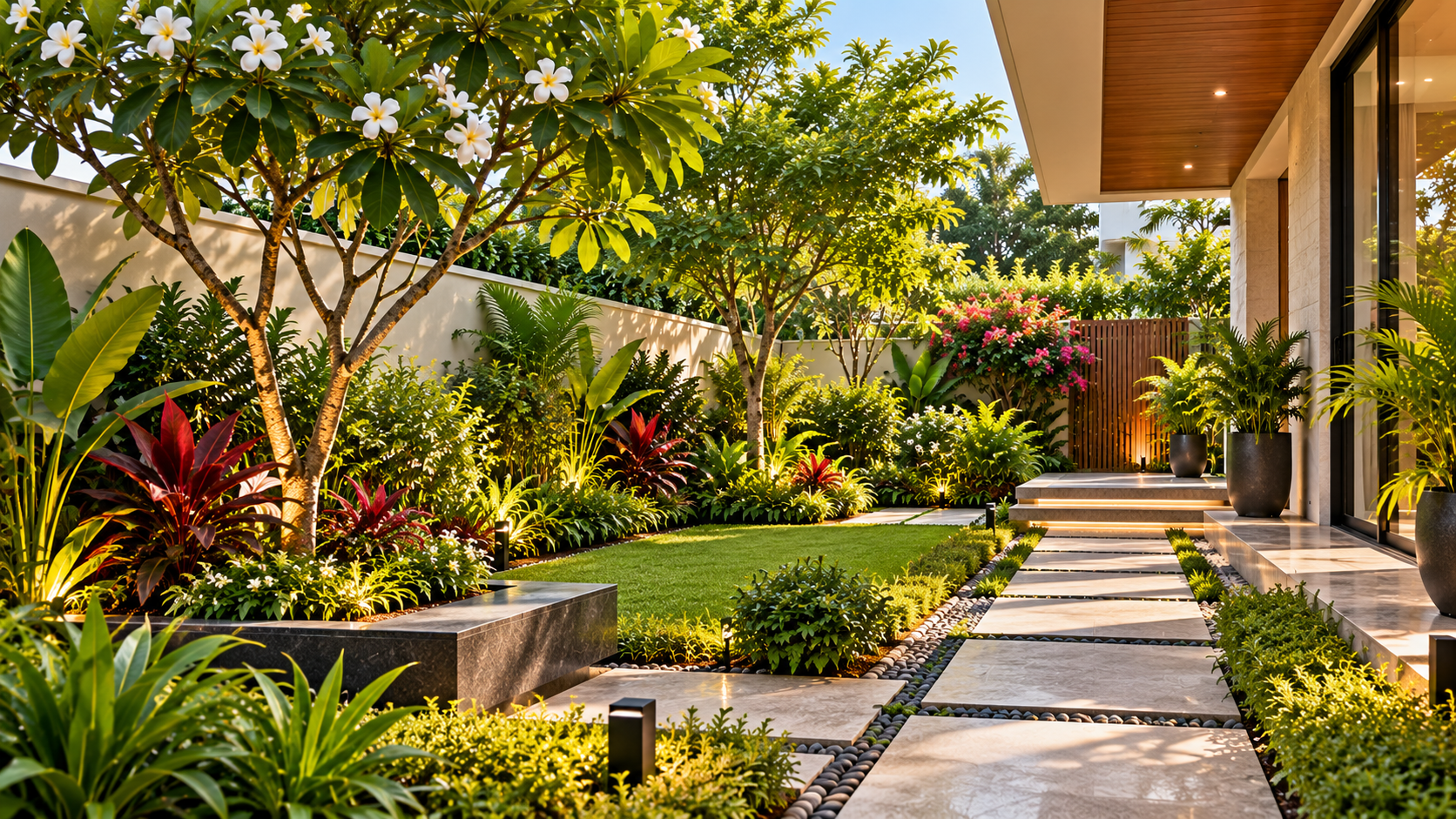
Thoughtful plant selection creates a beautiful, welcoming garden while reducing routine watering, pruning and maintenance.
5. Drainage and Irrigation — The Invisible Essentials
Good landscaping begins beneath the finished surface.
During heavy monsoon rainfall, improperly graded patios and garden areas may direct water towards doors, basement walls or foundations.
Landscape design should establish appropriate surface gradients, drainage collection points and safe discharge routes consistent with local requirements.
Where practical, drip irrigation can deliver water efficiently to planting beds. Automated irrigation controllers may simplify upkeep, but they should include accessible manual overrides and provisions for inspection.
Avoid designing irrigation systems that regularly spray walls, electrical fittings, outdoor furniture or pedestrian pathways.
Rainwater harvesting and groundwater recharge may be integrated where technically feasible and permitted.
Have a qualified professional verify site levels, soil infiltration, drainage capacity and the permitted discharge point before work begins. Keep runoff within the approved drainage strategy, away from neighbouring properties, and provide access for clearing silt and blocked outlets.
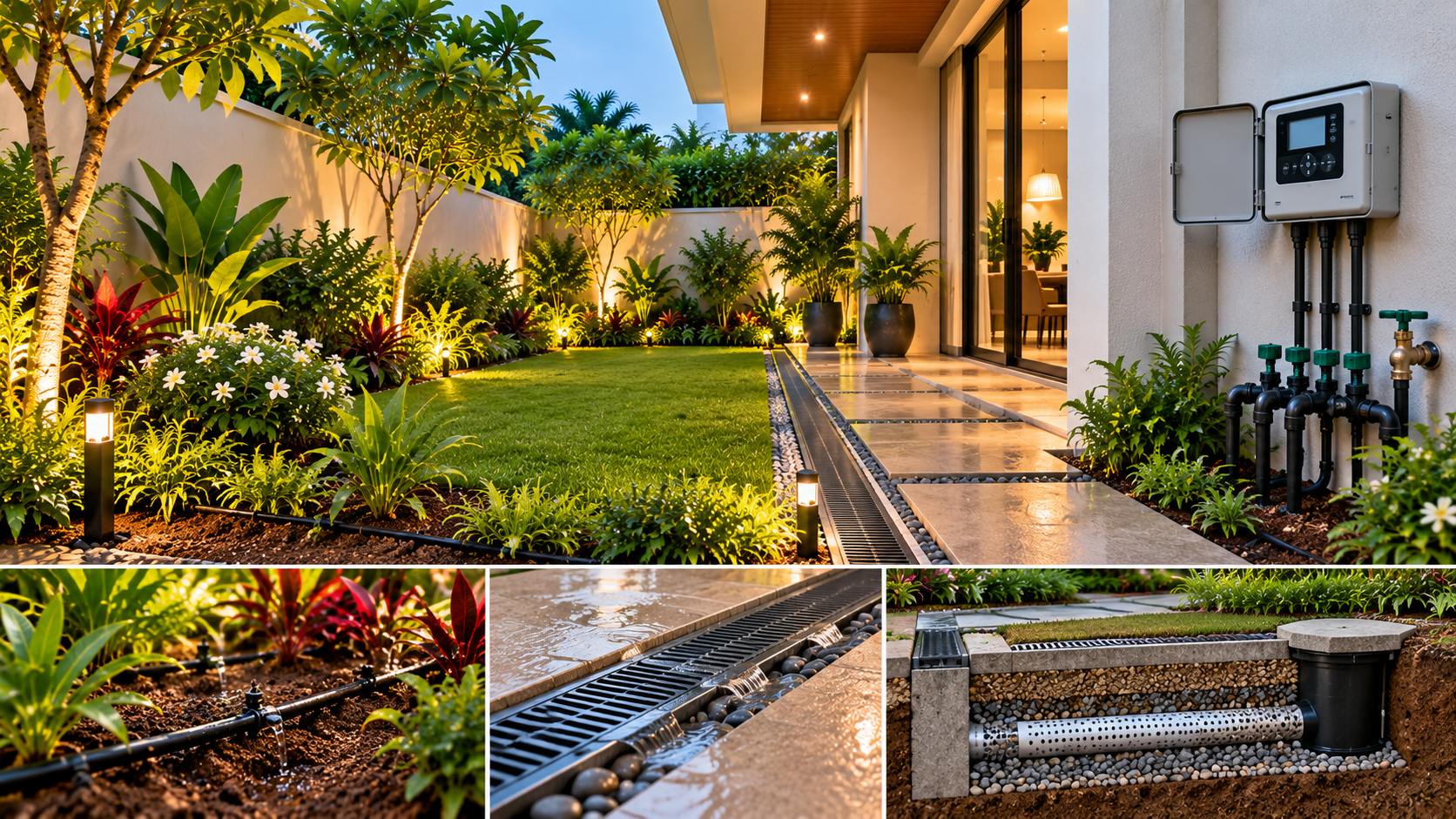
Well-planned irrigation and drainage systems help maintain healthy landscaping, manage monsoon rainfall and reduce routine garden maintenance.
6. Outdoor Lighting and Electrical Planning
Outdoor lighting should help people move safely, appreciate the landscape and enjoy evenings without excessive glare.
Consider low-level pathway lighting, restrained tree illumination, entrance lighting and separate task lighting for outdoor dining or cooking.
All outdoor electrical equipment should be appropriately rated for environmental exposure and installed with suitable earthing, residual-current protection and weather-resistant connections by qualified professionals.
Provide conveniently positioned power points for maintenance equipment, seasonal decorations and occasional outdoor activities.
Keep fittings accessible for replacement and inspection, rather than concealing them permanently within dense planting.
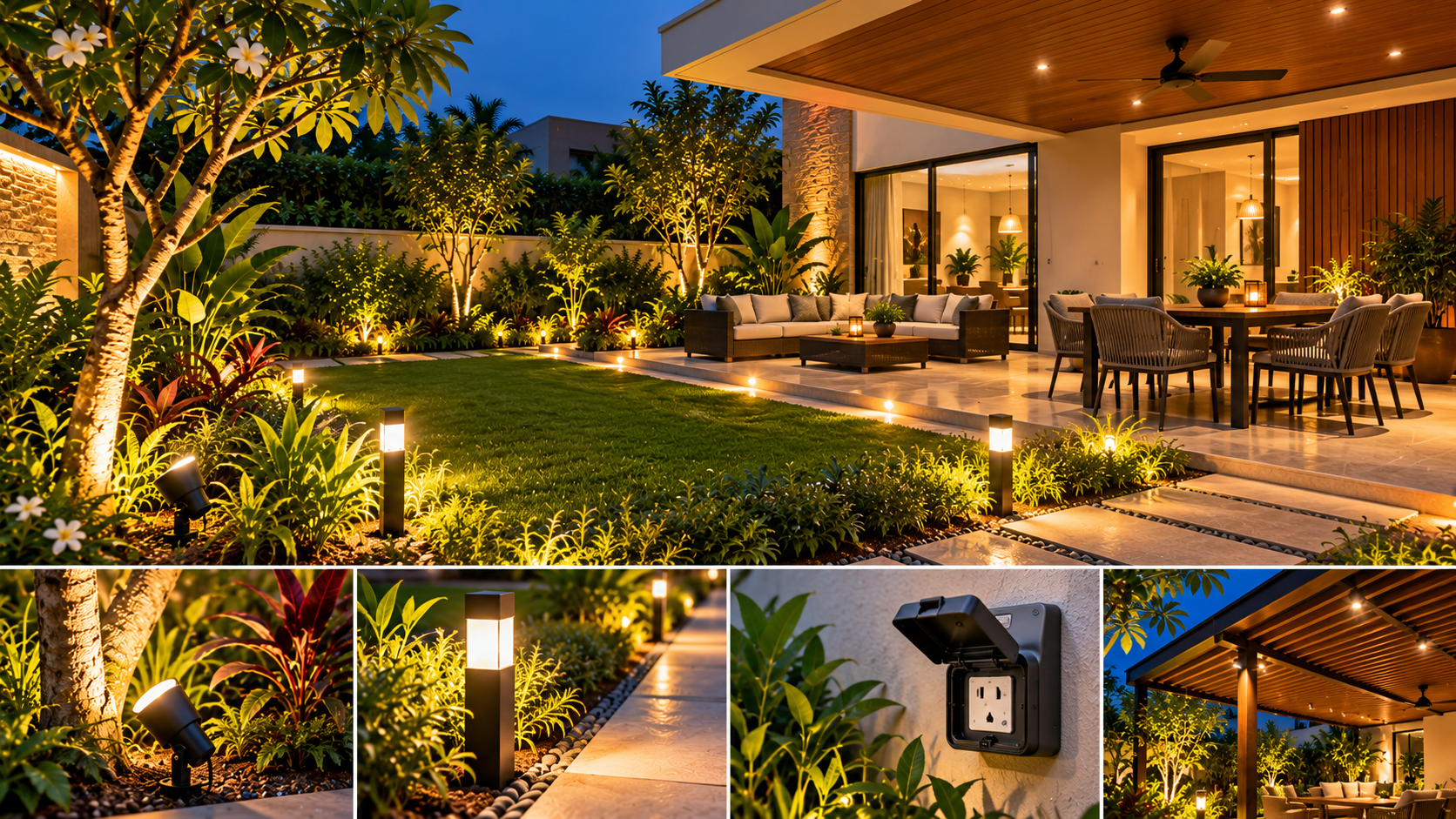
Thoughtfully layered outdoor lighting enhances evening ambience, highlights landscaping and improves safe movement, while weather-resistant electrical installations support everyday convenience.
7. Courtyards, Patios and Outdoor Dining
Outdoor living areas work best when they connect naturally with indoor activities.
A patio adjoining the family lounge may become an informal evening retreat. A dining terrace near the kitchen reduces the effort of carrying food, crockery and supplies.
For comfortable outdoor dining, consider circulation around chairs, slip-resistant flooring, shaded seating, insect management and nearby lighting.
Where space permits, provide a small counter or storage cabinet for outdoor dining essentials.
Avoid placing fixed barbecues or cooking equipment beneath combustible overhead structures or too close to openings and vulnerable materials.
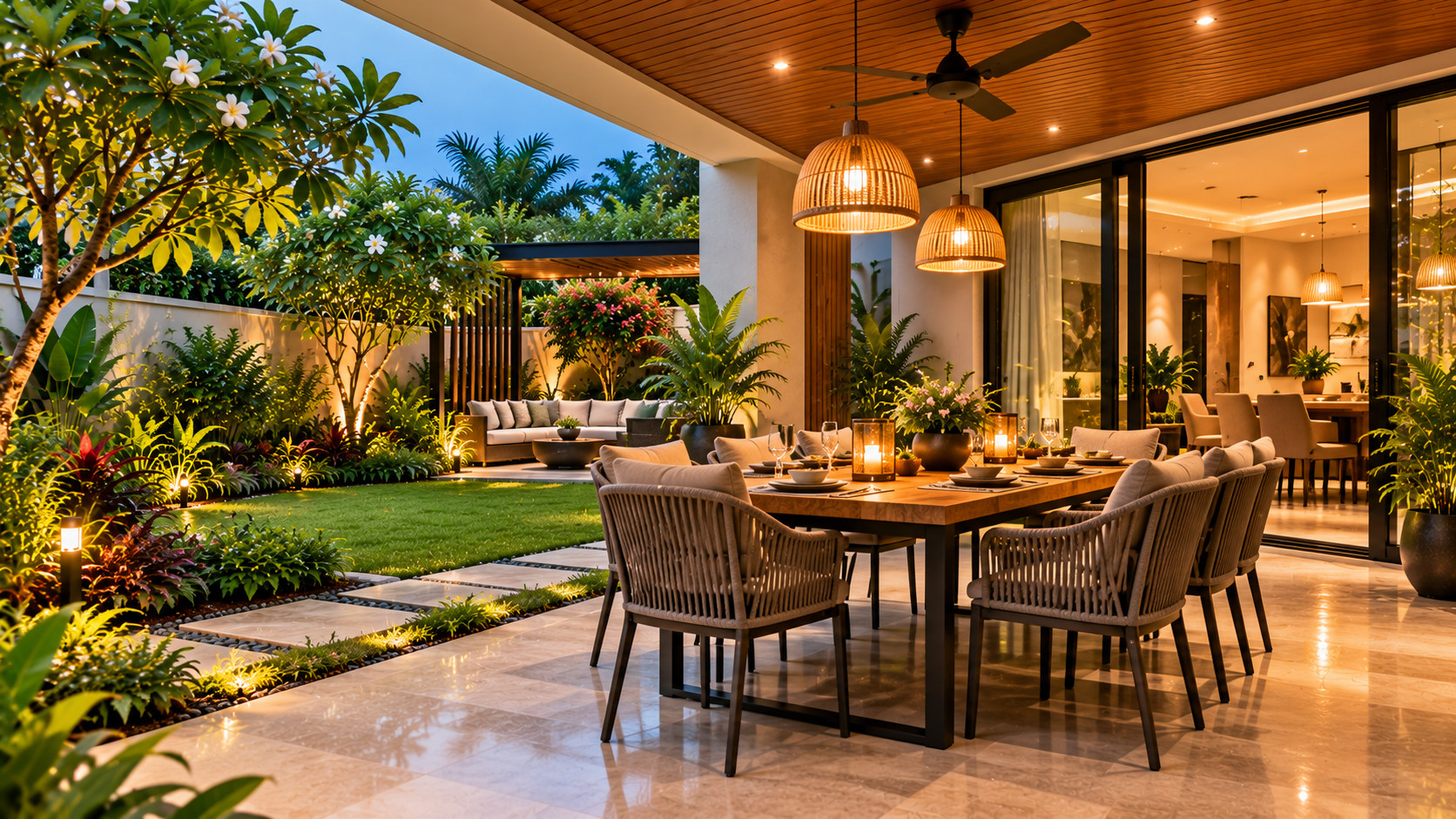
A beautifully planned outdoor dining terrace extends the comfort of the home into the garden, creating an inviting setting for family meals and evening gatherings.
8. Maintenance Storage and Service Access
A well-designed garden must accommodate its own upkeep.
Provide a dry, secure and accessible location for hoses, gardening tools, fertilisers and cleaning equipment. Keep chemicals appropriately separated from children, pets and food-related storage.
Equally important, planting should not obstruct access to:
Water pumps, valves and inspection chambers.
Rainwater pipes and drainage covers.
Electrical distribution equipment and outdoor AC units.
Underground tanks, septic systems and service routes.
Fire safety equipment and emergency access.
Maintain the ventilation and airflow clearances specified for pumps and outdoor AC units. Service clearances must follow equipment requirements and applicable regulations. Decorative planting should never compromise essential maintenance or safety.
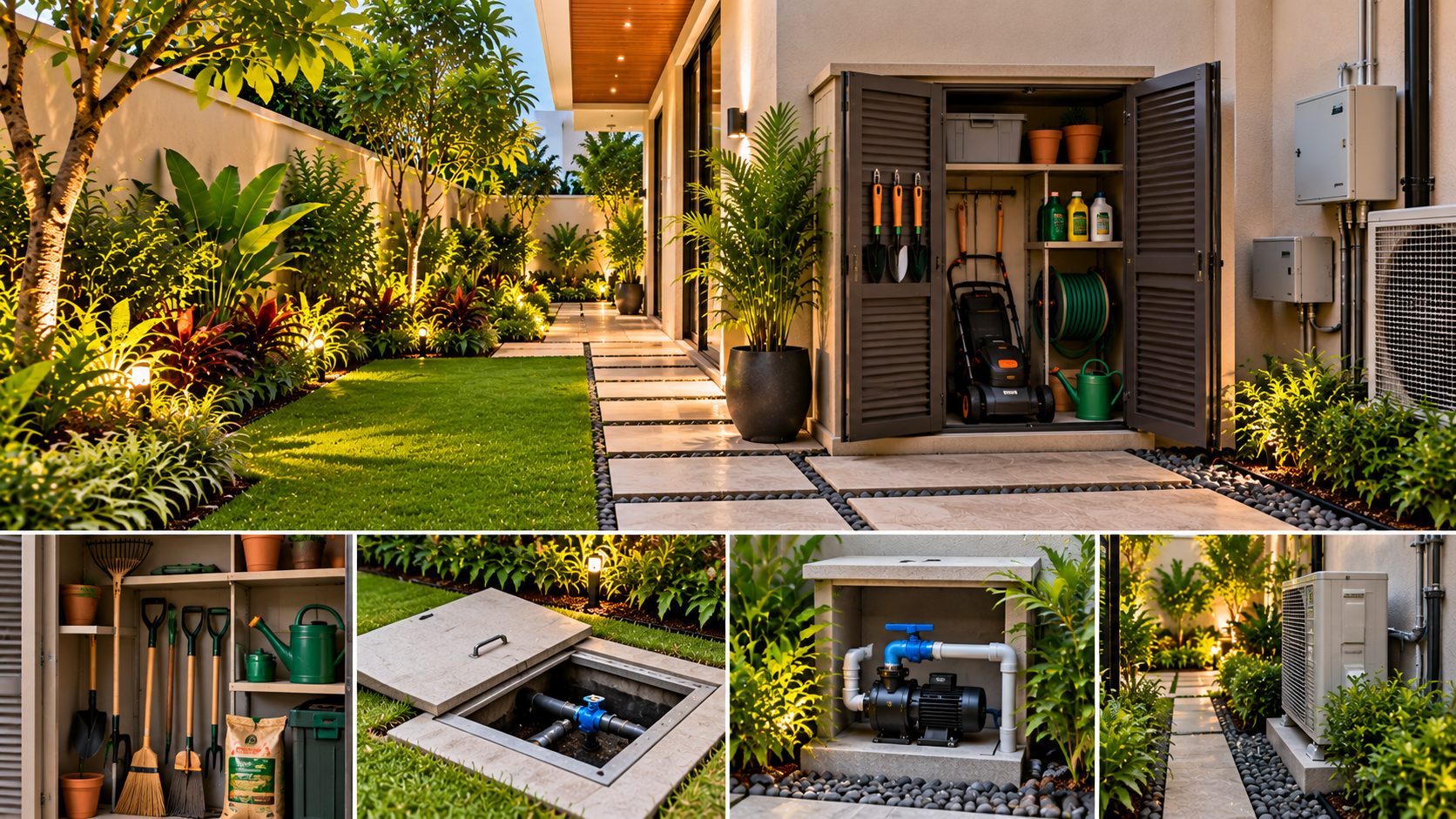
Thoughtful landscaping incorporates discreet garden storage and convenient access to essential utilities, making routine maintenance easier without compromising visual elegance.
9. A Garden That Can Grow in Phases
Not every outdoor feature needs to be completed during initial construction.
A practical phased approach allows homeowners to establish essential infrastructure first and develop the landscape gradually.
Phase 1 — Essential groundwork
Grading, drainage, safe pathways, service access, irrigation provisions, electrical conduits and essential safety lighting.
Phase 2 — Core landscaping
Main trees, planting beds, soil preparation, seating surfaces and essential shade.
Phase 3 — Lifestyle enhancements
Decorative lighting, outdoor furniture, pergolas, water features and additional planting.
Phasing reduces unnecessary rework when the infrastructure is planned properly at the beginning.
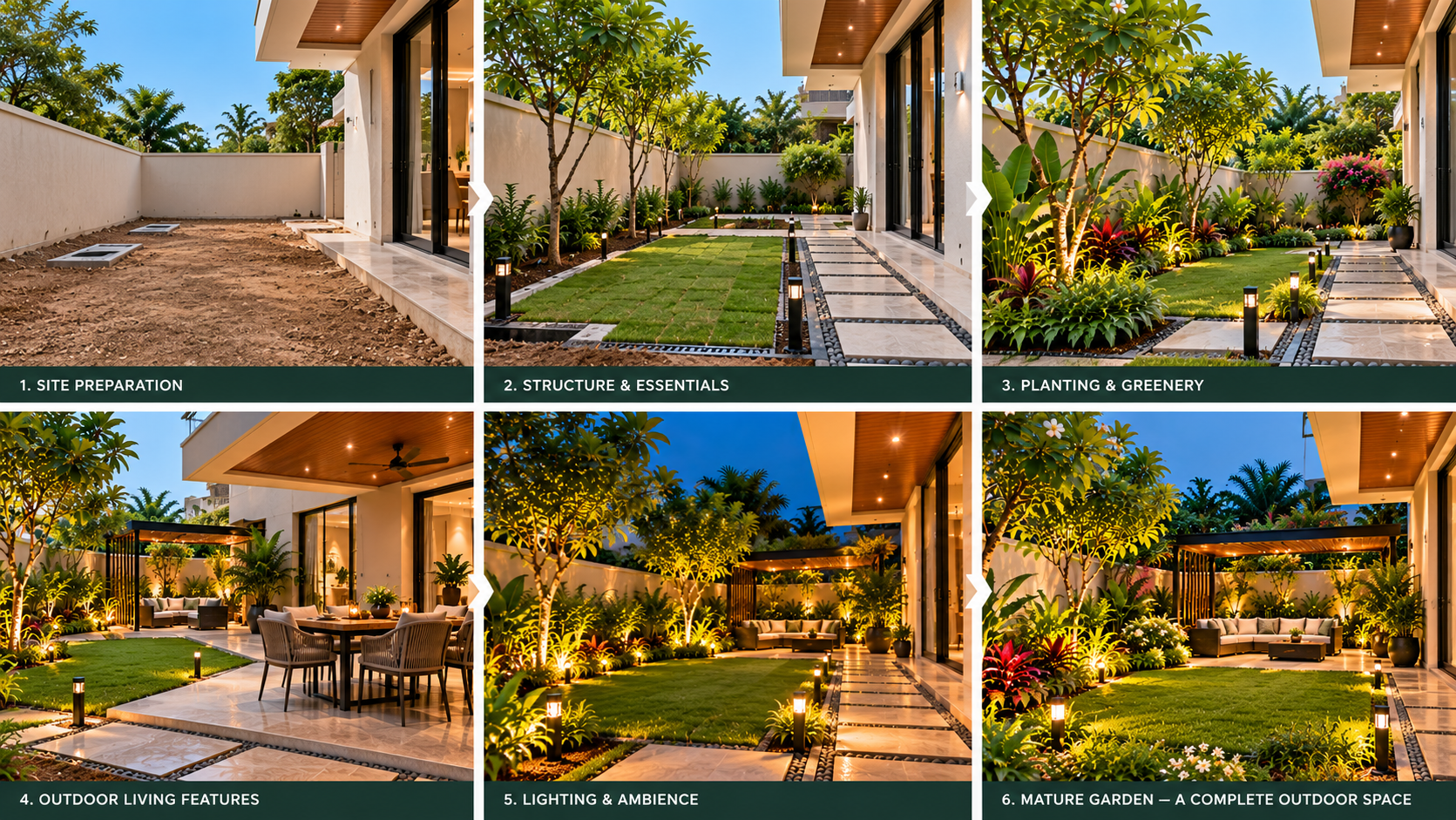
Six illustrative steps show how a garden can evolve within the three broad phases described above: essential groundwork, core landscaping and lifestyle enhancements. Plant establishment and growth continue across these phases; the panels are not a fixed construction sequence.
10. Ready Reference — Your Aurevia Garden Brief
Use this worksheet to clarify your family's priorities before commissioning a landscape design.
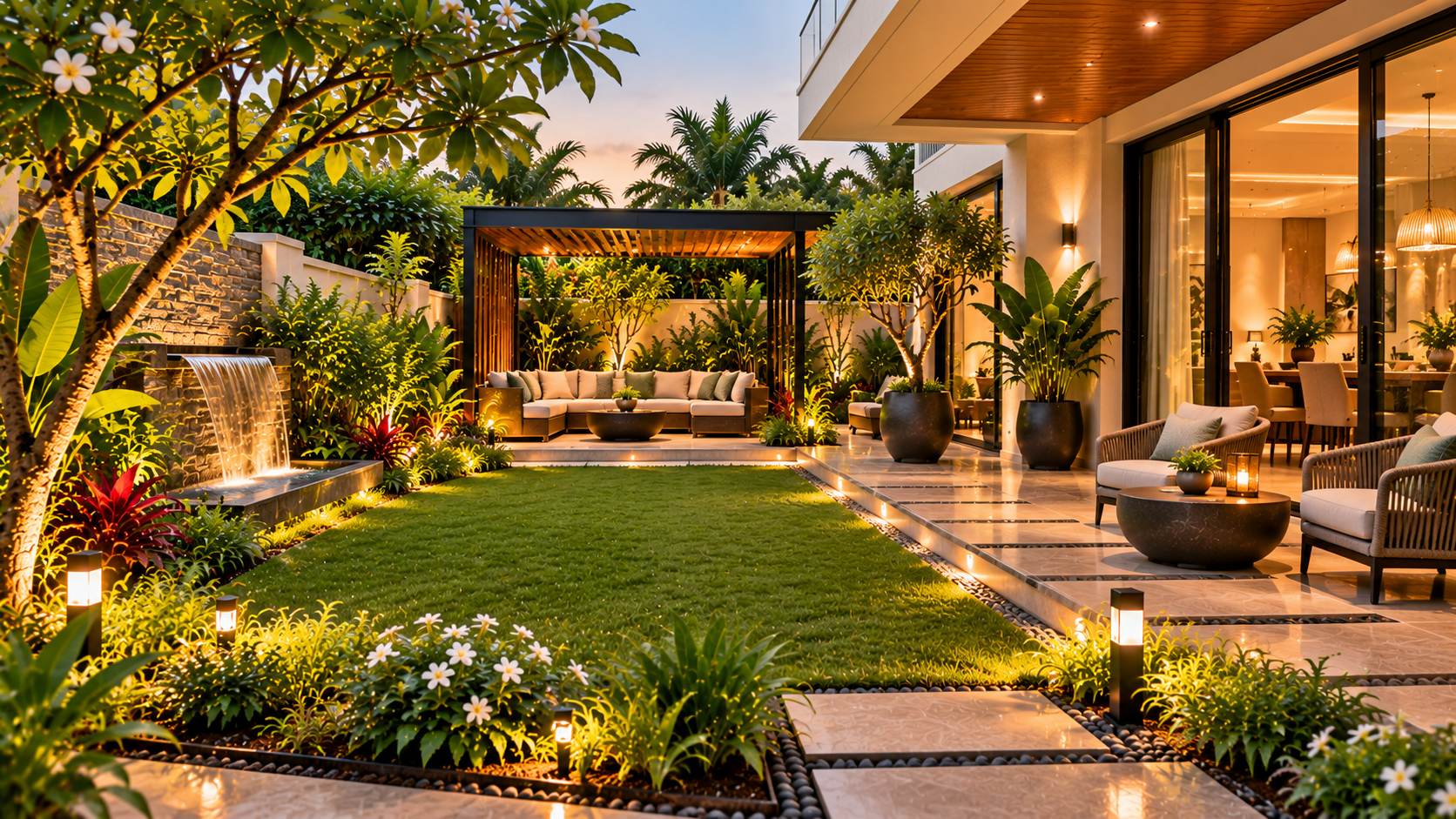
A beautiful garden begins with thoughtful planning—balancing family activities, comfortable seating, greenery and manageable maintenance to create an outdoor retreat for everyday enjoyment.
11. The Aurevia Perspective
The most successful outdoor spaces are not necessarily the most elaborate.
A modest courtyard with comfortable seating, beautiful planting, sensible drainage and carefully planned lighting can enrich daily life more than a large, high-maintenance landscape.
Luxury should feel effortless. It should welcome residents outside, encourage time with family and remain manageable through changing seasons.
At Aurevia Luxury Villas, we design outdoor spaces as a natural extension of the home — elegant, practical and thoughtfully prepared for long-term enjoyment.
Planning a garden, courtyard or outdoor living space in Lucknow? Explore Aurevia Luxury Villas' bespoke design, landscape planning and turnkey construction services.
Request a landscaping or villa-design consultation, or explore our design and turnkey services.