Keeping Essential Services Running When Electricity Fails
The Intelligent Villa — An Everyday Comfort Handbook for Planning Your Home
By Ashwini Kumar | AUREVIA LUXURY VILLAS

A thoughtfully planned villa keeps selected essential services available during a power interruption.
1. When the Lights Go Out
Imagine a warm summer evening in Lucknow.
Dinner is being prepared in the kitchen. The children are finishing their homework. Someone is watching television, while an elderly family member is resting upstairs.
Suddenly, the electricity fails.
The lights go out. The ceiling fans stop. The air conditioners fall silent. The television switches off, and the internet connection may disappear.
For a moment, the family waits.
Then a few selected lights come on automatically. The internet continues working. A fan keeps running in the family room. The refrigerator remains connected to a dependable supply.
The house is not operating exactly as it was before the interruption, but it remains comfortable and usable.
Now imagine a different situation.
The inverter has stopped working because its battery was never properly maintained. The backup circuit supplies too many appliances, causing an overload. Nobody knows which equipment should be switched off.
The same electricity interruption has become a household problem.
The difference is not necessarily the size or price of the backup system.
It is the quality of planning.
A dependable villa does not need to operate every electrical appliance during a power cut. It needs to keep the services that matter most available for a sensible period.
The important question is simple:
When electricity fails, what must continue working, for how long, and how will the family manage safely until normal power returns?
That question should guide the entire backup-power plan.
2. Decide What Must Keep Working
Before choosing an inverter, battery or generator, make a list of the services your family genuinely needs during an interruption.
Start with everyday safety and convenience.
Selected lights may be needed in bedrooms, staircases, passages, bathrooms and entrances.
A ceiling fan may be important during warm weather. The refrigerator may need continued power to protect food and medicines. Internet equipment may be useful for communication, work and security systems.
Some households may also need power for medical equipment, personal emergency alerts or other essential devices.
These needs should be identified individually.
Now consider the equipment that may not need to operate during every power cut.
Decorative lighting, multiple air conditioners, electric ovens, large water heaters and entertainment equipment may be temporarily unnecessary.
A swimming-pool pump, for example, might safely remain off during a short interruption, subject to the equipment's requirements.
The homeowner should distinguish between three broad groups:
Essential services: Equipment required for safety, communication, important household functions or specific family needs.
Comfort services: Selected fans, cooling equipment or other appliances that improve comfort but may not always be essential.
Optional services: Equipment that can reasonably remain switched off until normal supply returns.
These categories are not identical for every family.
For an elderly person with limited mobility, particular lighting and communication arrangements may be essential.
For someone working from home, dependable internet connectivity may be an important priority.
For a household using electrically powered medical equipment, a dedicated backup and emergency contingency plan may be necessary.
The purpose is not to minimise comfort at any cost.
It is to protect the services that matter most before spending money on equipment that may rarely be needed.
3. How Long Should Backup Last?
A backup system has two different responsibilities.
First, it must be capable of supplying the electrical equipment connected to it.
Second, it must be able to continue supplying that equipment for the required period.
These are not the same thing.
Imagine that a family wants to operate several lights, two ceiling fans, a refrigerator and its internet router.
An inverter may have sufficient power capacity to operate those loads together.
But if the available battery energy is limited, the system may stop supplying them much sooner than expected.
Now imagine the same family switches off unnecessary lights and uses only one fan.
The available battery may last longer.
This is why backup duration depends on both the equipment and the way it is used.
When discussing the system with a qualified designer, ask how long the proposed arrangement is expected to operate under realistic household conditions.
Consider different situations.
A short interruption may last only a few minutes.
A longer interruption may continue for several hours.
An exceptional outage caused by severe weather or a supply fault may last much longer.
It is not always economical to design a battery system to operate every household appliance throughout the longest imaginable interruption.
A more practical arrangement may combine short-duration battery backup with a separate solution for extended outages.
Battery performance also changes with age, temperature, charging conditions and use.
Theoretical capacity should not be mistaken for guaranteed real-world duration.
A good backup plan therefore considers realistic demand, expected duration, equipment limitations and a reasonable allowance for changing conditions.
4. Understanding Home Inverters and Batteries
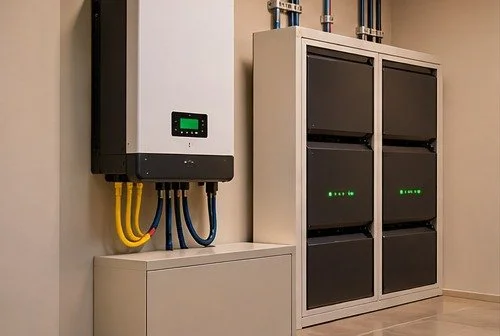
An inverter and battery system can support selected household circuits during an interruption.
An inverter-based backup system is familiar to many Indian households.
During normal operation, the battery is charged through the system's approved charging arrangement.
When the normal supply fails, a suitably designed inverter can provide electricity to selected circuits using energy stored in the battery.
Depending on the equipment, changeover may be automatic.
The family may notice only a brief interruption, or certain compatible equipment may continue operating with little noticeable disturbance.
However, not every inverter provides uninterrupted power suitable for every appliance.
Computers, network equipment, medical devices and sensitive electronics may have specific requirements for transfer time, output quality and compatibility.
A normal home inverter should not automatically be treated as a substitute for a dedicated uninterruptible power supply or a manufacturer-approved medical backup arrangement.
The inverter must also be selected for the type and combination of connected loads.
Certain appliances, including pumps, compressors and motors, can require substantially more power when starting than during ordinary operation.
A system that can operate a motor after it starts may still be unable to start it reliably.
The battery stores energy, while the inverter converts and manages the electrical supply.
Both must be considered together.
A larger battery does not automatically make an undersized inverter capable of operating heavy equipment.
Similarly, a powerful inverter connected to insufficient battery storage may provide only a short backup period.
The homeowner need not perform detailed electrical calculations.
But the designer should explain, in understandable terms, which appliances the proposed system can support, which it cannot, and approximately how long the expected backup will last.
5. Choosing Battery Technology
Batteries are central to many residential backup systems.
Two broad technologies commonly considered are lead-acid and lithium-based batteries.
Each has advantages, limitations and particular installation requirements.
Lead-acid batteries
Lead-acid systems have been widely used for household backup in India.
They may offer a comparatively lower initial purchase cost, depending on the configuration.
However, they are generally heavier and bulkier for a given amount of usable stored energy.
Some types require regular electrolyte-level checks and appropriate maintenance. Others are sealed and have different servicing requirements.
Battery life is affected by temperature, charging conditions, depth of discharge and maintenance.
Certain lead-acid batteries can release hydrogen during charging, making suitable ventilation and installation practices important.
Lithium-based batteries
Lithium-based systems can provide compact energy storage, and suitable products may offer longer cycle life and reduced routine maintenance compared with some lead-acid alternatives.
However, performance, safety and durability vary considerably between battery chemistries, manufacturers and system designs.
They normally require appropriate electronic battery management and compatible charging and inverter equipment.
Thermal management, installation location, electrical protection and manufacturer requirements are important.
Lithium batteries should not be treated as automatically safer or maintenance-free.
The complete installed system matters more than a battery label.
When comparing alternatives, consider usable energy, expected service life, warranty conditions, replacement cost, available local service and compatibility with the proposed inverter.
Also ask what happens if a battery module fails several years later.
Can it be replaced conveniently?
Will compatible components and service support remain available?
A battery that costs less initially may not necessarily be the most economical choice over the life of the home.
The right decision depends on the family's priorities, budget and the professionally designed system.
6. When a Generator Makes Sense
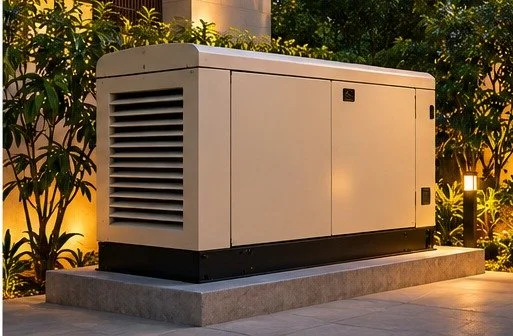
Generator backup requires safe outdoor siting, approved changeover and ongoing maintenance.
Battery backup is useful for selected household loads, particularly during relatively short interruptions.
But what happens if electricity remains unavailable for many hours?
A generator may be worth considering where extended outages are a realistic concern and the household has substantial essential power requirements.
A properly selected generator can provide electricity while suitable fuel is available and the equipment remains operational.
However, it brings responsibilities that should not be overlooked.
Generators require appropriate installation, periodic servicing and dependable fuel arrangements.
They also produce noise, vibration and exhaust gases.
Exhaust contains carbon monoxide, a dangerous gas that can cause fatal poisoning.
A generator must never be operated inside a home, garage, basement or enclosed space where exhaust can accumulate. Outdoor installation must follow the manufacturer's requirements and applicable rules, including safe separation from doors, windows and air intakes.
A generator should not be selected merely because it appears capable of supplying the villa's total connected load.
The electrical designer should assess realistic demand, motor-starting requirements, supply quality, protective arrangements and the intended operating pattern.
Safe connection to the building is essential.
An improperly connected generator can create dangerous backfeeding into electrical supply systems.
Suitable approved transfer equipment and professional installation are necessary.
The homeowner should also consider who will start the generator, how fuel will be managed and what happens when it fails to start.
A generator may provide valuable resilience, but it should not become another complicated system that the family cannot operate or maintain.
7. Solar Power and Battery Storage
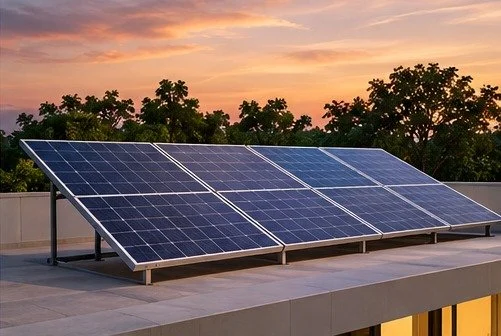
Rooftop solar requires suitable backup-capable equipment to supply electricity during a grid outage.
Rooftop solar panels can reduce the electricity purchased from the grid and contribute to a home's long-term energy strategy.
But there is an important misunderstanding.
Solar panels do not automatically provide electricity during a power cut.
Many ordinary grid-connected solar installations are designed to stop supplying power when the utility grid fails.
This is an essential safety feature intended to prevent unintended energisation of the external electricity network.
A homeowner may therefore have solar panels receiving bright sunlight while the house remains without electricity during an outage.
To supply selected household loads when the grid is unavailable, the installation needs equipment specifically designed and approved for that operating arrangement.
Depending on the system, this may involve an appropriately configured hybrid inverter, battery storage, backup circuits and suitable isolation and control arrangements.
Solar generation also varies with sunlight, weather, season and shading.
A rooftop system that produces useful electricity during a clear afternoon cannot be assumed to supply the same amount during heavy cloud cover or after sunset.
Battery storage can help make solar energy available when sunlight is insufficient, subject to system capacity and operating conditions.
For a villa in Lucknow, rooftop solar may be an attractive option, but backup performance must be evaluated separately from normal electricity-bill savings.
Before investing, ask the supplier to demonstrate exactly what happens when grid power fails.
Which circuits remain energised?
Can solar generation continue during the outage?
Can the battery recharge while the grid is unavailable?
What happens when the battery becomes depleted?
These questions are more useful than relying on a general claim that a home is 'solar powered'.
8. A Sensible Hybrid Backup Arrangement
Some villas may benefit from combining more than one source of electricity.
A typical arrangement could include the normal utility supply, an inverter with battery storage, rooftop solar and, where justified, a generator.
However, adding more equipment does not automatically make the home more dependable.
Each component must work with the others through a properly designed and coordinated system.
Consider a possible household arrangement.
During normal operation, the villa receives electricity from the grid, with rooftop solar contributing where available.
If the grid fails, selected essential circuits receive backup from the inverter and battery.
If the interruption continues and the battery approaches its operating limit, a properly integrated generator may supply approved loads or support the system according to the equipment design.
When normal electricity returns, the system changes back through its approved switching arrangement.
This is an illustration, not a universal operating sequence.
Actual behaviour depends on the selected equipment, configuration and approved design.
The homeowner should avoid independently combining inverters, generators and solar equipment from different suppliers without confirming system compatibility.
Improper integration can damage equipment and create serious electrical hazards.
The designer should clearly identify the power sources, switching arrangements, protected circuits and operating limitations.
A simple explanation of normal operation, power failure, extended outage and power restoration should be included in the home's services manual.
The family should not need to understand complicated electrical diagrams to know what the backup system is expected to do.
9. Backup for Pumps, Lifts and Special Equipment
Some household equipment requires particular attention during a power cut.
Water pumps
A water pump may have a high starting demand relative to its normal running power.
It may also need to operate only occasionally, depending on the water-storage arrangement.
In a villa with suitable overhead storage, maintaining adequate stored water may reduce the need to operate a pump during every short interruption.
However, the actual arrangement must be assessed by the responsible professionals.
Home lifts
A home lift requires special treatment.
The lift supplier may provide an approved emergency lowering or rescue arrangement, or specify particular backup provisions.
These are not necessarily equivalent to operating the lift normally during a power cut.
A conventional household inverter should not be assumed suitable for running the lift.
The electrical designer and lift manufacturer must coordinate the supply, safety functions and any approved backup arrangements.
The family should also know what to do if the lift stops during an interruption.
Air-conditioning and other heavy equipment
Air conditioners, large water heaters, cooking appliances and other substantial loads can greatly increase the size and cost of a backup system.
Some families may choose to support one selected cooling unit during an extended outage.
Others may prefer fans and essential lighting.
Neither arrangement is universally correct.
The decision should reflect household needs, realistic operating duration, equipment compatibility and budget.
Special equipment should never be added to backup circuits merely because a spare connection appears available.
10. Backup for Internet, Security and Personal Safety
During an electricity interruption, communication can become particularly important.
A family may need to contact relatives, security personnel, emergency services or equipment technicians.
The home's internet router, fibre termination equipment and network switches may need backup power if continued connectivity is important.
However, powering the router does not guarantee that the external internet service will remain available.
The service provider's network may also be affected by the outage.
Mobile communication should therefore be considered as a separate option where possible.
Security cameras, alarm panels, access controls and electronic door equipment may have their own backup requirements.
A system that works well during normal operation should also be assessed for what happens when electricity fails.
Can occupants still enter and leave the building safely?
Do essential locks have appropriate emergency or manual arrangements?
Will alarm and communication equipment continue operating for the required period?
For families relying on medical equipment, personal emergency alerts or other safety-critical devices, ordinary household backup may not be sufficient.
The equipment manufacturer and relevant healthcare professionals should guide the specific backup requirements.
A separate contingency plan may be needed if both normal and backup electricity become unavailable.
It is also wise to keep a charged mobile phone, a dependable torch and important emergency contact information readily accessible.
Resilience is not only about electrical equipment.
It is also about helping family members respond calmly and safely.
11. Safe Installation and Equipment Location
An inverter and battery system should not be placed wherever a little unused space happens to be available.
The location affects safety, performance, maintenance and future replacement.
Battery systems may generate heat, and some battery types require particular ventilation or environmental arrangements.
Electrical equipment should be protected from unsuitable moisture, excessive heat, physical damage and unauthorised access.
The exact requirements depend on the equipment and battery technology.
A poorly ventilated enclosure, a location exposed to water leakage or an arrangement that blocks maintenance access can create avoidable problems.
Generator location requires separate consideration because of exhaust, noise, fuel and fire safety.
Equipment should not obstruct essential exits or safe movement routes.
Appropriate isolation, electrical protection, cable routing and access for qualified technicians must be incorporated into the design.
The homeowner should ask practical questions.
Can the equipment be inspected safely?
Can a failed battery be removed and replaced?
Is there enough space to service the inverter or generator?
Are the manufacturer's installation and clearance requirements being followed?
Will the equipment remain accessible after cupboards, decorative panels and landscaping are completed?
A neat installation is desirable.
But appearance must never take priority over safety and service access.
12. What Happens When Power Returns?
Most homeowners think about what happens when electricity fails.
Fewer consider what happens when it returns.
Imagine that a power cut ends late at night.
The normal supply becomes available again. The inverter begins returning to its normal operating mode. Battery charging may resume.
At the same time, appliances that were previously running may attempt to restart.
Some equipment may restart automatically, while other equipment may remain off until manually operated.
This behaviour depends on the appliance and the control arrangement.
A properly designed system should manage supply transfer, charging and restoration according to its specifications.
It should also avoid unsafe interaction between different electricity sources.
For a home with a generator, the return to utility power must follow the approved transfer arrangement.
For a solar and battery system, the controls should manage the transition between grid-connected and backup operation as designed.
The homeowner should ask the installer to demonstrate the complete sequence.
What happens when electricity fails?
What happens if the battery becomes depleted?
What happens when the generator starts or stops?
What happens when grid power returns?
Can the family identify an abnormal condition?
These demonstrations should be part of commissioning and handover.
A backup system should not merely work on the day it is installed.
Its behaviour should remain understandable and predictable throughout everyday use.
13. Plan, Maintain, Repair, Replace
A dependable backup system needs attention throughout its working life.
PLAN
Identify essential household services before selecting equipment.
Decide the expected backup duration and obtain a professionally assessed design covering power demand, battery storage, switching arrangements, equipment location and future requirements.
Coordinate special equipment such as lifts, pumps, medical devices and communication systems.
MAINTAIN
Follow the manufacturer's maintenance instructions.
Arrange periodic professional inspection of the inverter, batteries, generator and associated electrical protection.
Check battery condition, charging performance and the system's expected operation during a simulated outage where appropriate and safely supervised.
Maintain generator fuel, servicing and testing arrangements as specified.
REPAIR
Ensure qualified technicians can identify faults, isolate supplies and access equipment safely.
Keep electrical diagrams, equipment manuals, warranty details and service contacts available.
Do not attempt to open battery systems, alter electrical connections or bypass protective devices without appropriate professional competence and authorisation.
REPLACE
Plan for the eventual replacement of batteries and other components.
Consider equipment dimensions, compatibility, warranties, local service support and the availability of replacement parts.
When upgrading the system, reassess household demand and the existing electrical installation rather than assuming that new equipment can simply be connected to the old arrangement.
A backup system is not a one-time purchase.
It is part of the home's long-term services infrastructure.
14. Ready Reference — Household Backup-Power Planning Checklist
Use this checklist when reviewing the backup-power proposal with your architect, electrical designer and equipment supplier.
Household backup-power review — 0 / 9 reviewed
Essential services and duration
☐
Have we identified the essential lights, communication equipment and household services that must continue during a power cut?
☐
Have we agreed on a realistic backup duration for ordinary and extended interruptions?
☐
Has a qualified designer assessed the combined loads, starting requirements and expected battery performance?
Equipment and safety
☐
Have we compared suitable inverter, battery and generator options based on safety, performance and long-term cost?
☐
If rooftop solar is proposed, do we understand exactly what will operate when the grid fails?
☐
Have lifts, pumps, security systems and any medical or personal safety equipment received appropriate backup planning?
Operation and long-term maintenance
☐
Are equipment locations, ventilation, access, electrical protection and isolation arrangements suitable?
☐
Have power-failure, battery-depletion and power-restoration sequences been explained and demonstrated?
☐
Will we receive operating instructions, circuit information, warranties, maintenance schedules and service contacts at handover?
This checklist is a planning aid. It does not replace professional electrical design, installation, commissioning or safety testing.
15. A Final Thought
A power cut reminds us how much modern living depends on electricity.
But a dependable home is not necessarily one with the largest generator, the greatest number of batteries or the most complicated energy system.
It is one where the family has considered what truly matters.
A few dependable lights can make a staircase safer.
A working fan can make a warm evening more comfortable.
Continued communication can help a family remain connected.
A properly planned backup system can protect essential services without creating unnecessary expense or maintenance difficulties.
The best arrangements are designed before the first power cut, tested before they are needed and maintained throughout their working life.
An intelligent villa does not promise that electricity will never fail. It prepares thoughtfully for the moments when it does.
Coming next — Chapter 6: Clean Water. Planning dependable water supply, storage, filtration and everyday water quality throughout your villa.