Natural Stone, Aluminium or Wood-Finish Cladding: What Works Best in Lucknow?
A villa’s exterior makes its first impression long before anyone enters the home. Natural stone can bring depth and permanence. Aluminium can give the façade crisp, contemporary lines. A wood-finish surface can add warmth without making the entire building look heavy.
In Lucknow, appearance is only the beginning of the decision. Strong summer sun, monsoon rain, dust and seasonal temperature changes all affect how an exterior looks and performs over time. The best cladding choice also depends on where it will be installed, how water will drain behind it, and whether it can be cleaned and repaired safely.
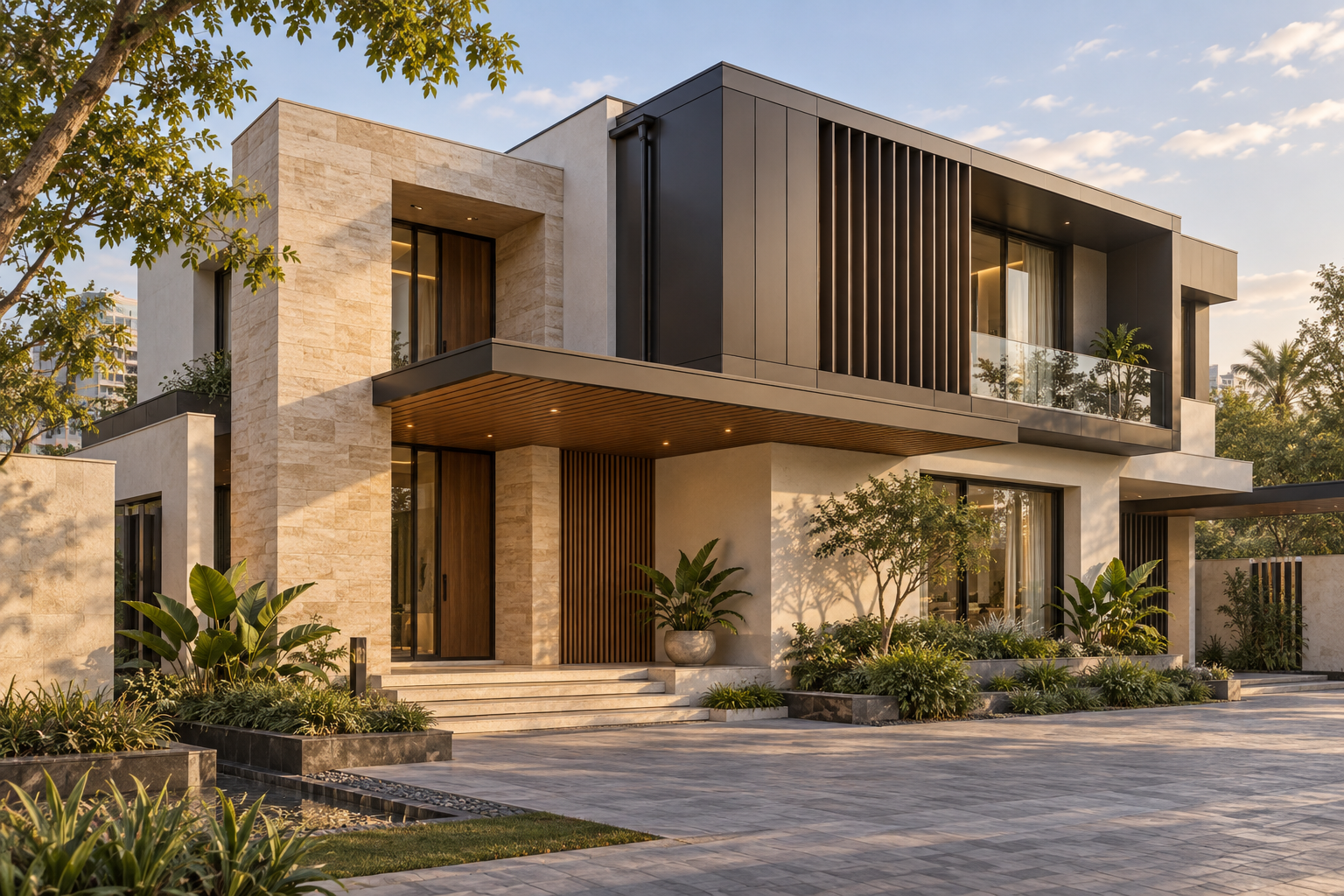
AI-generated façade concept illustrating natural stone, aluminium and wood-look accents. Not a photograph of a completed Aurevia project.
Start With the Location, Not the Sample
A small showroom sample cannot tell the whole story. A finish that looks excellent beneath an entrance canopy may need different detailing on an exposed upper-floor wall.
Before selecting a material, mark the façade areas that receive prolonged afternoon sun, direct rain, water splashing from the ground, or runoff from a terrace. Consider which surfaces will be within reach for cleaning and which will require scaffolding. These conditions should shape the material selection before colour and texture are finalised.
Cladding is also only one part of the external wall. Shading, insulation, waterproofing and ventilation behind the finish can matter more to indoor comfort than the visible material alone. No cladding product should be treated as a substitute for a properly designed wall.
Natural Stone: Character That Needs Careful Selection
Natural stone works especially well when a design calls for texture, visual weight and a connection to the landscape. It can give an entrance, boundary feature or carefully composed façade a lasting architectural identity.
But “natural stone” is not one specification. Granite, sandstone, limestone and marble differ in appearance, porosity, strength and maintenance needs. The selected stone should be assessed for its intended exterior location, rather than chosen only from a photograph. Ask to see a full-size sample in daylight and, where possible, an installed example that has weathered for some time.
Weight and fixing deserve particular attention. Large or elevated stone panels need an engineered support and anchoring design appropriate to the substrate and panel size. Joints, movement, water drainage and replacement access must be planned. A beautiful stone face will not compensate for unreliable fixing or water trapped behind it.
Where it often works best: entrance walls, protected feature areas and selected ground-floor surfaces where its texture can be appreciated up close. Exposed high-level stone may also be suitable, but requires more demanding structural and installation review.
Aluminium: Clean Lines With Several Product Choices
Aluminium suits villas with slim profiles, sharp edges, screens, fins or broad contemporary surfaces. Its relatively light weight can make it useful on upper levels, provided the framing, fixings and wind loads are designed for the project.
The word aluminium can describe very different products. Solid aluminium sheets and extrusions are different from aluminium composite panels, which contain a core between metal faces. Their properties, fixing methods and fire performance should not be assumed to be identical. Obtain the exact product specification, coating details, test documentation and proposed installation assembly before approval.
Finish quality also matters. Confirm that the selected coating is intended for exterior use and ask how it should be cleaned or repaired. Large panels need planned joints that accommodate movement and keep water away from vulnerable edges and connections.
Where it often works best: upper-floor accents, façade fins, screens, canopies and details that benefit from precise lines. It can also provide a convincing wood appearance when a specified wood-look aluminium system is used.
Wood-Finish Cladding: Warmth Without a Vague Specification
Wood tones can soften stone, glass and plaster and make a modern villa feel more welcoming. They are particularly effective at an entrance, beneath an overhang or on a limited feature surface.
However, wood-finish cladding is a description of appearance, not a material. It might mean natural timber, wood-look aluminium, a wood-plastic composite, or another manufactured board. These products differ in their response to sunlight, moisture, expansion, fire and cleaning. They should be compared by exact make and system, not by their wood-grain pattern alone.
For a highly exposed location, ask for evidence that the specific product and finish are intended for exterior use. Check fixing spacing, ventilation or drainage requirements, edge treatment, colour variation and the maintenance instructions. If a warm appearance is the main objective, wood-look aluminium may be worth comparing with timber or composite boards; if the feel of real timber is essential, allow for its expected upkeep.
Where it often works best: protected entrance ceilings, recessed walls, shaded balconies and selective accents. A product proposed for a fully exposed wall should be reviewed for that exact application.
Which Material Should a Lucknow Villa Choose?
For rich natural texture at an entrance, consider a suitable exterior stone. Check the stone type, anchoring, joints, staining risk and cleaning method.
For crisp lines on an upper floor, consider a specified aluminium system. Check its construction, coating, framing, movement joints and fire documentation.
For a warm timber appearance, compare exterior-grade wood-look aluminium with other proven cladding systems. Review full-size samples, finish durability and how damaged pieces can be repaired or replaced.
For authentic timber character, select a timber system suitable for the exact exterior exposure and plan for its weathering and maintenance.
This is a starting point, not a universal ranking. A mixed façade can be more effective than covering every surface in one material. For example, a stone entrance can establish a sense of arrival, while lighter cladding or aluminium details define the upper floor. A restrained wood-toned element can add warmth where people see it up close.
Detail the Edges Before Approving the Elevation
Many façade problems begin at the places an elevation drawing barely shows: window edges, parapets, terrace junctions, corners and the bottom of a clad wall. Rainwater must have a clear route away from the building. Behind-the-cladding drainage, flashings, waterproofing, movement joints and access for future repairs should be resolved before installation.
Ask the architect and façade specialist to prepare a small set of enlarged details for these junctions. Review a full-size site mock-up that includes at least one corner, one joint and one window or opening. It is easier to change a detail on a mock-up than after an entire elevation has been installed.
Lucknow Villa Cladding Checklist
Identify the sun, rain and splash exposure of each proposed cladding area.
Name the exact stone type or manufactured product; avoid approving only a generic finish description.
View full-size samples outdoors in both direct light and shade.
Confirm the substrate, support frame, anchors or fixings, and allowance for movement.
Detail waterproofing, drainage, flashings, corners, openings and parapets.
Review product and assembly fire documentation with the qualified design team.
Obtain written cleaning, inspection and replacement guidance.
Approve an installed mock-up before ordering the complete façade.
The Best Façade Is Designed as a Whole
Natural stone, aluminium and wood-finish cladding can all have a place on a luxury villa in Lucknow. The strongest result usually comes from using each material where its appearance and practical performance make sense, while keeping the overall palette disciplined.
Plan the façade early, alongside shading, windows, structure, waterproofing and exterior lighting. That coordination produces an exterior that looks considered on opening day and remains practical to care for in the years ahead.
Planning a new villa or updating an existing home in Lucknow? Aurevia Luxury Villas can help develop a coordinated façade brief that balances appearance, climate response and long-term maintenance.
WhatsApp: 7838981189
Email: ashwini@aurevialuxuryvillas.com
Website: www.aurevialuxuryvillas.com
Final materials, fixings and façade details should be confirmed by qualified architects, engineers and specialist suppliers for the specific project.